11世纪辽代青铜鎏金五髻文殊菩萨童子坐像(纽约大都会博物馆)
尺寸: H. 6 1/4 in. (15.9 cm); W. 4 1/4 in. (10.8 cm); D. 2 3/4 in. (7 cm)
年代:11世纪
质地:青铜鎏金(Gilt bronze; lost-wax cast)
风格:中原
来源:纽约大都会博物馆
参阅:外部链接
鉴赏:

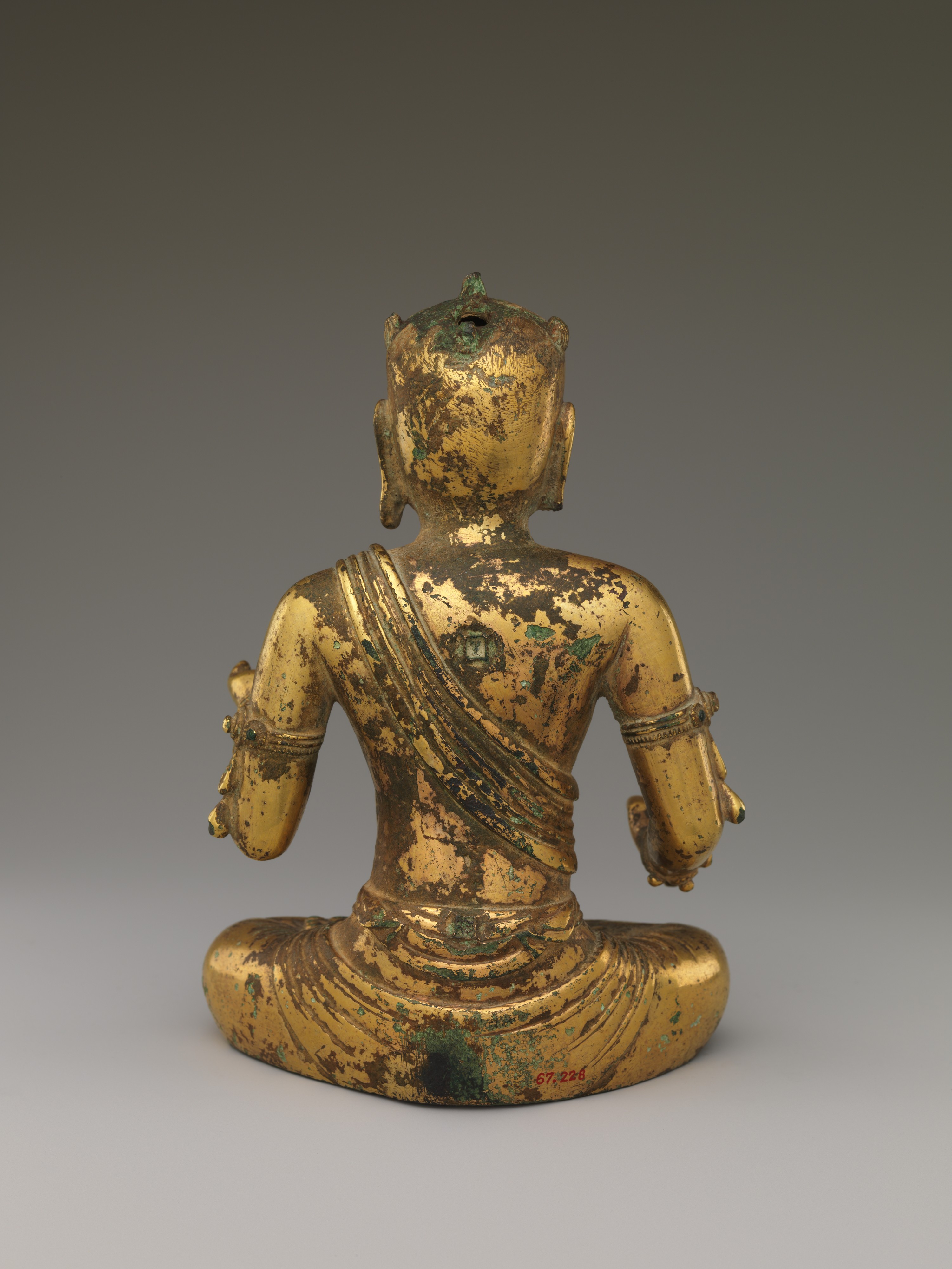
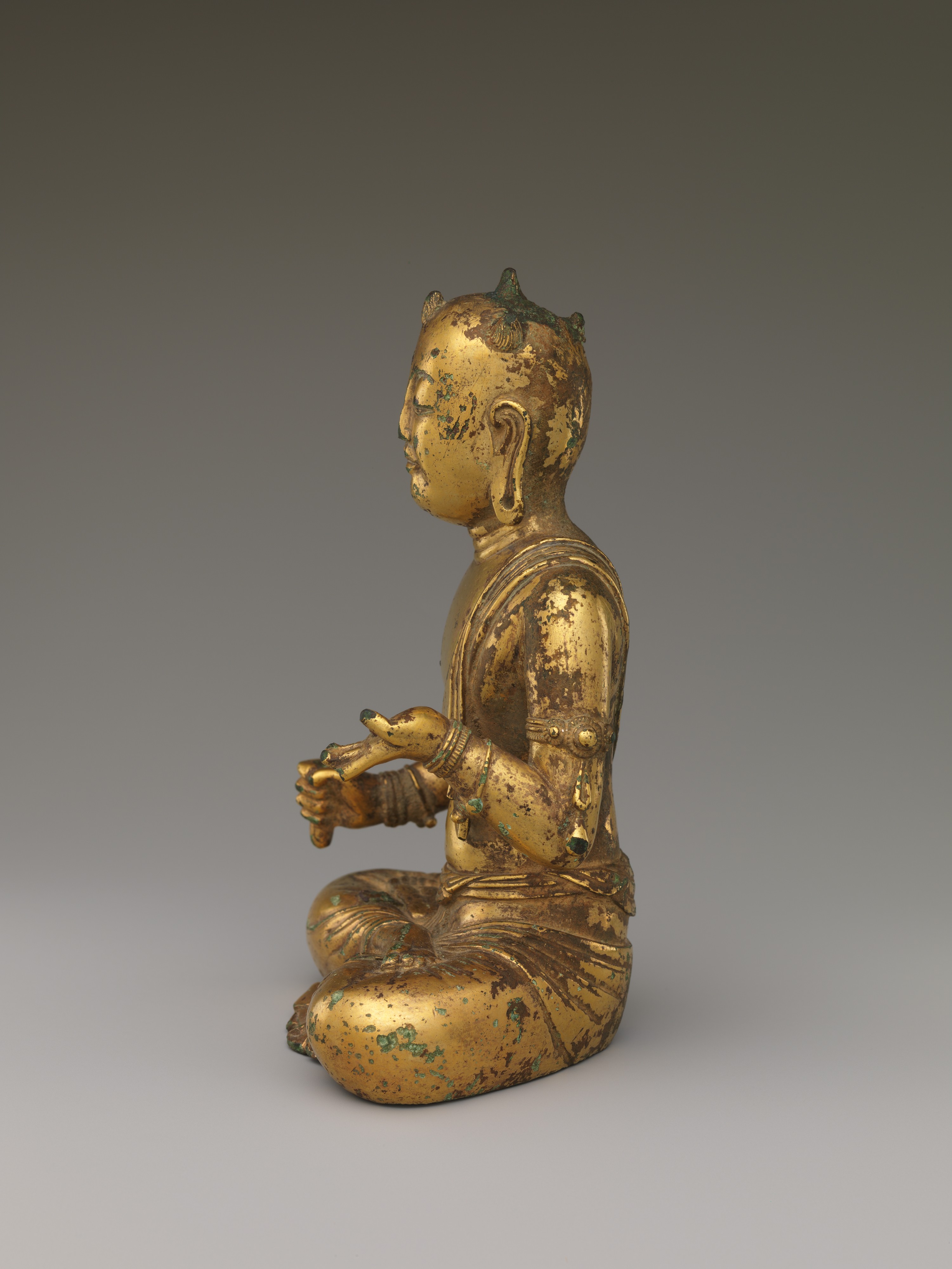
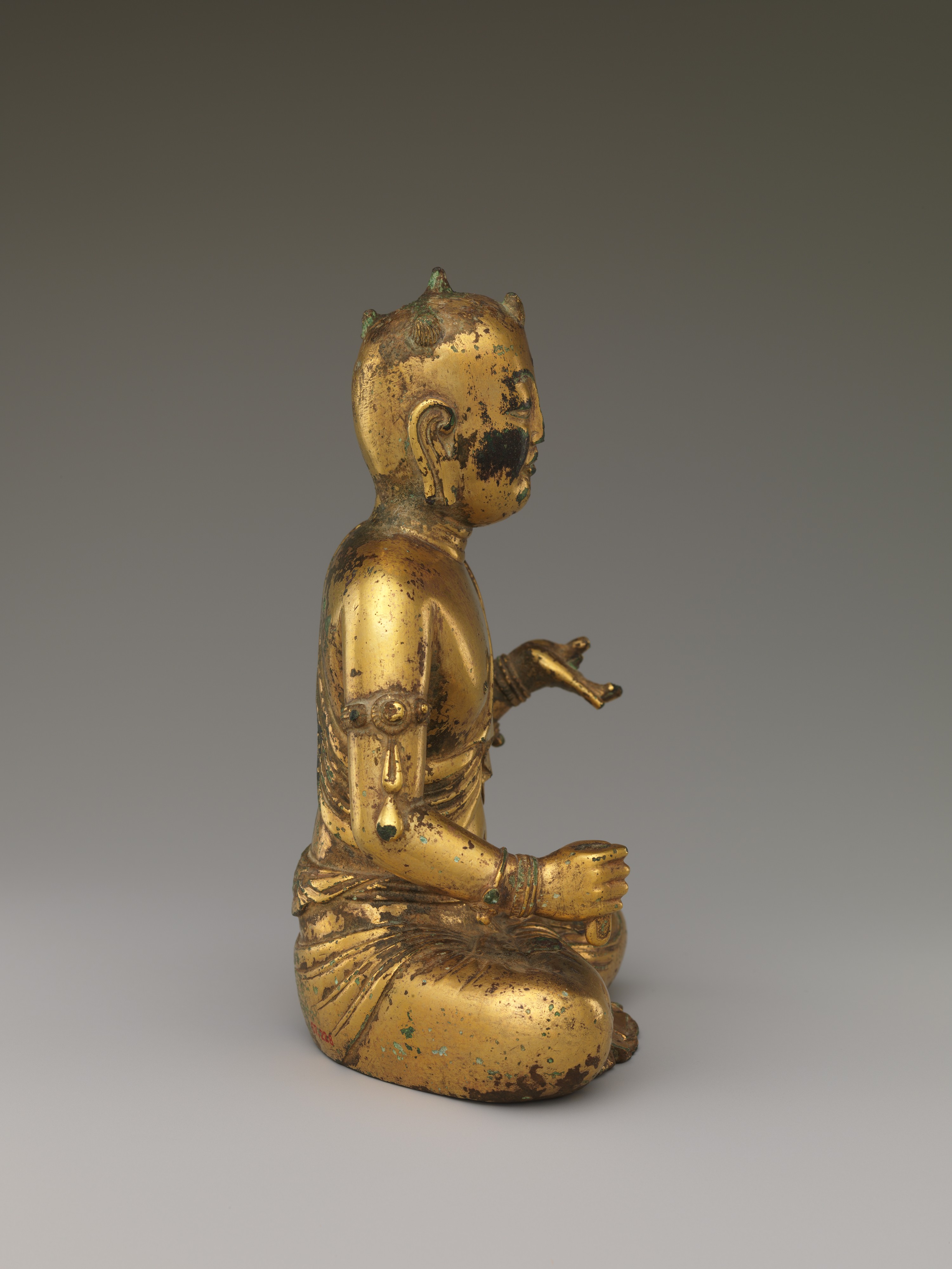 这是一尊来自山西的辽代文殊童子金铜坐像。因头顶五髻表五智,故又称作五髻文殊童子菩萨,示现童子的形象。菩萨面容圆润,面露微笑,神态充满自信和智慧。童子上身裸露,斜披圣带,下着长裙,右手持智慧之剑(已失),左手应拈青莲花茎或是梵箧(已失),双腿呈金刚跏趺坐安住。整尊坐像造型独特,形态健硕,比例合度,距今已近千年保存基本完好,是难得一见的辽代金铜像精品之作。
“文殊童子”象征文殊菩萨已证悟诸法无变实相,安住于不来不去,不生不灭的基法界中,故无有变迁,永不衰老。“童子”也可表示了义的文殊菩萨—不生不灭的实相。“其顶发绾五髻,用表五智,故亦称五髻文殊。密号吉祥金刚。……三昧耶形为青莲花,上有梵箧,一说为智剑。此菩萨身呈黄色,顶发五髻,右手当胸持青莲花,左手横持梵箧,坐赤莲花。梵箧即般若经,表智波罗蜜,青莲花表不染着诸法三昧,智剑则表此尊之大空智。
The five knots of hair(五髻) represent the five syllables of a Sanskrit invocation, a-ra-paca-na, used in devotions to the bodhisattva of wisdom. Each syllable has a different meaning and can help a devotee gain such benefits as protection from illness.
来源:
[Ellsworth & Goldie, Ltd. , New York, until 1967; sold to MMA]
展览:
New York. The Metropolitan Museum of Art. “Arts of Ancient China,” 2005.
著录:
Fong Chow. “Reports of the Departments: Far Eastern Art.” The Metropolitan Museum of Art Bulletin: Ninety-Eighth Annual Report of the Trustees of The Metropolitan Museum of Art for the Fiscal Year 1967–1968, n.s., 27, no. 2, October 1968. p. 98.
Angela Falco Howard. “Buddhist Sculptures of the Liao Dynasty.” Bulletin of the Museum of Far Eastern Antiquities, 56, 1984.