8世纪日本木雕漆金药师佛说法像(东京国立博物馆)
尺寸:
年代: 8世纪 奈良时代(Nara period)
质地: 木雕漆金
风格: 日本
来源: 东京国立博物馆
参阅: 外部链接
鉴赏:
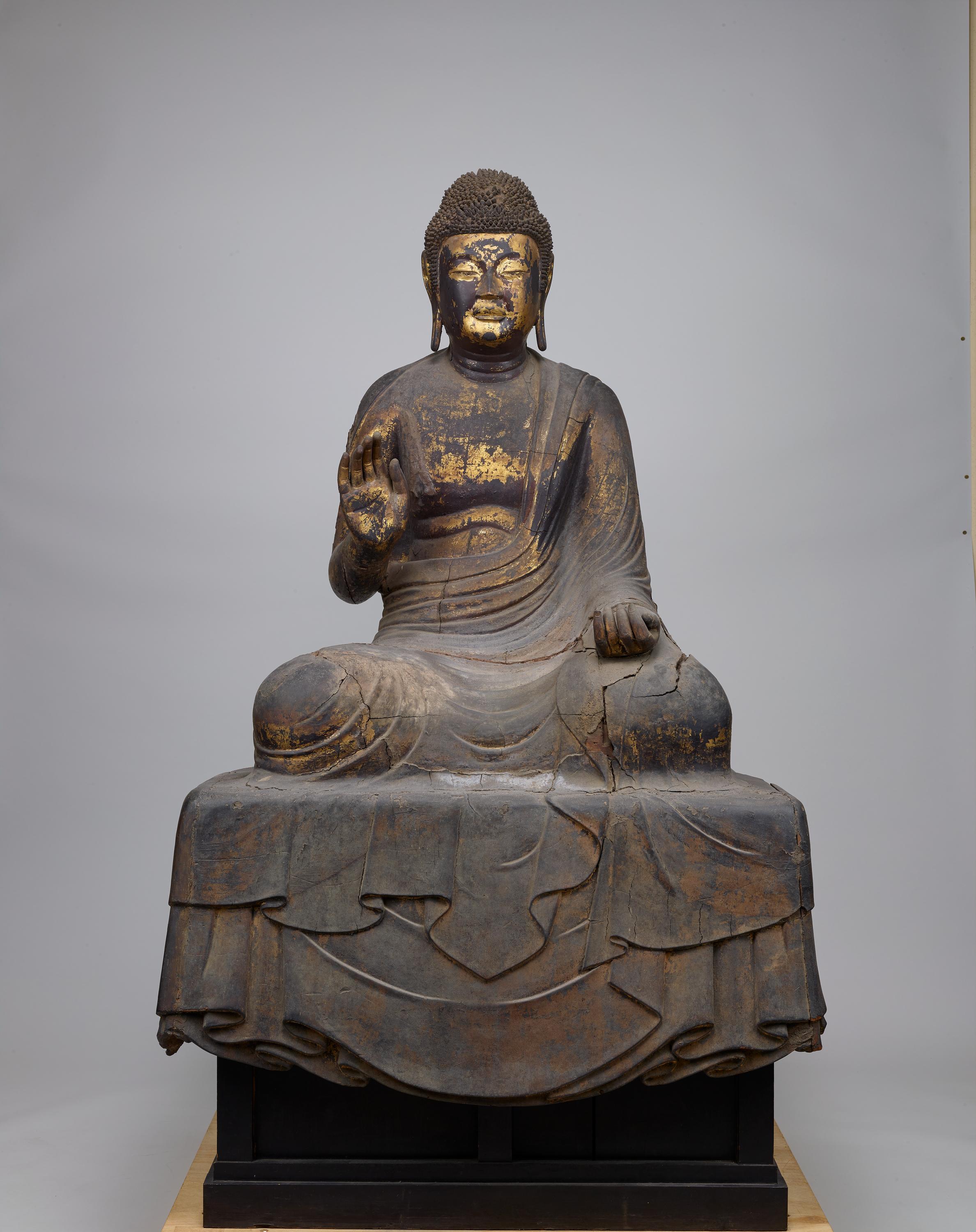
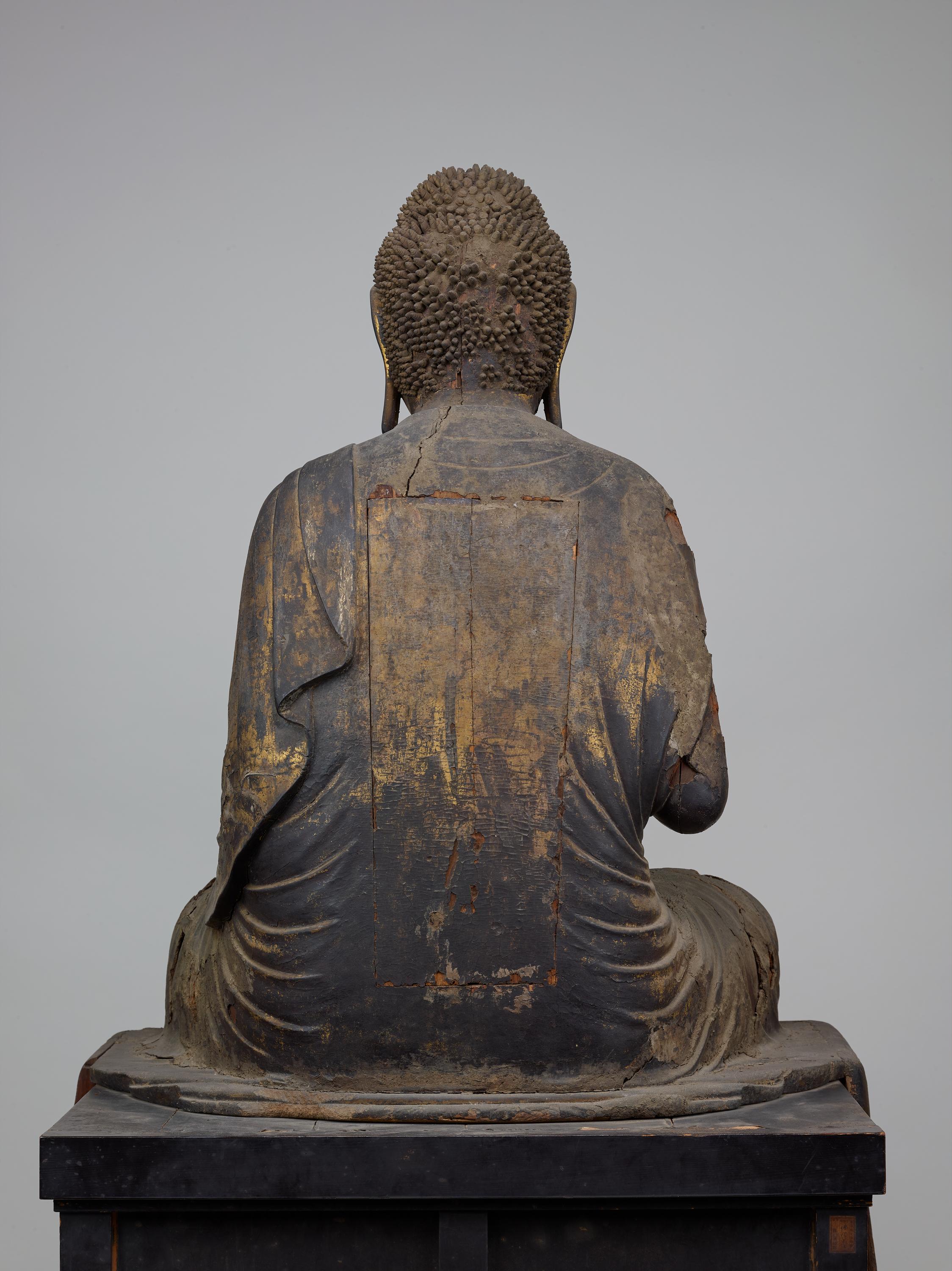
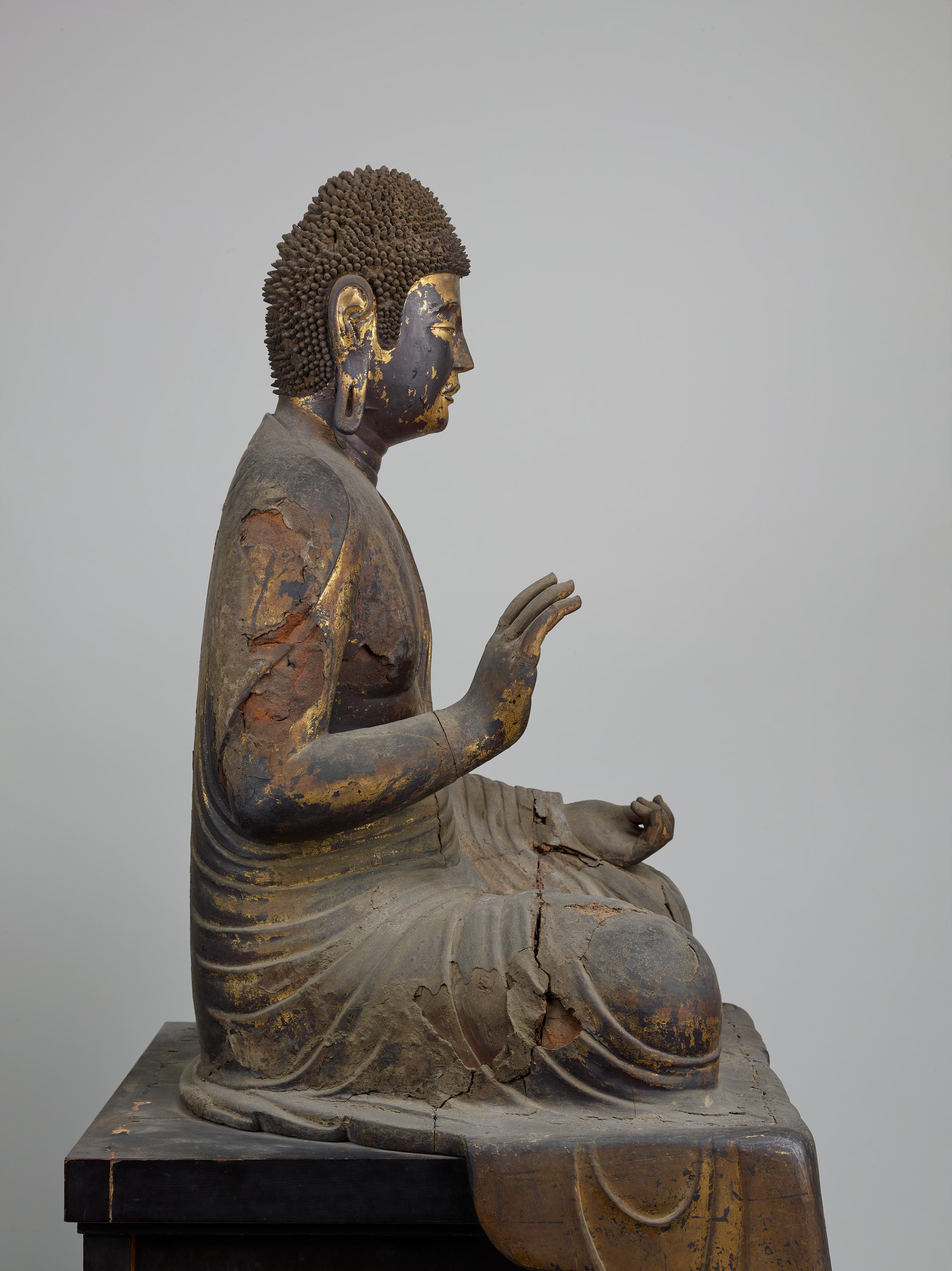
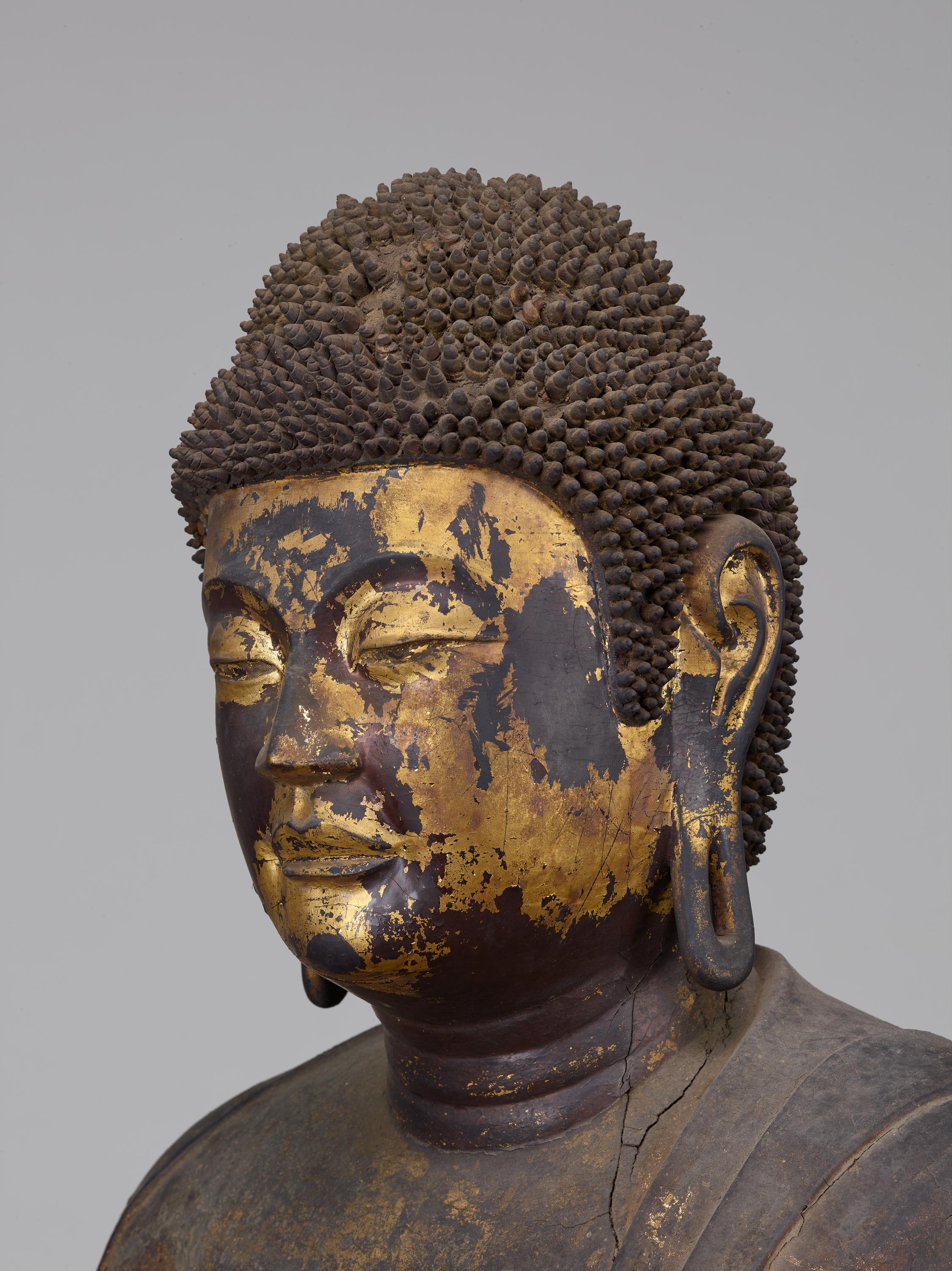
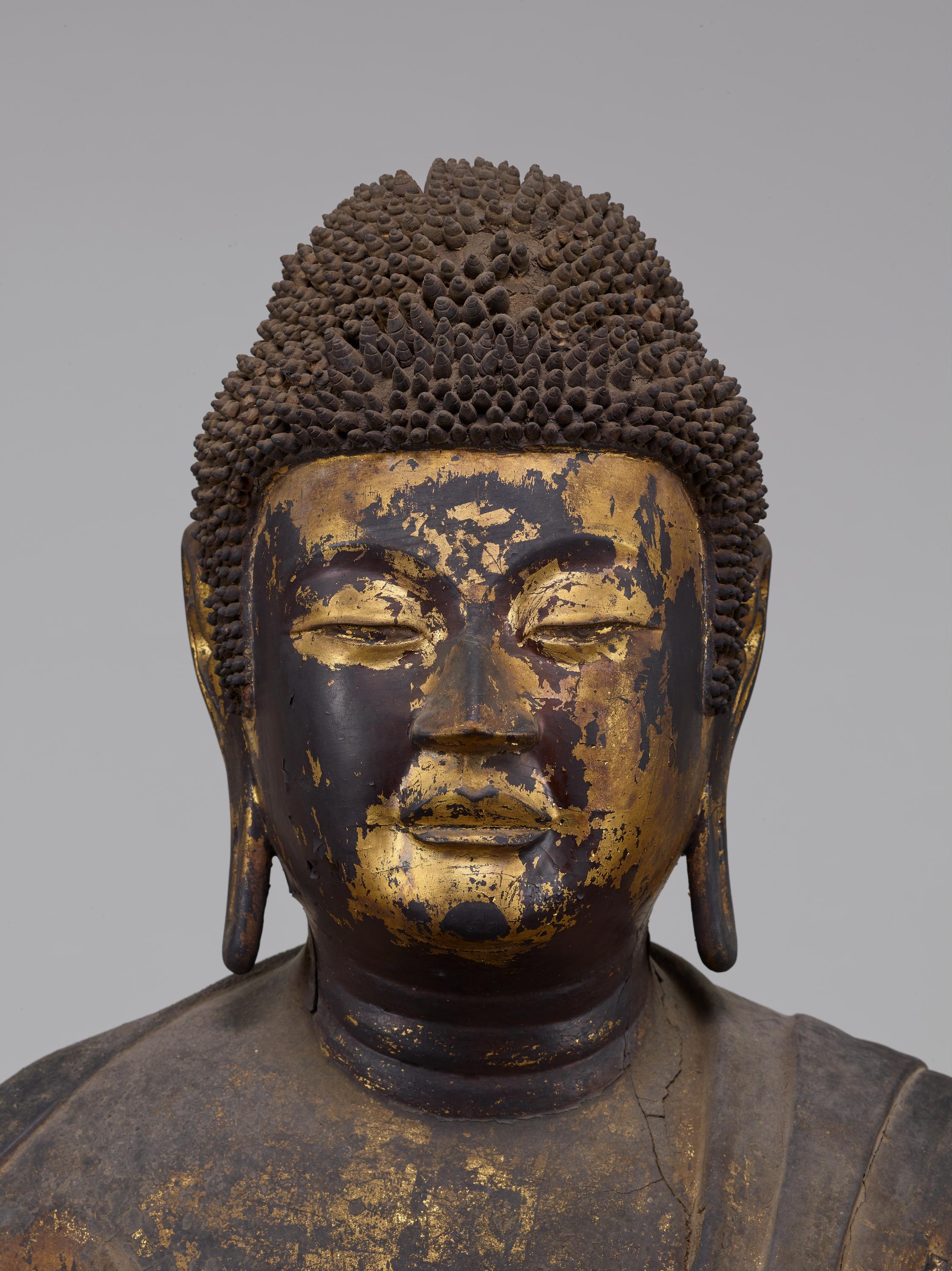 The Buddha Yakushi (药师佛)
The suface of this sculpture was modeled by applying a putty-like mixture of lacquer and wood pulp onto a wooden core. This technique became popular in the Nara period (710–794).
The Buddhist pantheon includes a variety of Buddhist deities with different names, appearances, and roles. “Buddha” means “one who has reached truth.” It originally referred only to the Buddha Shaka, the founder of Buddhism. As Buddhism developed after Shaka’s death, however, its followers came to believe that other Buddhas also exist. This is a statue of the Buddha Yakushi. The “yaku” in Yakushi means “medicine.” As his name suggests, he is believed to have the power to cure any disease. All buddhas share the same basic appearance, which can be seen in this statue. Its characteristics include a hair style with many small, round curls, three wrinkles at the base of the throat, and simple clothing consisting of only a plain cloth wrap. Note how the statue is modeled. It has an oval face with clean-cut features, and the folds of its robe are lightly and simply carved. The rough shape of this statue was carved from a single block of wood. Paste was then shaped over its surface. Based on recent research, the paste that forms the statues surface is thought to be a mixture including the inner bark of the elm tree, sticky substances, and wood dust. This process brings out both the thick solidity of the wooden model and the softness of the paste. On the other hand, it also requires a great deal of time, labor, and wealth. This technique was employed primarily during the Nara period (710–794). Buddhist statues from later periods feature thinner layers of paste on their surfaces and are classified as wooden.