15世纪西藏铜鎏金药师佛(香港邦瀚斯)
尺寸:高21.5cm
年代:15世纪
质地:铜鎏金
风格:西藏
来源:拍卖会
成交:486,400港元(2023.10)
参阅:香港邦瀚斯
鉴赏:
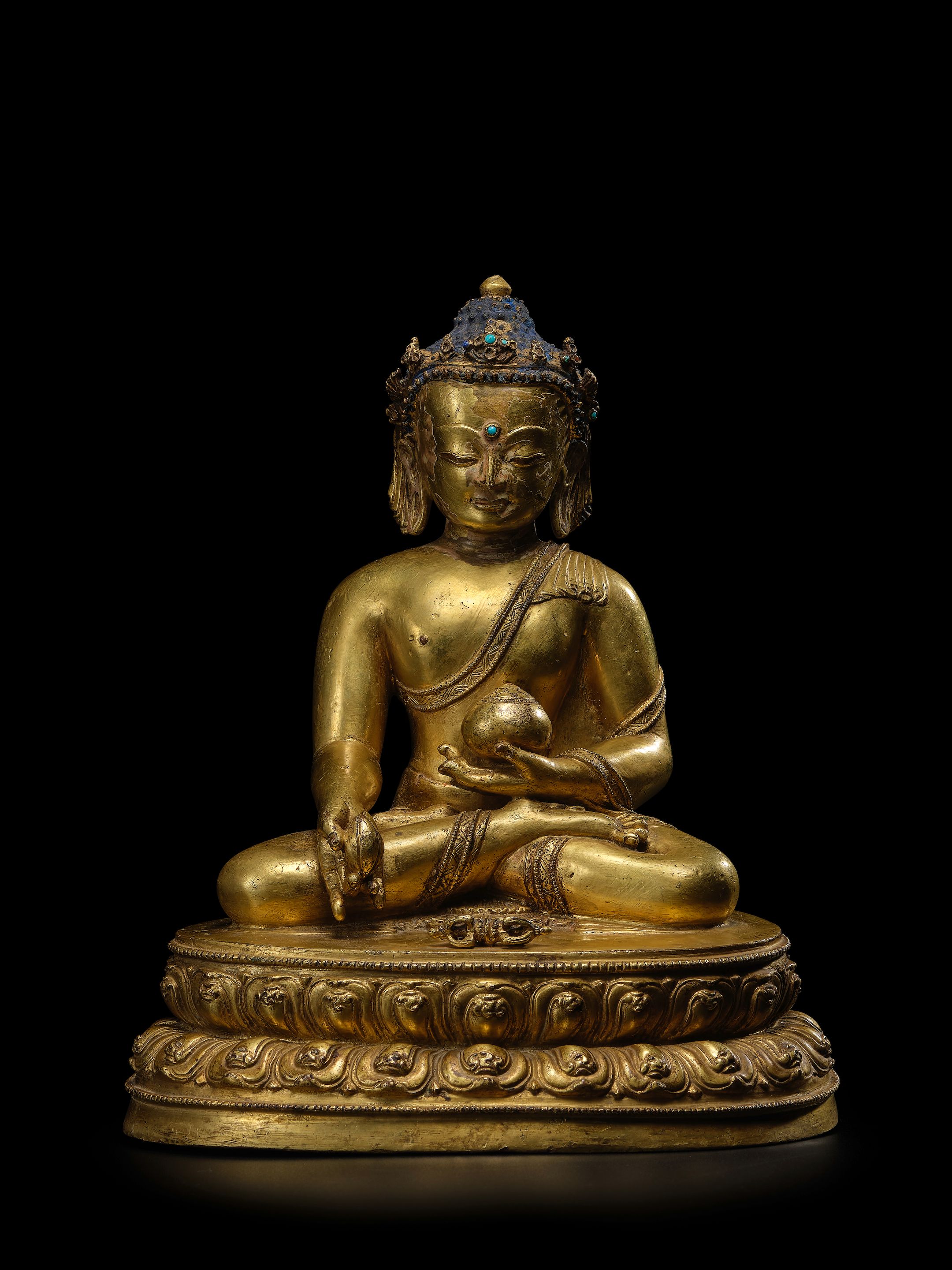
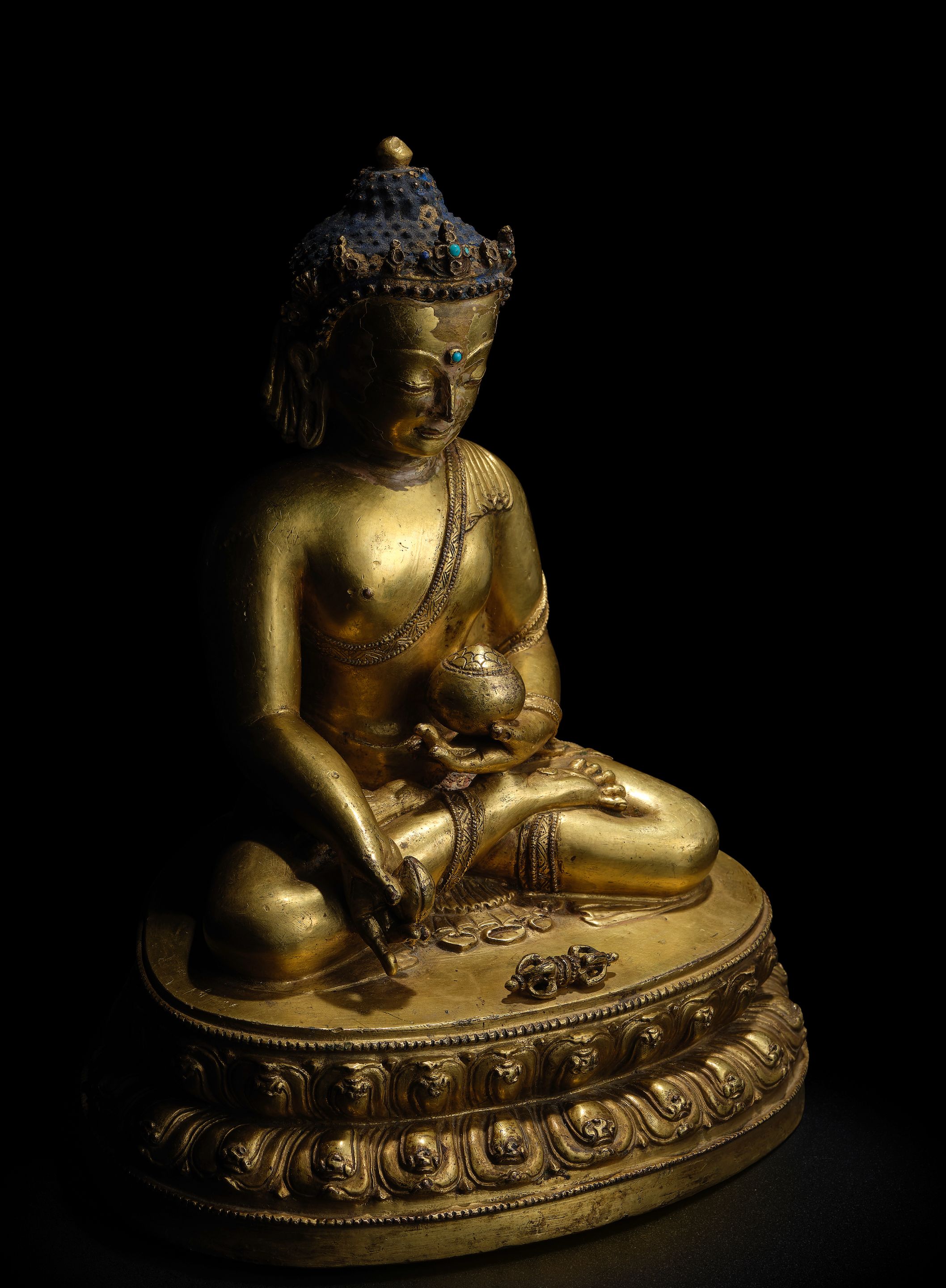
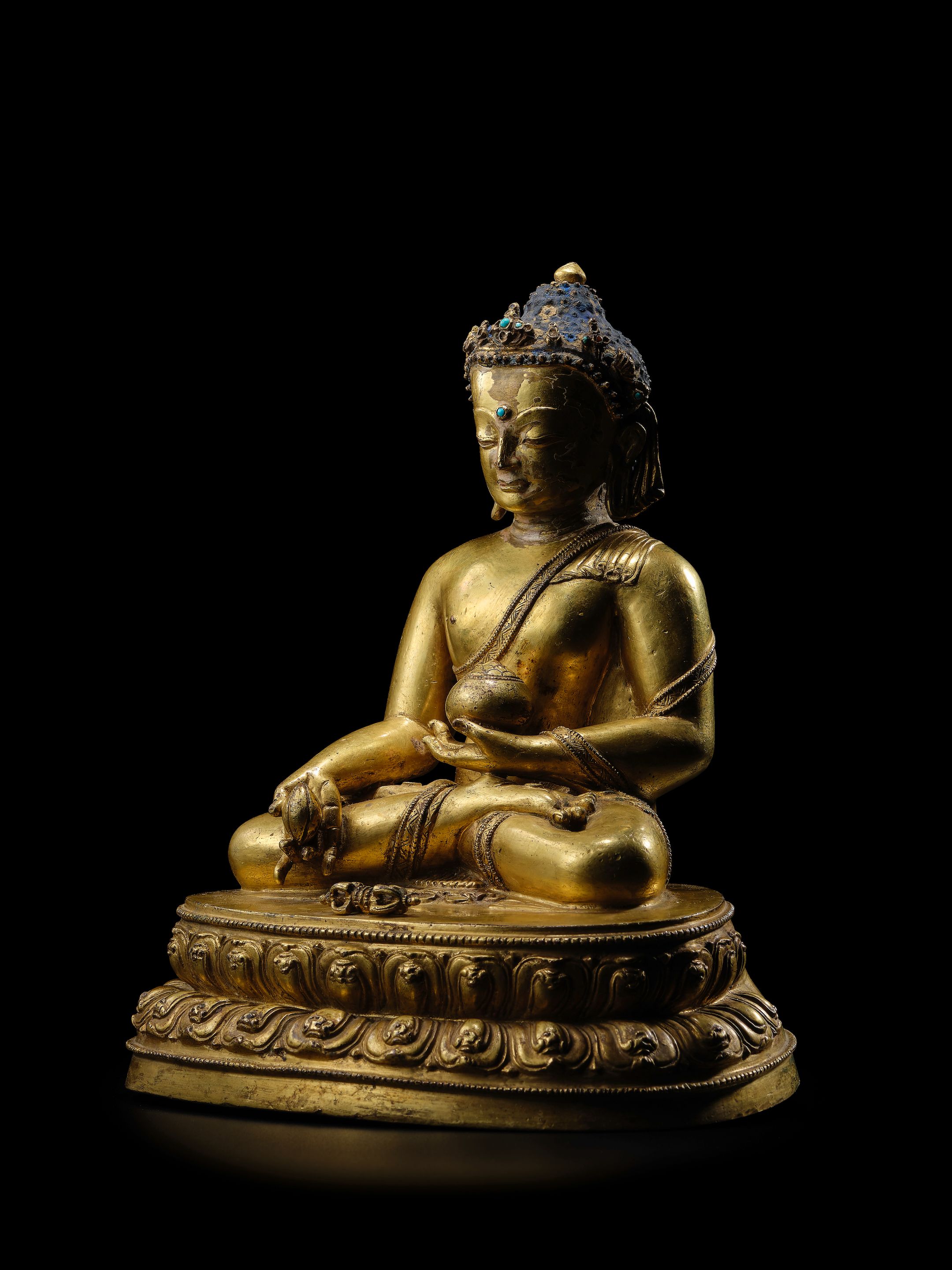 A GILT COPPER ALLOY FIGURE OF BHAISHAJYAGURU
TIBET, 14TH/15TH CENTURY
Himalayan Art Resources item no. 4913
21.5 cm (8 1/2 in.) high
Footnotes
西藏 十四/十五世紀 銅鎏金藥師佛像
Provenance:
With Claude de Marteau, Brussels, by 1970s
Bhaisajyaguru, also known as the Medicine Buddha, is revered for his healing powers. Depicted as a serene and compassionate figure, Bhaisajyaguru is adorned in diaphanous robes with his right hand extended downward holding a myrobalan plant, symbolizing healing. In his left hand, he holds a begging bowl, representing his renunciation of worldly desires. Believed to possess profound knowledge of medicine and its transformative powers, his teachings emphasize the importance of cultivating both physical and mental well-being. He guides individuals on the path to enlightenment and liberates them from suffering.
Illustrating a strong Newari aesthetic, this figure captures the influence of the Khasa Malla aesthetic on Tibetan bronzes. The diminutive crown with sashes falling along the ears, wide face, robust physique, and the beaded hemline of his robe follow Khasa Malla conventions, as illustrated in two bronzes published in Heller, Early Himalayan Art, 2008, pp. 68-9, no. 12 and in von Schroeder, Indo-Tibetan Bronzes, 1981, p. 423, no. 109C. Waning control over territories by the Khasa Mallas likely instigated the migration of craftsman into Tibet during the 14th and 15th centuries.
The distinct design of the base is reminiscent of 15th century bronzes from the Yongle and Xuande periods. Tibetan Buddhism became more widespread when the Mongols of the Yuan dynasty (1279-1368) ruled China. This favored position continued during the early Ming dynasty and reached its peak under the reign of the Yongle Emperor (1403-21), who was a devout follower of Tibetan Buddhism. The flourish along the tips of broad lotus petals with beading above and below compares favorably to a Xuande figure of Avalokiteshvara, sold in Sotheby's, New York, 16 September 2008, lot 173. Another example of this pedestal type can be found on a large standing bodhisattva in Musée Cernuschi (see Ming: 50 Years that Changed China, 2014, fig. 205).