明代合金铜药师佛(巴黎苏富比)
尺寸:高40.1cm
年代:明代
质地:铜
风格:中原
来源:拍卖会
成交:127,000欧元(2023.06)
参阅:外部链接
鉴赏:
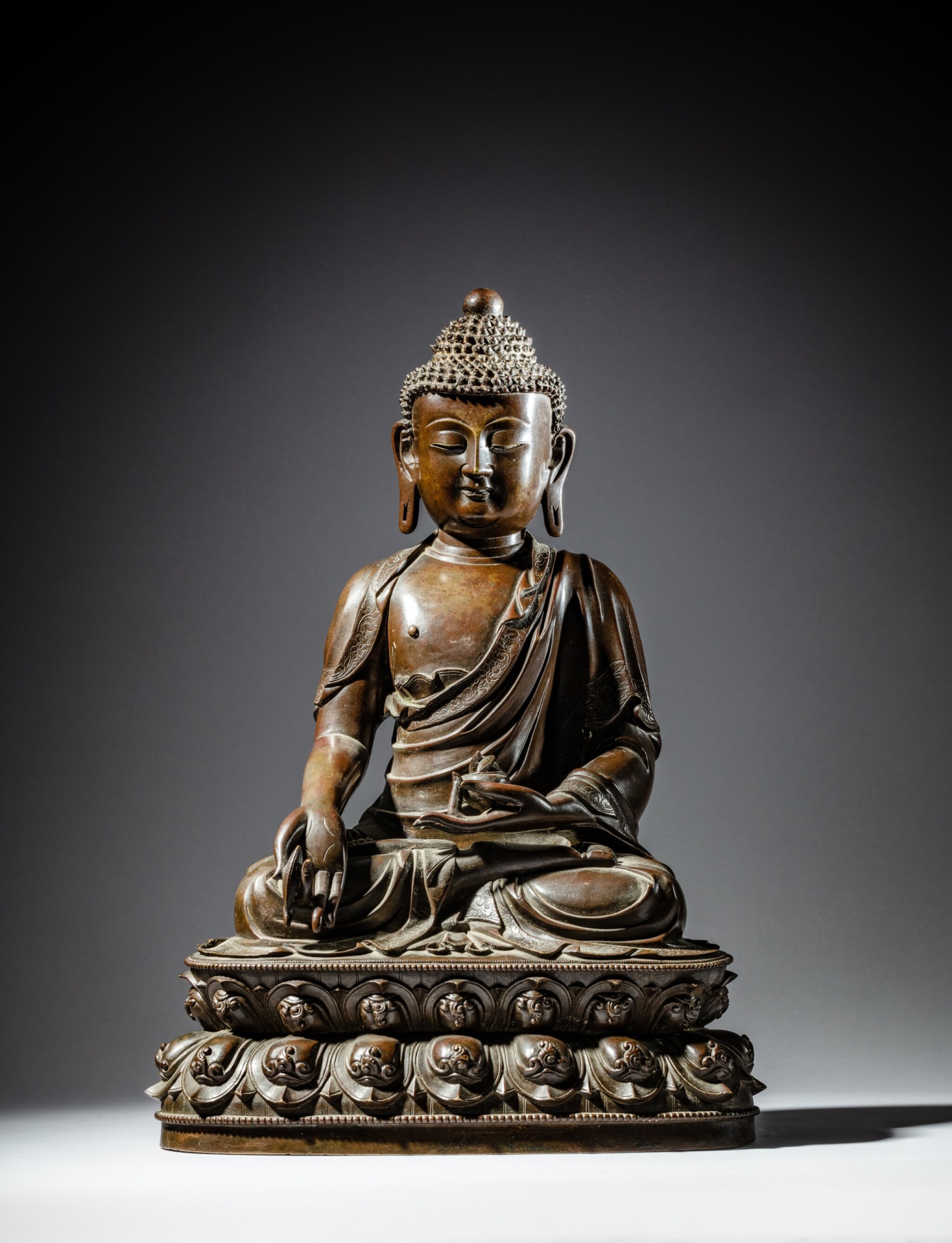 明十五至十六世紀 銅藥師佛坐像
Please note that the dating has been changed. The guarantee line should read “Ming dynasty, 15th - 16th century” and not “Ming dynasty, 16th century” as indicated in the catalogue. / Veuillez noter que la datation a été changée. La date est dynasty Ming, 15e-16e siècle, pas comme indiqué sur le catalogue imprimé. / 敬請注意,本拍品年代已更正,為明十五至十六世紀,非紙上圖錄所印。
The Medicine Buddha is worshipped according to the ancient Indian text of the bhaishajyaguru sutra, traditionally believed to have been taught by Shakyamuni Buddha. The popularity of the Medicine Buddha in Chinese worship is evident in the large ca. 1319 Bhaishajyaguru mural from Lower Guangshengsi, Shanxi Province, see James C. Y. Watt, The World of Khubilai Khan: Chinese Art in the Yuan Dynasty, New York, 2010, p. 89, fig. 118; the large and important inscribed gilt bronze Bhaishajyaguru dated first year of Jingtai (1450) in the Capital Museum, see Han Yong, Gems of Beijing Cultural Relics Series: Buddhist Statues I, Beijing, 2001, pp. 153-54, pls. 115-17: and in the number of Qing period fifty-one deity three-dimensional Bhaishajyaguru mandalas, such as the almost-complete set of bronzes in the State Hermitage, St. Petersburg, see Marylin M. Rhie & Robert A. F. Thurman, Wisdom and Compassion: The Sacred Art of Tibet, London, 1991, cat. no. 134.
The classic early Ming style of the loosely draped cloth of the Buddha’s robe falling in elegant, pleated folds on the lotus base, and the flourish on the tips of the petals of the double lotus pedestal suggest a late fifteenth date century for this finely cast and engraved bronze of the Medicine Buddha.