13世纪大理国铜鎏金阿嵯耶观音菩萨立像(伦敦V&A博物馆)
尺寸:H. 28.5cm
年代:13世纪(1200-1250) 大理国时期
质地:铜鎏金
风格:大理
来源:伦敦V&A博物馆
参阅:外部链接
鉴赏:
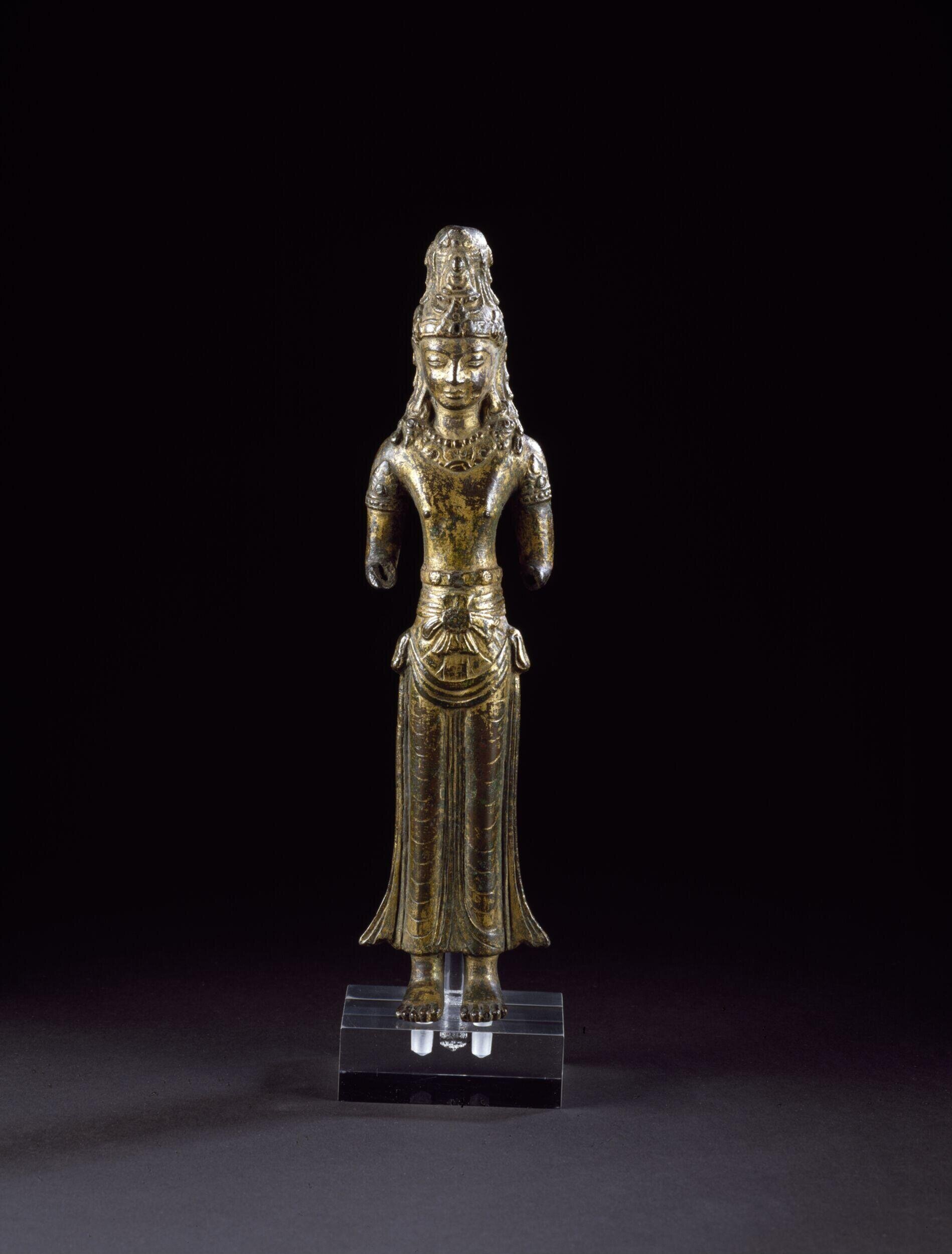 This Bodhisattva is known as Guanyin Acuoye, who was a deity worshipped in the 13th century in Dali Kingdom, in present-day Yunnan province.
This gilt bronze piece is a rare and distinctive Buddhist figure made in the Yunnan region of south-west China in a style reflecting influences from India, Tibet, Burma, China and south-east Asia. At the time it was cast, between 1200-1250, Yunnan was an independent kingdom ruled by the Duan family. The figure represents Avalokitesvara (or Guanyin in Chinese), one of the holy beings (or Bodhisattvas) of the Buddhist tradition who has obtained the final enlightenment, but chosen to return to earth to help humanity. The Duan kings believed that an Indian monk of the 7th century, who was said to have introduced Buddhism to the kingdom, was actually the embodiment of the Bodhisattva Guanyin. He took the form of an Indian monk, hence the princely Indian dress of this figure. Images of Bodhisattvas were used in temples and shrines, and were particularly popular among devotees. Guanyin is specifically associated with the virtue of compassion and was considered a tutelary divinity for the royal house.
这尊菩萨像被称为“阿嵯耶观音”,是13世纪大理国(位于今云南省)时期供奉的佛教造像。
此件鎏金铜像是一件罕见而独特的佛教造像,出自中国西南云南地区,其风格融合了印度、西藏、缅甸、中原及东南亚的艺术元素。铸造于公元1200年至1250年间,当时云南是由段氏家族统治的独立王国。这尊造像表现的是观世音菩萨(梵文Avalokitesvara),即佛教传统中已证得究竟觉悟、却选择重返人间度化众生的圣者之一。段氏国王坚信,7世纪那位将佛教传入大理国的印度僧侣,实为观音菩萨的化身。菩萨化现为印度僧形,故此像身着印度王子式装束。菩萨像供奉于寺庙佛堂,深受信众尊崇。观音菩萨以慈悲德行闻名,被尊为皇家护法神祇。
展览:
exhibited in Ghent 1979-80