16世纪西藏铜鎏金嵌银金刚总持(纽约佳士得)
尺寸:高29.8cm
年代:16世纪
质地:铜鎏金嵌银
风格:西藏
来源:拍卖会
成交:20,000美元(2018.09)
参阅:纽约佳士得
鉴赏:
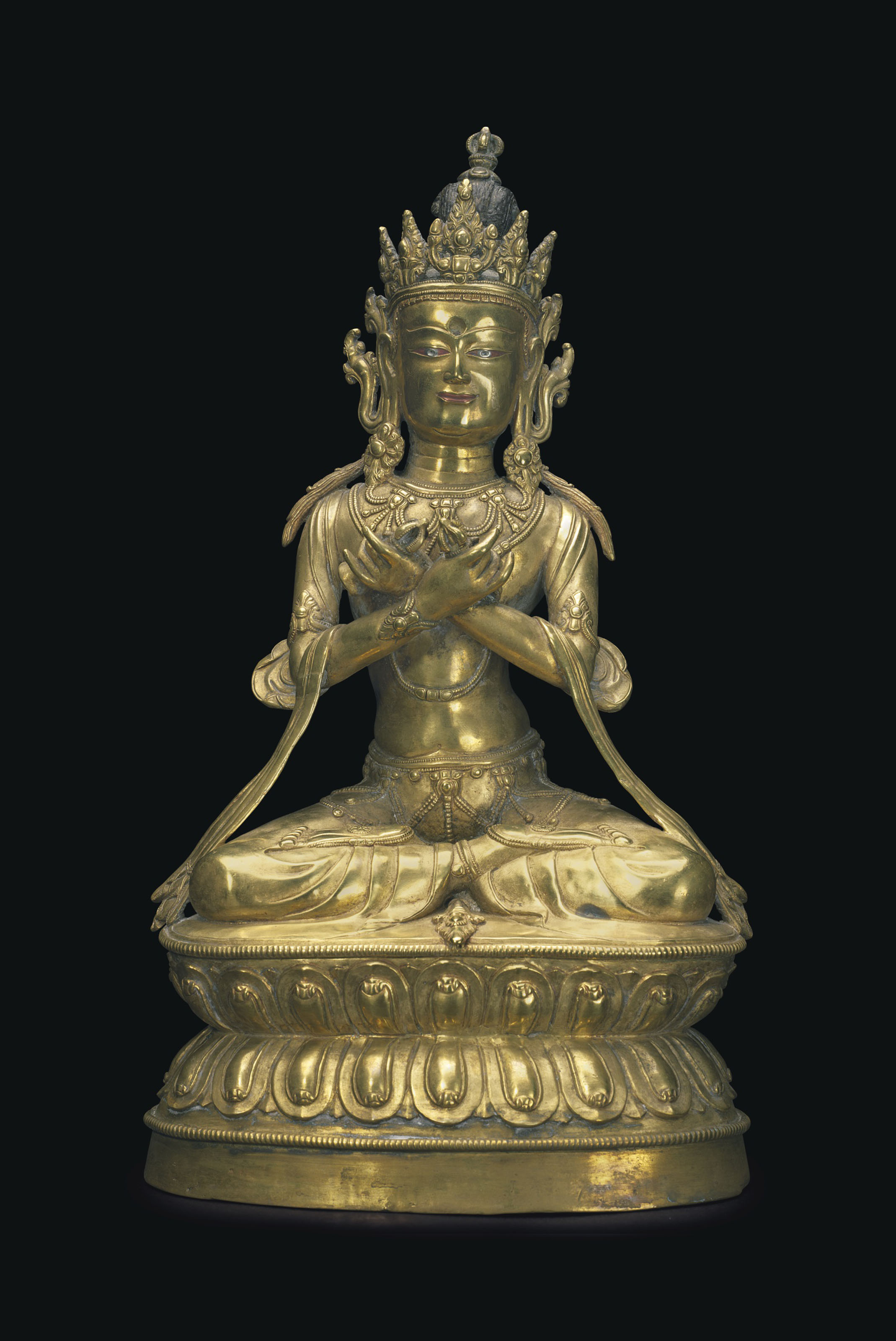 A SILVER- AND COPPER-INLAID GILT-BRONZE FIGURE OF VAJRADHARA
TIBET, TSANG PROVINCE, 16TH CENTURY
11 ¾ in. (29.8 cm.) high
Lot Essay
With hands in vajrahumkara, the primordial buddha Vajradhara in bodhisattva garb, holds a ghanta (Tib. dril bu) symbolizing the female aspect of wisdom and a vajra (Tib. rdo rje) symbolizing the male aspect of skillful means and compassion. This important Tibetan Buddhist deity is understood as the primary and ceaseless source of Vajrayana teachings. The present example has a remarkably tranquil posture and countenance with slightly-upturned lips and half-closed eyes that resemble a number of other examples attributed to South-central Tibet. It is distinguished, however, by its carefully-inlaid bits of silver and copper that give a brightness to the face. The figure’s facial features are quite similar and its ornaments nearly identical to the figure of Vajradhara in the collection of the Rubin Museum of Art, which is also dated to this period (C2005.37.1). By the 16th century, when these two examples were likely created, this particular atelier seems to have already established a discernable style, integrating features of other schools including the early-15th-century Yongle and Xuande gilt-bronzes of China.
双手结金刚哞迦罗印,以菩萨装束示现的本初佛金刚总持,手持象征女性智慧面向的金刚铃(藏文:dril bu),以及象征男性善巧方便与慈悲面向的金刚杵(藏文:rdo rje)。这位重要的藏传佛教本尊,被认为是金刚乘教法根本且无间断的源泉。此尊造像的姿态与面容异常宁静,嘴唇微扬,双目半阖,与一些归为藏中南部地区的其他作品相似。然而,其独特之处在于精心镶嵌的银与铜片,为面部增添了明亮的光彩。造像的面部特征与鲁宾艺术博物馆收藏的一尊金刚总持像(C2005.37.1)极为相似,其饰物也几乎相同,该馆藏造像同样被断代于此时期。到16世纪(这两件作品很可能创作于此时),这一特定作坊似乎已经形成了一种可辨识的风格,融合了包括中国15世纪早期永乐和宣德时期鎏金铜像在内的其他流派的特征。