6-7世纪新疆泥塑菩萨头像(纽约大都会博物馆)
尺寸:22.9 x 15.2 x 12.7 cm
年代:6-7世纪
质地:Red clay with traces of color
风格:新疆
来源:纽约大都会博物馆
参阅:外部链接
鉴赏:
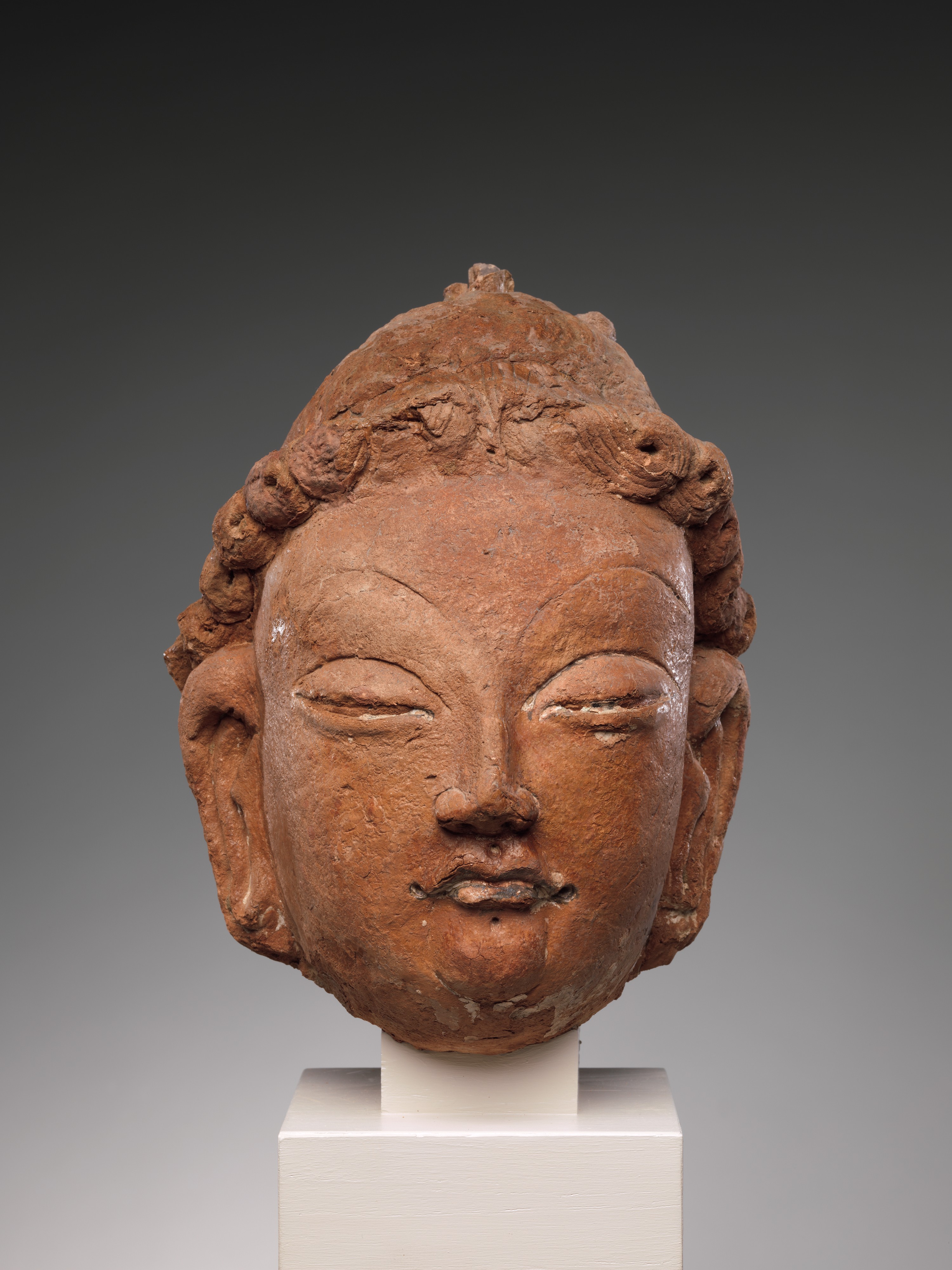
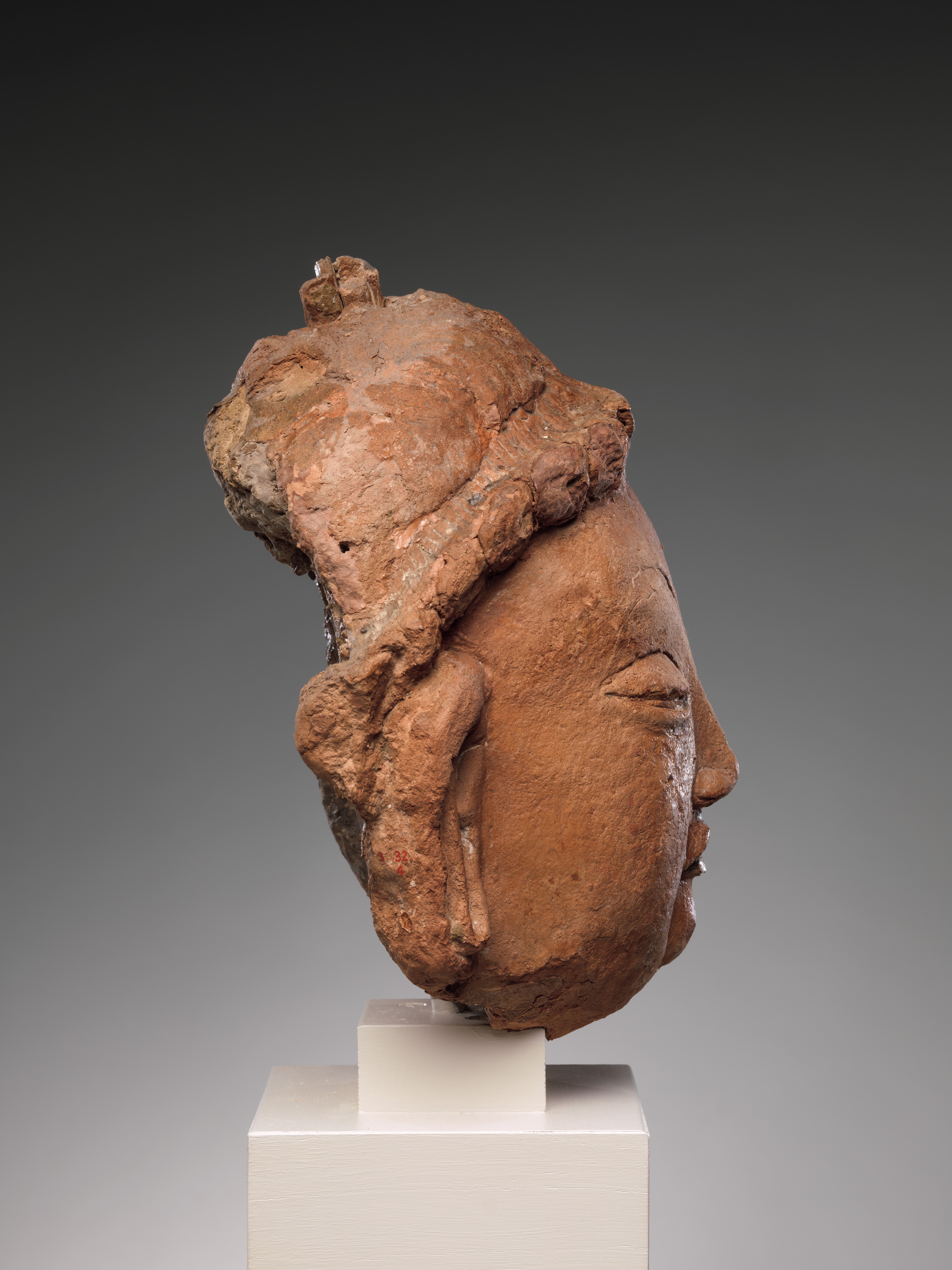
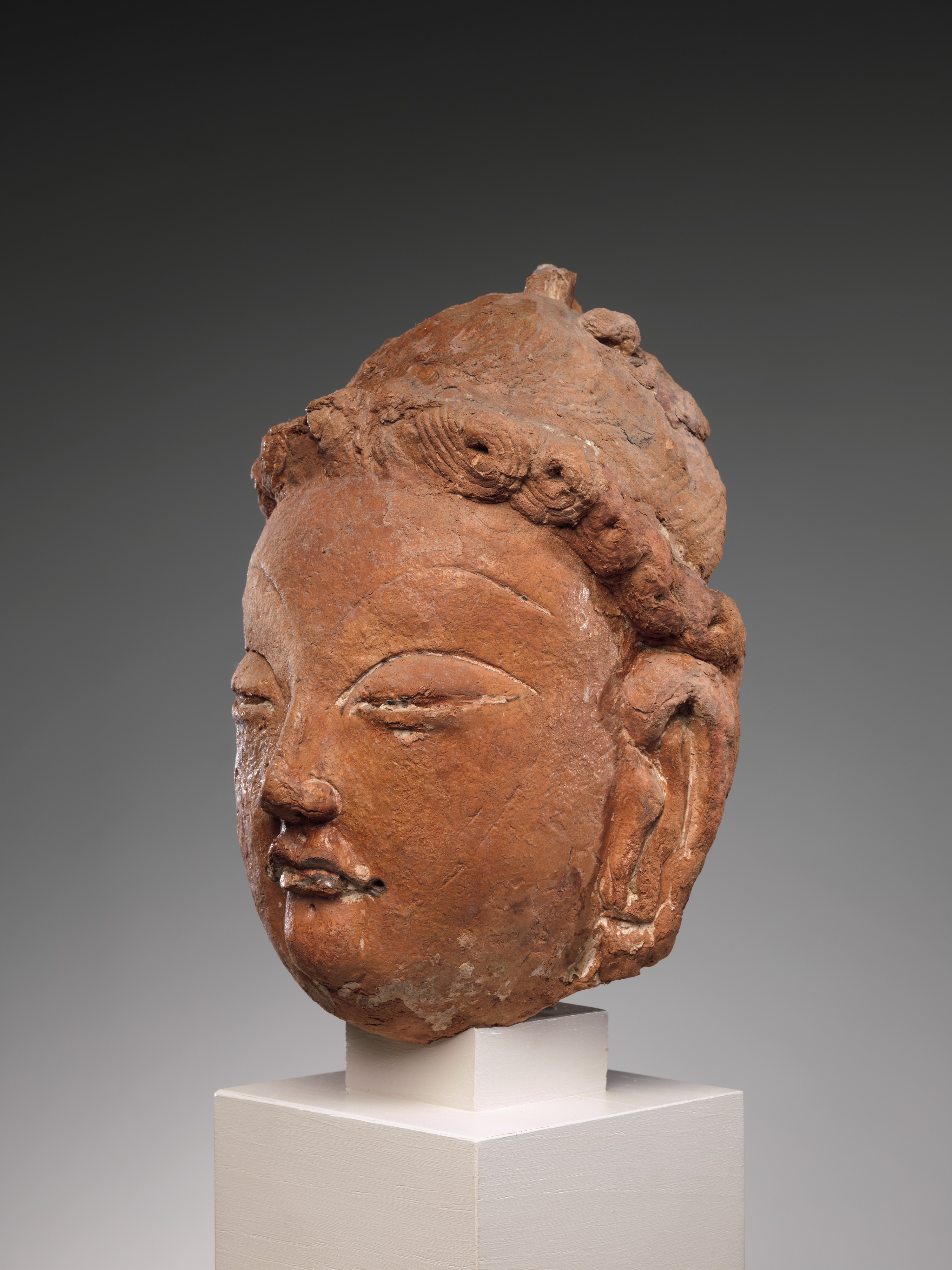
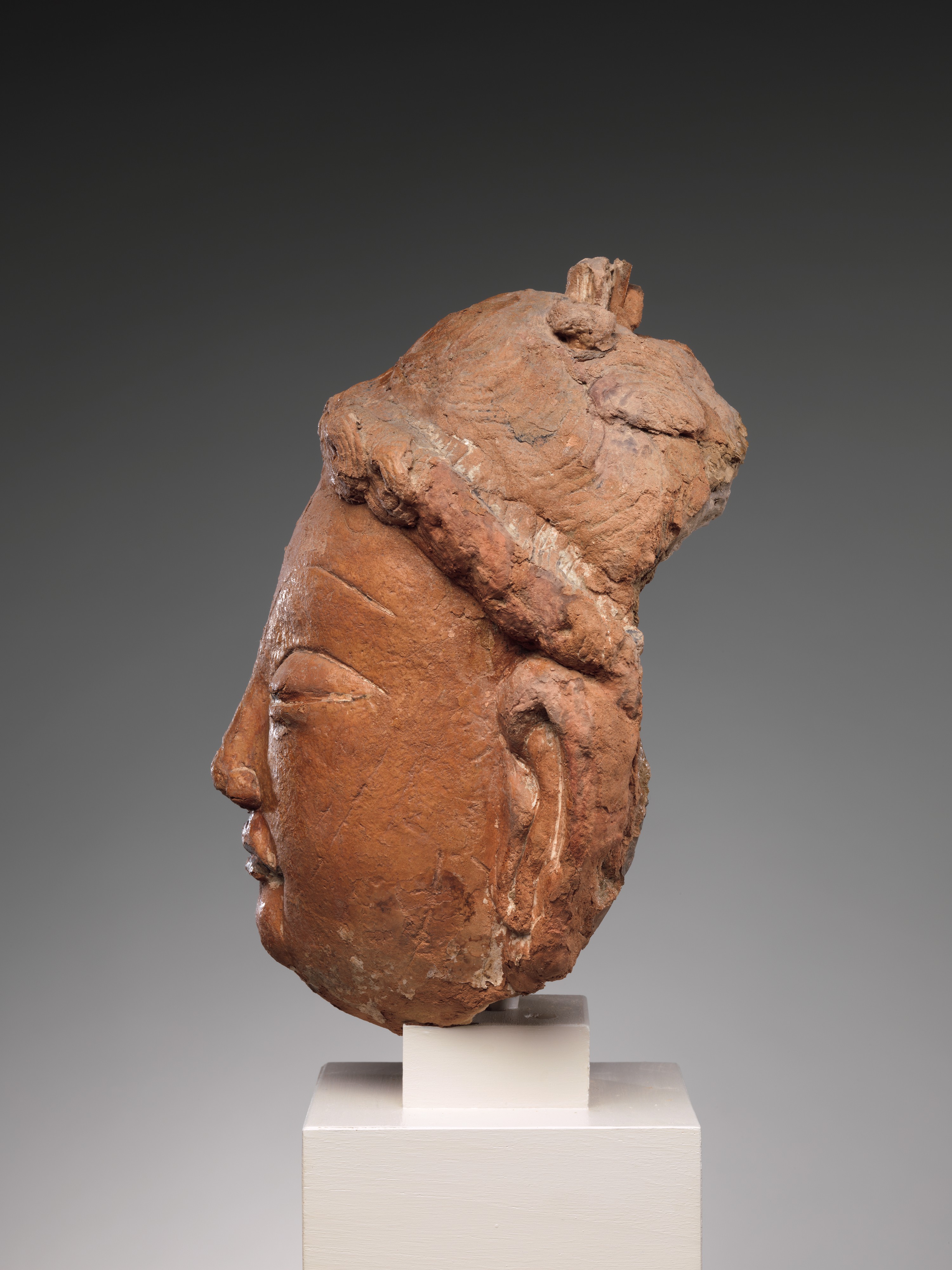
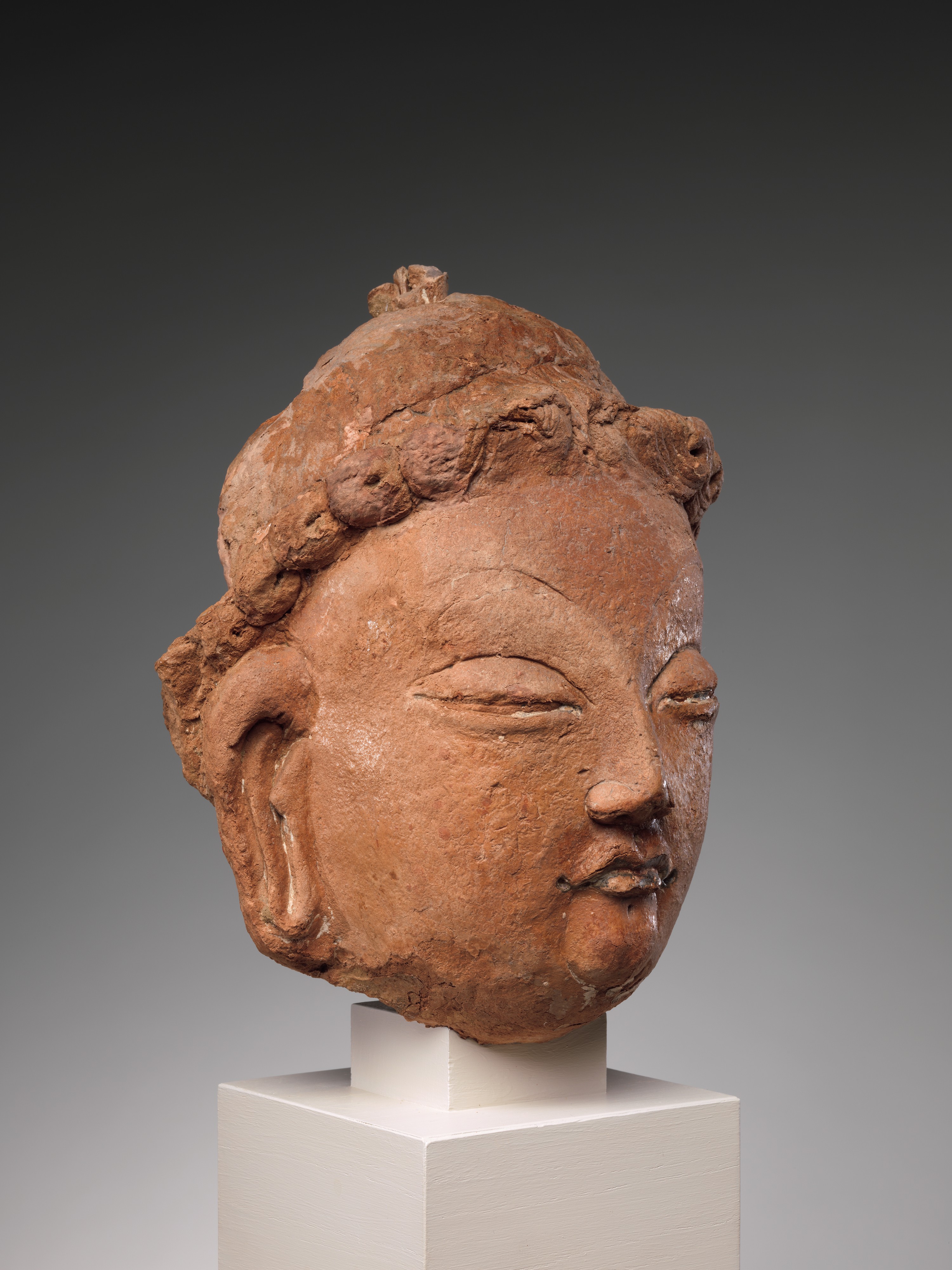
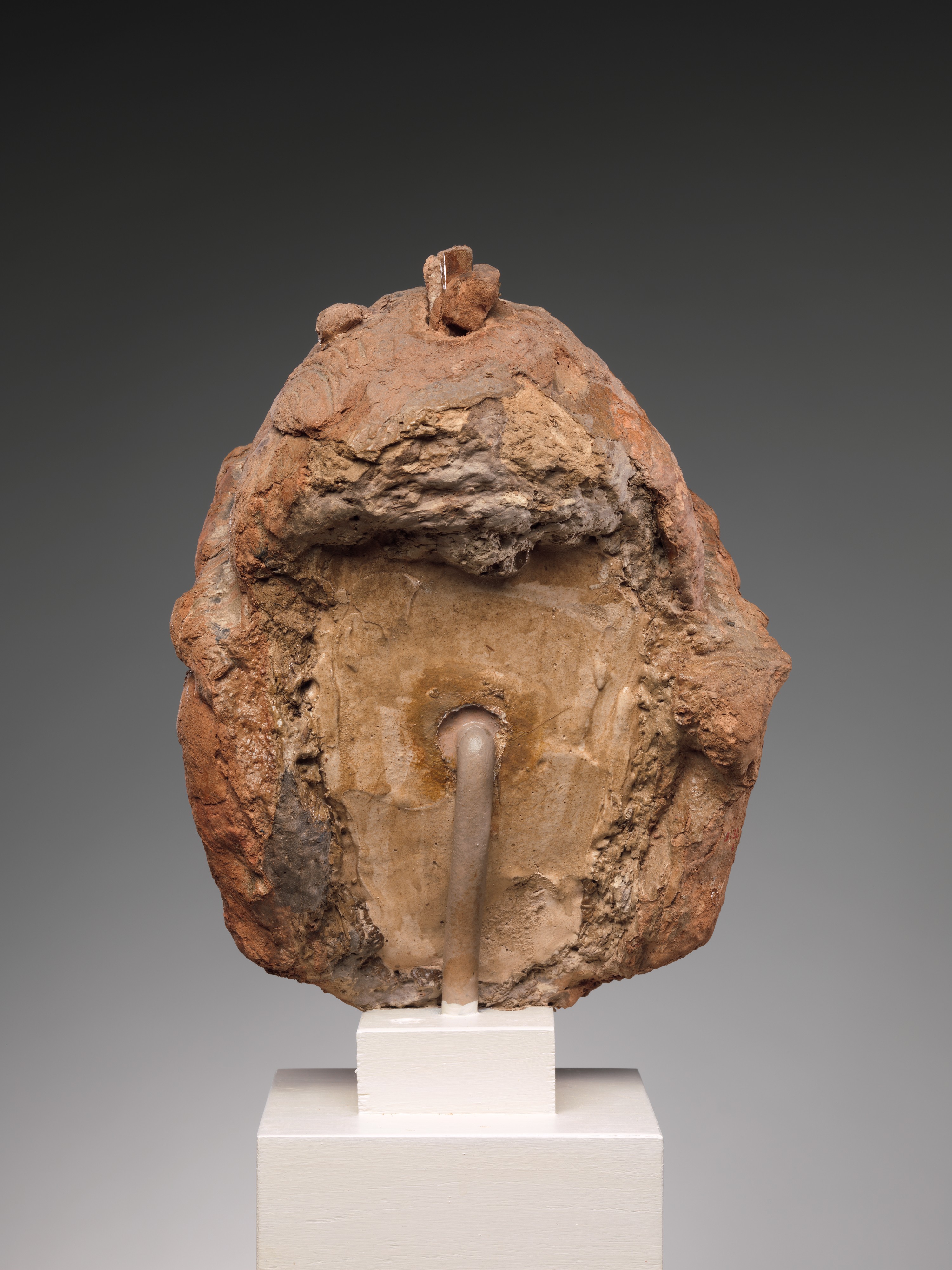 Head of a Bodhisattva
China (Xinjiang Autonomous Region)
6th–7th century
The delicate modeling of the hair and face provide a sense of the sophisticated sculptural production at Rawak. Early photographs show that this bodhisattva originally had an elaborate topknot, suggestive of the figure of the future Buddha Maitreya. This bodhisattva also had flowers in his hair, earrings, and an elaborate halo embellished with multiple Buddha images (similar to 30.32.33 and 30.32.44). The use of unfired red clay is a technical feature shared with late Afghan Buddhist imagery.
来源:
Site of Rawak Stupa
[ Emil Trinkler , Bremen, Germany, excavated or purchased in Tibet or Turkestan during 1927–1928 Trinkler expedition; sold to Kleijkamp by 1930]; [ Jan Kleijkamp , New York, by 1930, sold to MMA]
展览:
New York. The Metropolitan Museum of Art. “Buddhism Along the Silk Road,” June 2, 2012–February 10, 2013.
著录:
Stein, M. Aurel. Ruins of Desert Cathay: Personal Narrative of Explorations in Central Asia and Westernmost China. London: Macmillan and Co., Limited, 1912.
Bosshard, Walter. Durch Tibet und Turkistan: Reisen im unberührten Asien. Stuttgart: Strecker und Schröder, 1930.
Trinkler, Emil. Im Land der Stürm, mit Yak und Kamelkarawanen durch Innerasian. Leipzig: F. A. Brockhaus, 1930, pp. 143–60.
Priest, Alan. Chinese Sculpture in The Metropolitan Museum of Art. New York: The Metropolitan Museum of Art, 1944, p. 38, cat. no.39, pl. LXXXI.