9世纪斯瓦特风格黄铜莲花手观音坐像(美国鲁宾艺术博物馆)
尺寸:5 × 3 5/8 × 2 3/8 in
年代:9世纪
质地:黄铜
风格:斯瓦特
来源:美国鲁宾艺术博物馆
参阅:外部链接
鉴赏:
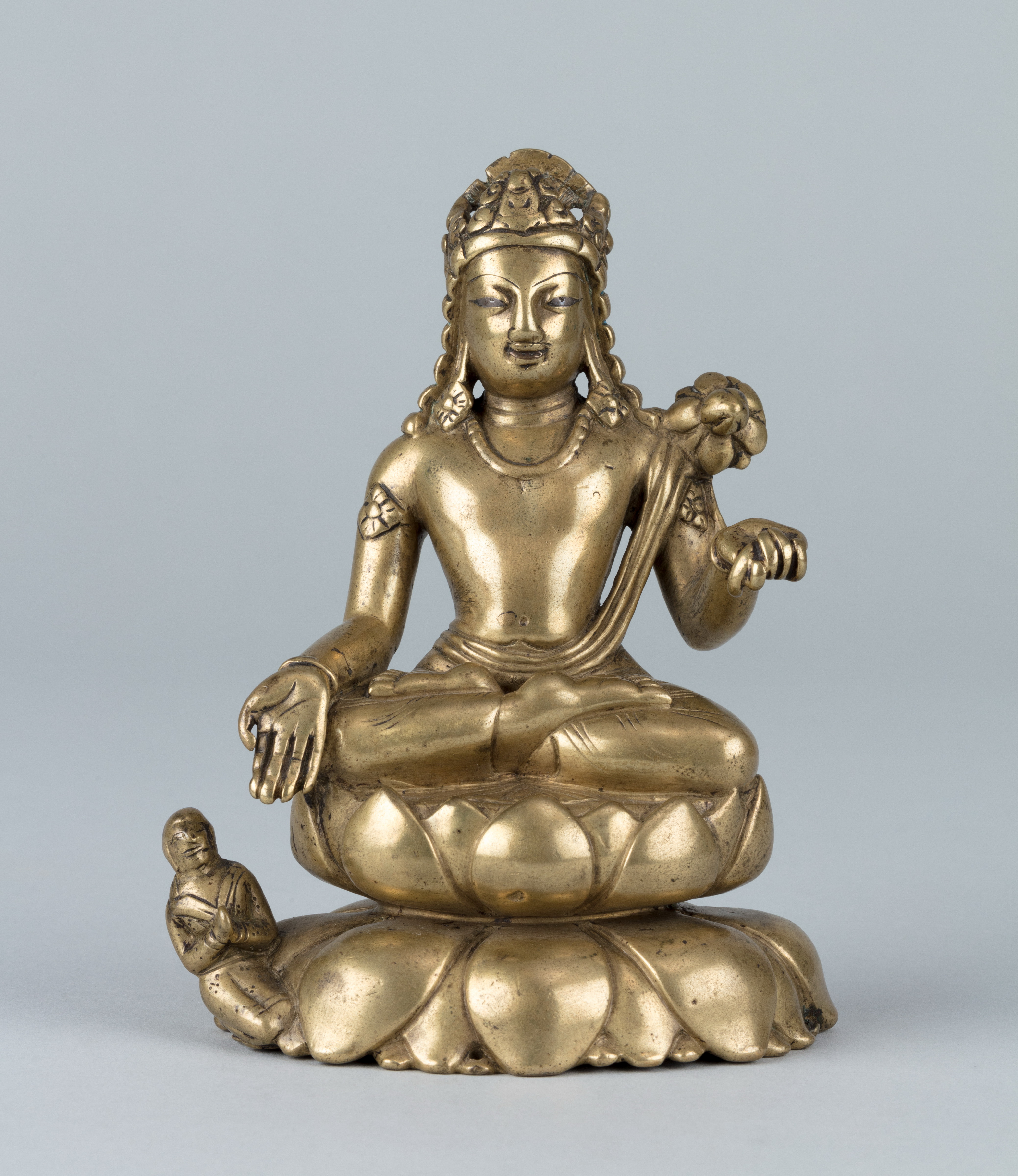


 Avalokiteshvara Padmapani
Swat region (present day Pakistan)
ca. 9th century
This small sculpture shows the bodhisattva Avalokiteshvara in an artistic convention that developed in the northern Himalayan regions now within Pakistan’s borders. Buddhism flourished in that area during the seventh and eighth centuries and the arts and artisans who created art in various mediums were renowned in neighboring regions. Some of these artists are said to have later traveled to Tibet, whose royalty newly encountered Buddhism and were beginning to embrace Buddhist culture. In general Tibetans greatly treasured ancient images from India, and they are often recorded in monastic registries as objects that are passed down from master to disciple or as specially venerated images for which the monastery may even be famous. Sometimes Tibetan artists would reproduce the older Indian models by making a mold of them and then recasting. This sculpture has a Tibetan inscription on its base stating that it’s the thirty-fifth, possibly implying it is part of a set or a collection, and that the deity portrayed is Chenrezig, the Tibetan name for Avalokiteshvara.
著录:
J. Van Alphen, Collection Highlights: Rubin Museum of Art (Rubin Museum of Art, 2014), 248-249.