19世纪西藏铜银鎏金十一面观音(美国Walters艺术博物馆)
尺寸:109.2 x 49.5 x 30.5 cm
年代:19世纪
质地:铜银鎏金
风格:西藏
来源:美国Walters艺术博物馆
参阅:外部链接
鉴赏:
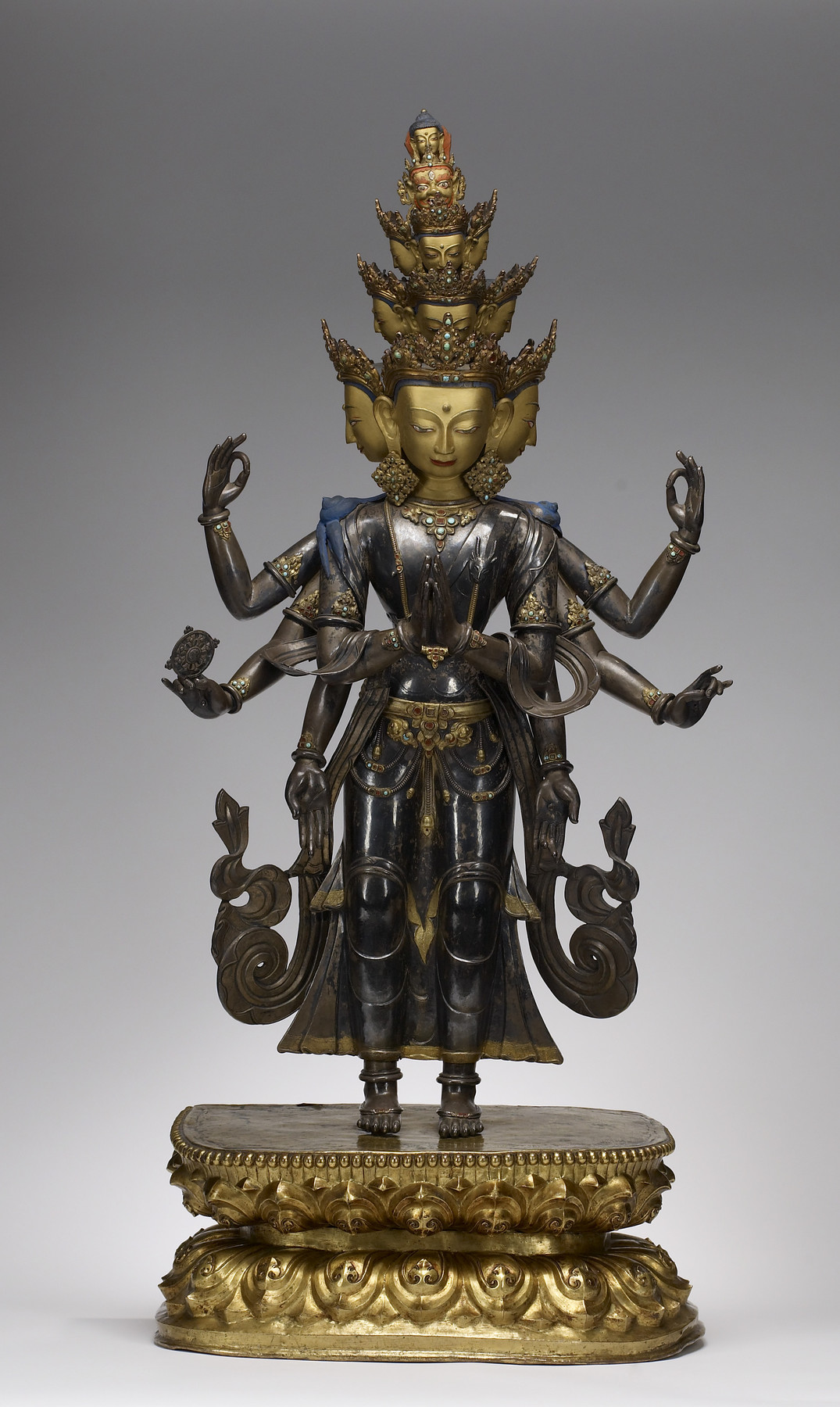
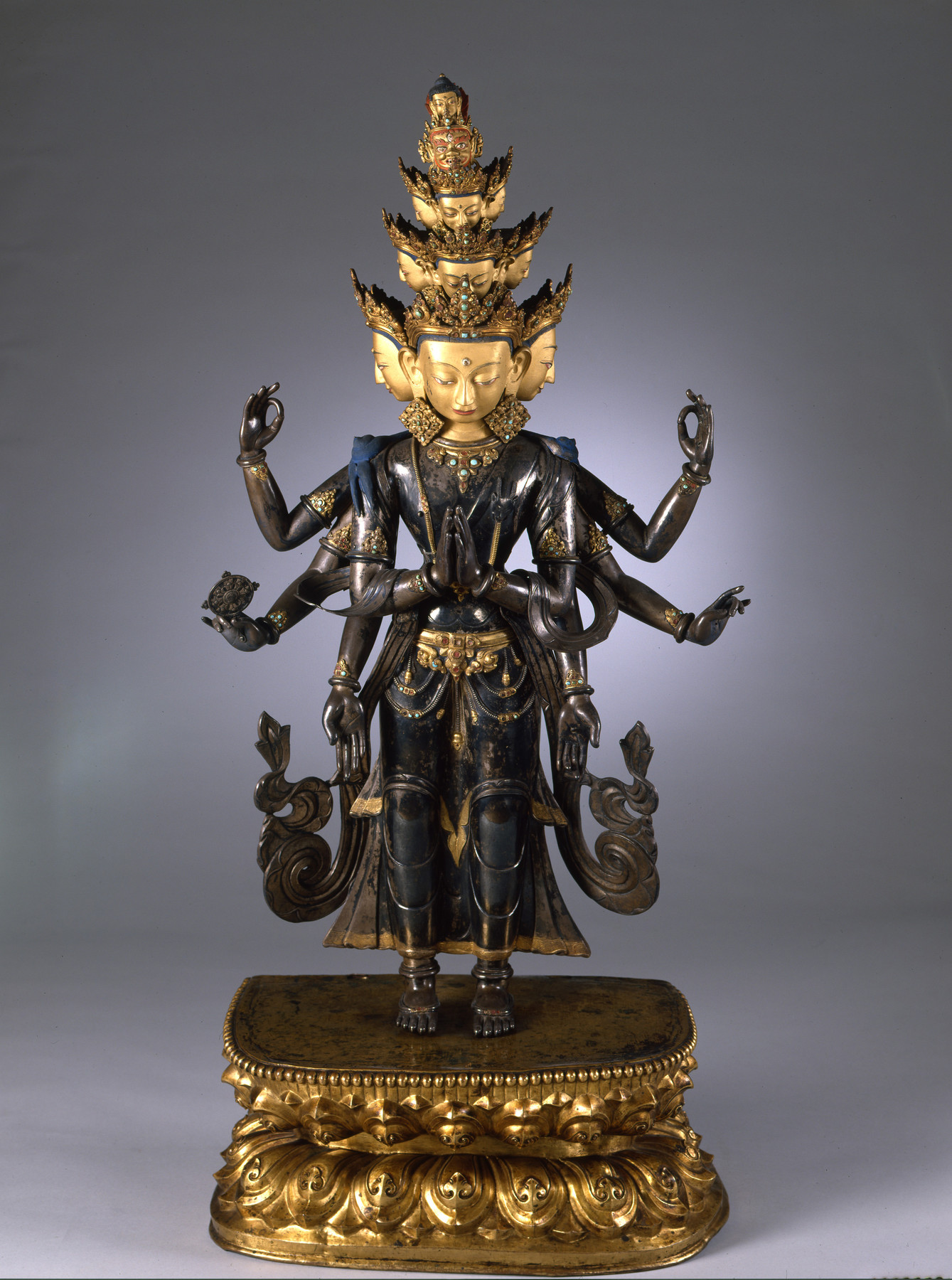
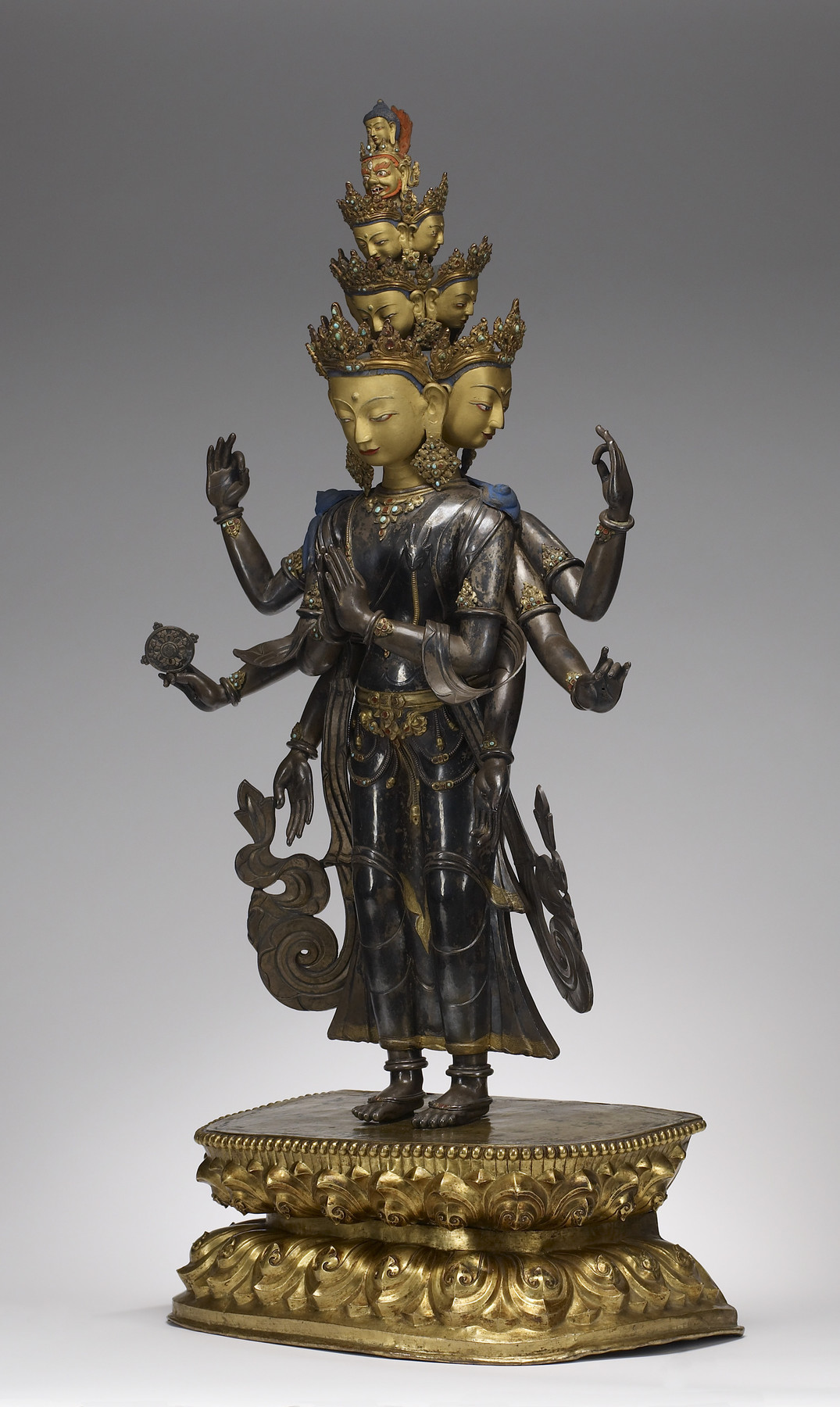
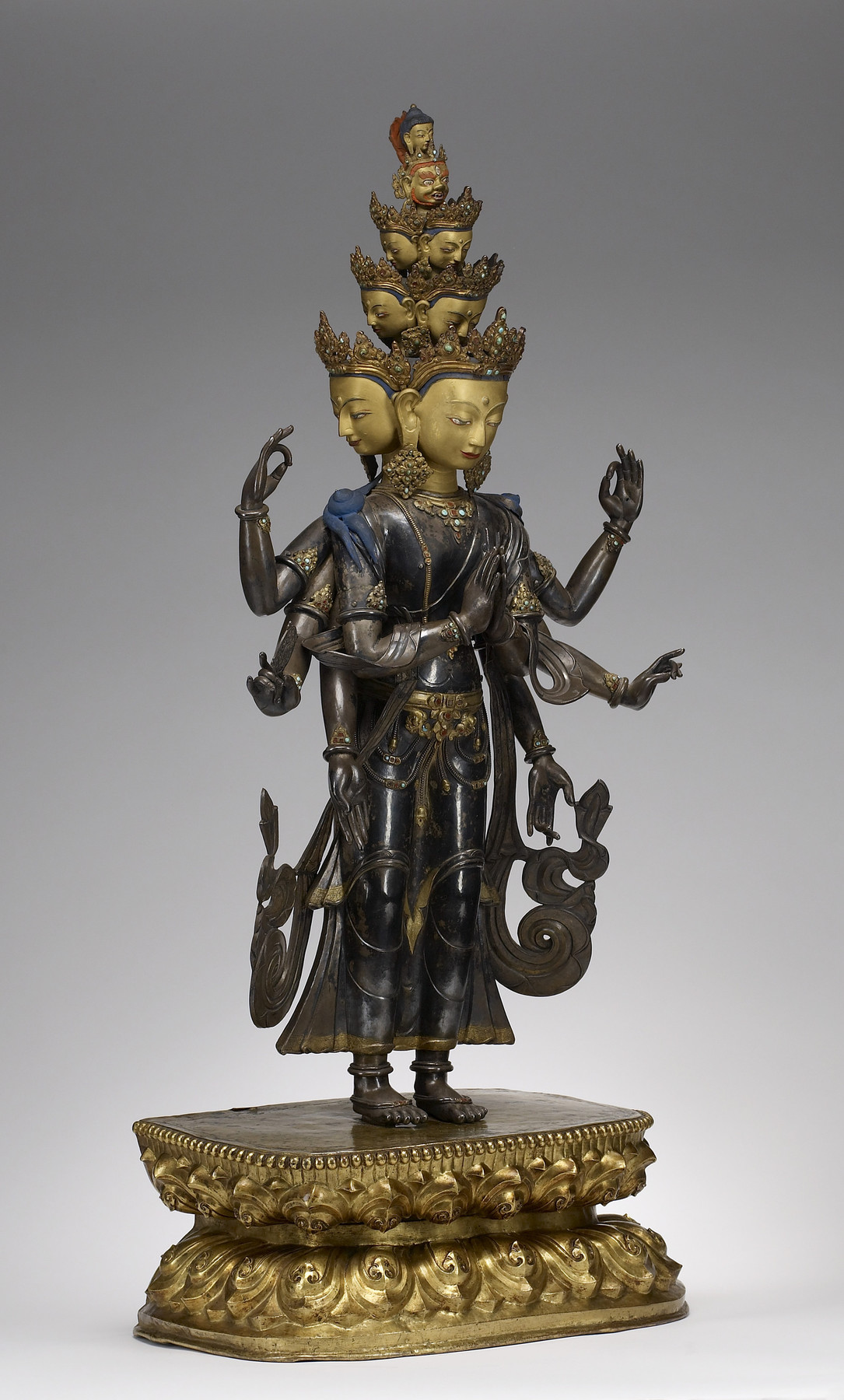

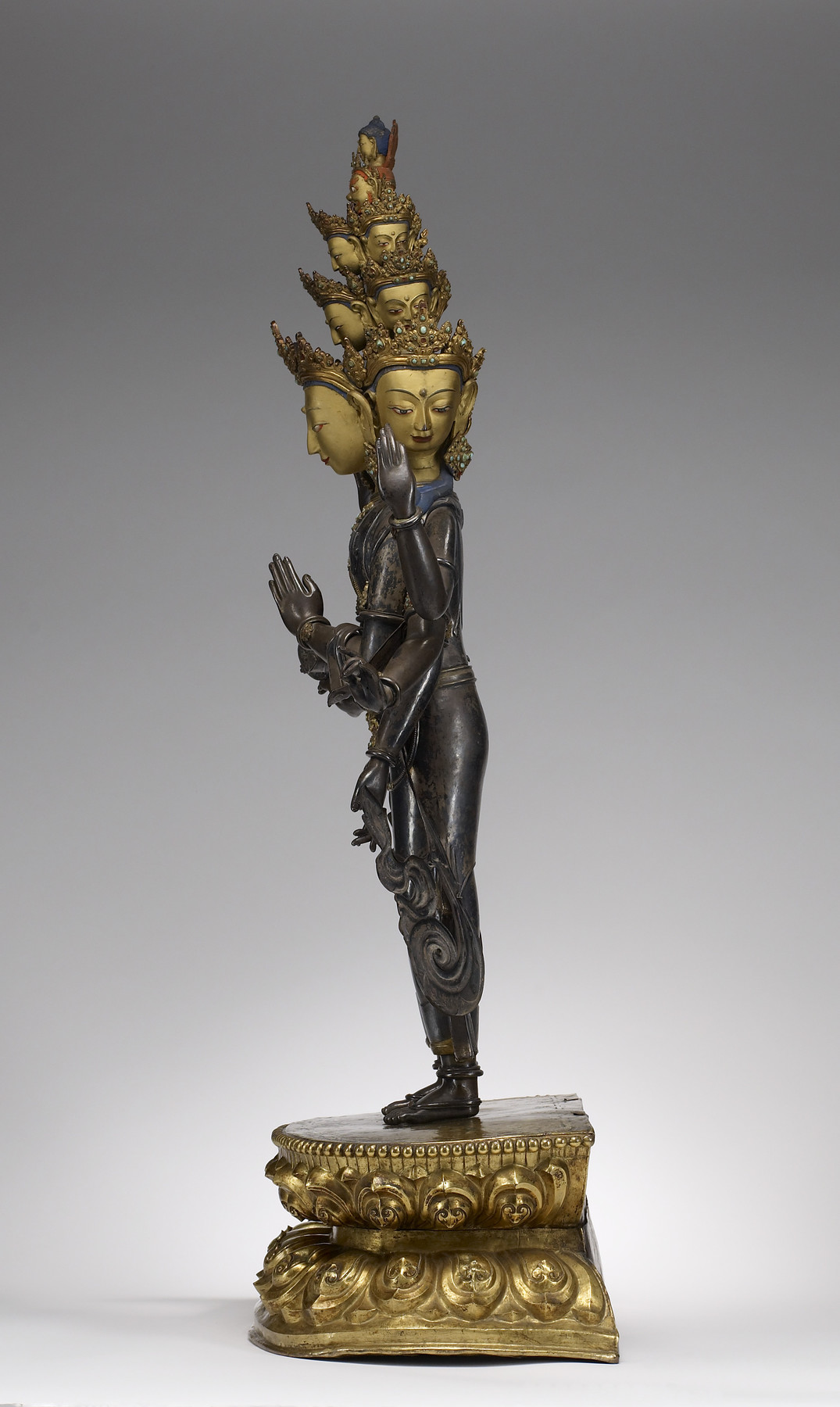

Eleven-Headed Avalokiteshvara
Tibetan (Artist)
ca. 1800
silver, gilded silver, gilded copper, paint, and semiprecious stones
两百余年前,一位佛教住持或喇嘛将数十卷贝叶经卷严密封藏于这尊中空造像之中。此经卷装藏仪式是多重开光仪轨的重要组成,旨在迎请慈悲之主观世音菩萨灵应住锡。虽经卷本不示人,然透过台座背部孔洞,仍可见朱墨题写的经文字迹。
此尊观音示现八臂法相,表诠八方三际;十一面首叠呈,既象征十方世界,又暗喻上中下三界。顶髻以三阶宝冠层叠,十面慈悲相环伺,一面忿怒相摄伏,最上端安住阿弥陀佛寂静尊。
More than 200 years ago, a Buddhist abbot (head monk) or lama sealed dozens of tightly rolled scrolls with sacred texts within this hollow sculpture. The offering of these texts was part of a multi-step ritual to consecrate the sculpture so that the bodhisattva Avalokiteshvara, the Lord of Compassion, would inhabit it. Although the scrolls were not meant to be visible, paper inscribed with black and red ink can be seen through small holes at the back of the base.
Avalokiteshvara is portrayed with eight arms, representing the eight directions, and eleven heads, which also signify the eight directions as well as the three vertical divisions of top, middle, and bottom. The heads are arranged in a pyramid with three rows, ten of the heads peaceful and one ferocious representing Avalokiteshvara’s angry form, which is capped by the peaceful Buddha head of Amitabha.
来源:
Rudolph Antiques, New York; purchased by John and Berthe Ford, Baltimore, February 7 1968; given to Walters Art Museum, 2012.
展览:
2001-2003 Desire and Devotion: Art from India, Nepal, and Tibet in the John and Berthe Ford Collection. The Walters Art Museum, Baltimore; Santa Barbara Museum of Art, Santa Barbara; Albuquerque Museum, Albuquerque; Birmingham Museum of Art, Birmingham; Hong Kong Museum of Art, Hong Kong.
维护:
A modern waxy coating was cleaned off the gilded copper base. Scratches on the proper right cheek of the central front face were inpainted using gold tone watercolors.