8世纪斯瓦特或克什米尔风格青铜嵌银释迦牟尼佛说法坐像(纽约大都会博物馆)
尺寸:H. 8 3/8 in. (21.3 cm)
年代:8世纪
质地:Bronze with silver inlay
风格:斯瓦特 克什米尔
来源:纽约大都会博物馆
参阅:外部链接
鉴赏:
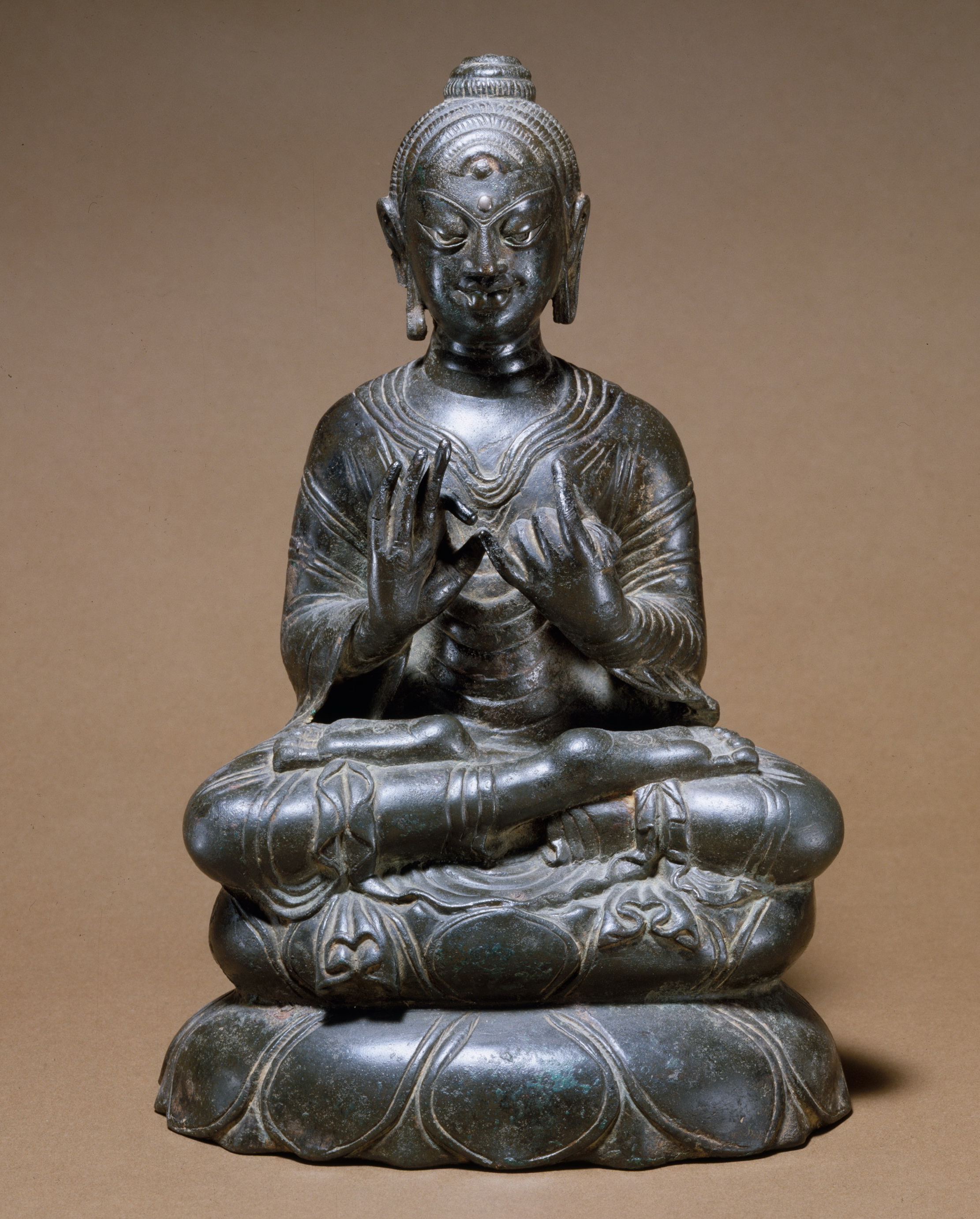 形象不同寻常
India (Jammu & Kashmir, ancient kingdom of Kashmir) or Pakistan
This Buddha, with his legs folded in a full yogic posture and his hands gesturing preaching, invokes the first sermon at Sarnath. The complex treatment of the monastic robes, most notably their pleated ends, is evidence of an unidentified monastic workshop, probably located in Kashmir or the Swat Valley. The treatment of the hair curls is unconventional, as is the extreme stylization of the eyes and eyebrow. Silver inlay marks the eyes and auspicious forehead mark (urna).
来源:
Samuel Eilenberg , New York (until 1986; donated to Columbia University); [ Columbia University , New York, 1986–1987, sold to MMA]
展览:
New York. The Metropolitan Museum of Art. “The Lotus Transcendent: Indian and Southeast Asian Art from the Samuel Eilenberg Collection,” October 2, 1991–June 28, 1992.
著录:
Lerner, Martin. Bronze Sculptures from Asia. Exh. cat. New York: The Metropolitan Museum of Art, 1975, cat. no. 6, pl. 6.
Pal, Pratapaditya. Bronzes of Kashmir. New York: Hacker Art Books, 1975, pp. 212–13, cat. no. 83.
Schroeder, Ulrich von. Indo-Tibetan Bronzes. Hong Kong: Vishual Dharma Publications, 1981, pp. 82–83, fig. 5F.
Klimburg-Salter, Deborah, and Maximilian Klimburg. The Silk Route and the Diamond Path: Esoteric Buddhist Art on the Trans-Himalayan Trade Routes. Exh. cat. Los Angeles: UCLA Art Council, 1982, p. 93, pl. 6.
Lerner, Martin, and Steven Kossak. The Lotus Transcendent: Indian and Southeast Asian Art from the Samuel Eilenberg Collection. Exh. cat. New York: The Metropolitan Museum of Art, 1991, pp. 117–18, cat. no. 88, pl. 88.
Reedy, Chandra L. Himalayan Bronzes: Technology, Style and Choices. Newark: University of Delaware Press, 1997, p. 141, fig. P13.