
侧边栏

15世纪明代永宣风格铜鎏金大日如来坐像(巴黎苏富比)
尺寸:不详
年代:明代 15世纪
质地:铜鎏金
风格:中原
来源:拍卖会
成交:847,500欧元(2016.12)
参阅:巴黎苏富比
鉴赏:
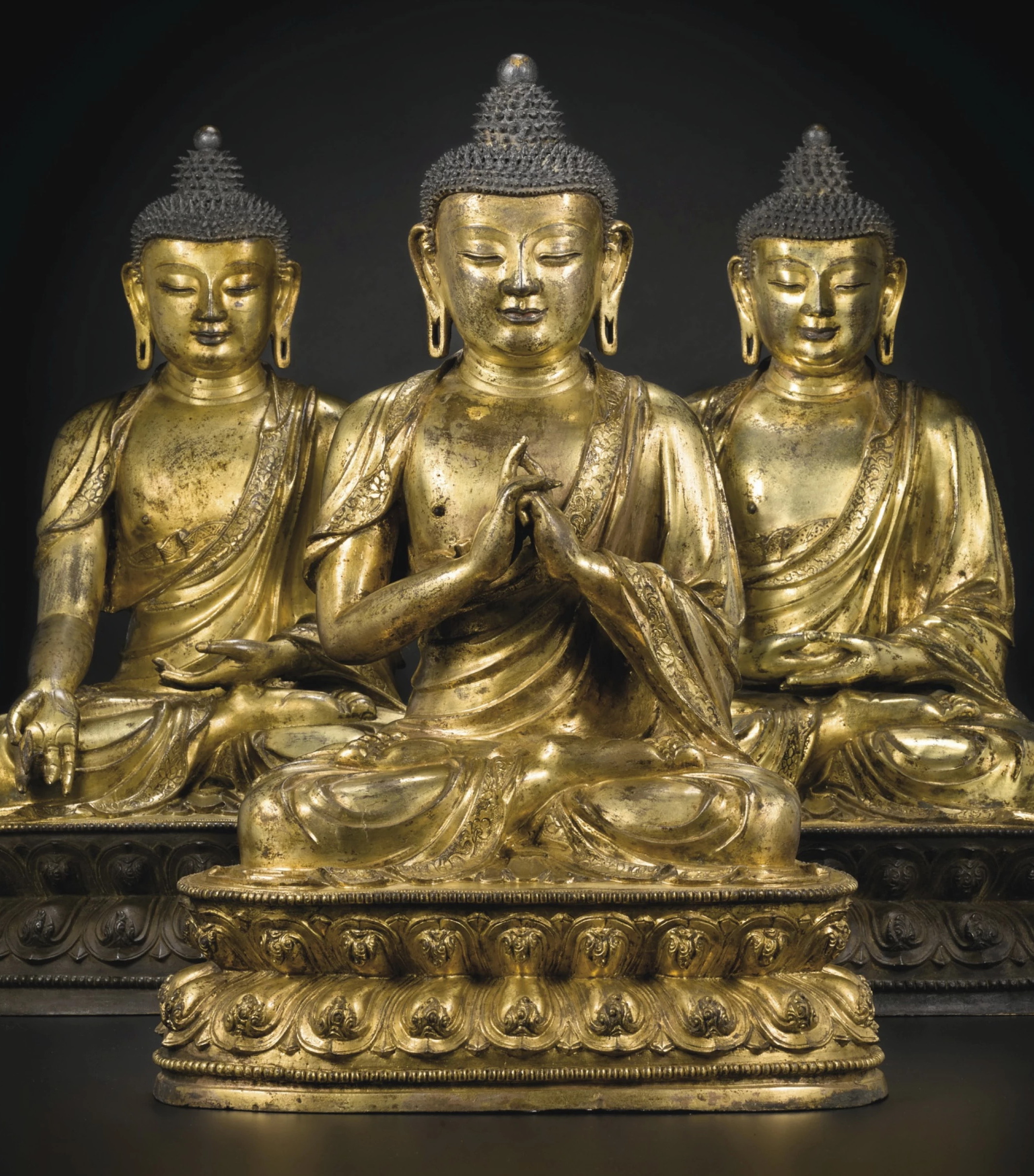
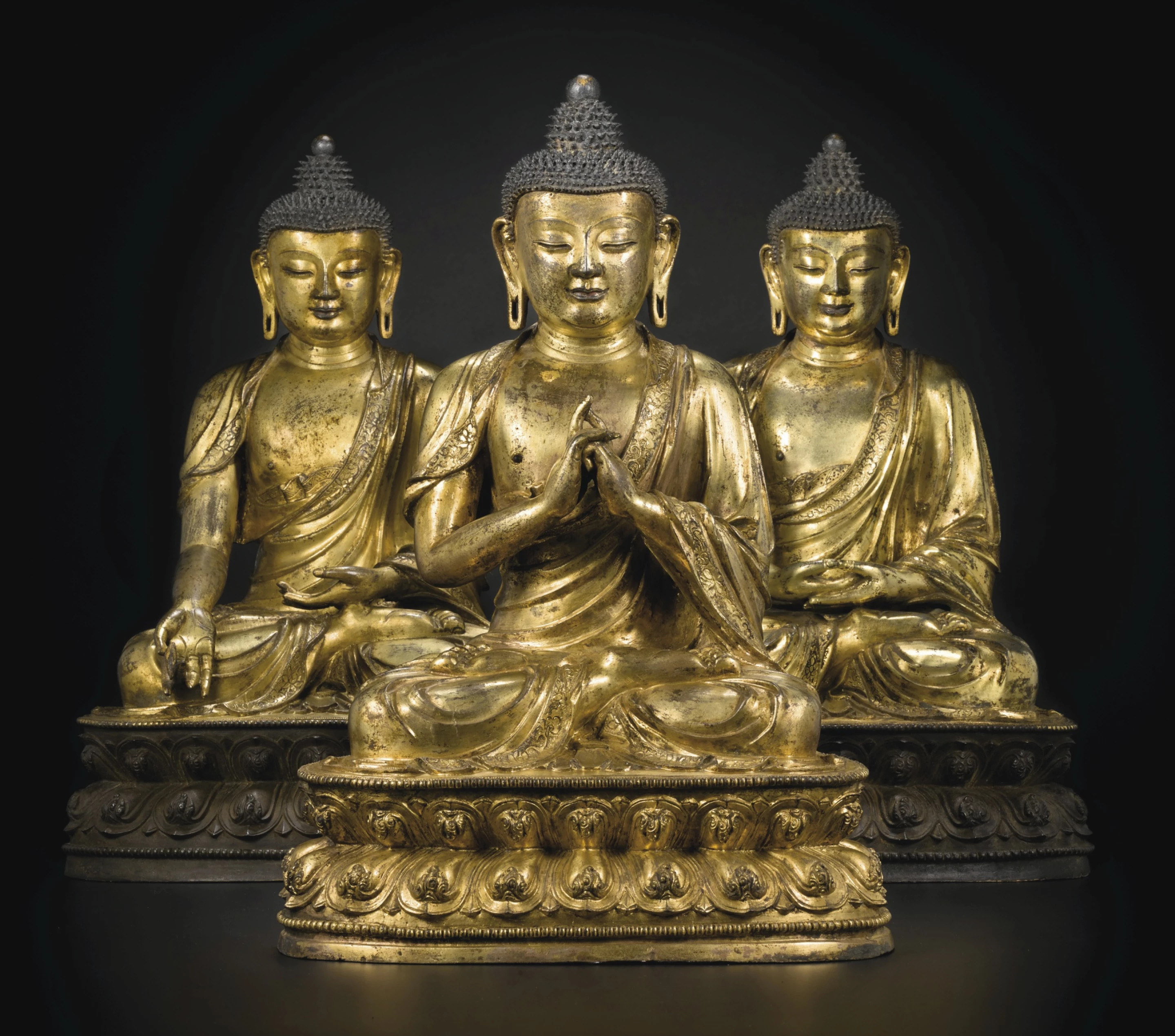 大日如来, 药师佛, 阿弥陀佛 三尊
Important ensemble de trois statuettes de Bouddhas Bhaishajyaguru, Vairocana et Amitabha en bronze doré Dynastie Ming, XVE siècle
Condition
The three figures are quite heavily cast, the bases of all three figures not sealed. On two figures, the lotus base is not gilt. On the third figure the lotus base and figure are entirely gilt (all visible in the catalogue illustration). Figure of Amitabha to the right in the main catalogue illustration: The lotus base is not gilt. There is overall wear to the gilding particularly the face, torso, folds of the robe, forearms and feet. There are traces of black soot overall, and traces of red pigment on the lips. The figure of Bhaishajyaguru to the left in the main catalogue illustration: The lotus base is not gilt. There is overall wear to the gilding particularly the face, torso, folds of the robe, arms and feet. There scattered copper spots to the gilding on the back of the figure. There is a ca. 1×2.5cm large casting flaw/patch contemporary to when the figure was made to the figure's right shoulder. There are traces of black soot overall and traces of red pigment to the lips. The central figure of Vairocana in the main catalogue illustration: the figure is entirely gilt, the base not sealed. There is overall wear to the gilding particularly the face, torso, folds of the robe, forearms and feet. There is an area of light corrosion on the figure's right elbow. The gilding on the base is more worn off on the back of the base. There traces of red pigment on the lips. There are scattered casting flaws/patches contemporaneous to when the figure was made, a small one on the chest. There is a ca. 1.5×1.5cm large casting flaw on the figure's right shin, another ca. 3.5cm wide area of stress to the metal on the rear part of the base just behind the figure's left side. “In response to your inquiry, we are pleased to provide you with a general report of the condition of the property described above. Since we are not professional conservators or restorers, we urge you to consult with a restorer or conservator of your choice who will be better able to provide a detailed, professional report. Prospective buyers should inspect each lot to satisfy themselves as to condition and must understand that any statement made by Sotheby's is merely a subjective, qualified opinion. Prospective buyers should also refer to any Important Notices regarding this sale, which are printed in the Sale Catalogue.
Catalogue Note
The finely modeled and engraved gilt-bronzes depict three Buddhas displaying the mudras and attributes of Vairocana, Amitabha and Bhaishajyaguru, are cast in the mid-fifteenth century style following the sculptural tradition of the Yongle and Xuande periods, cf. a very similar fifteenth century Buddha of Medicine, Bhaishajyaguru, in the Qing Court Collection, illustrated in Buddhist Statues of Tibet: The Complete Collection of Treasures of the Palace Museum, Hong Kong, 2003, p. 235, cat. no. 224. Compare also with a very large gilt-bronze figure of Bhaishajyaguru, dated by inscription to the first year of the Jingtai reign (1450), and published in Gems of Beijing Cultural Relics Series. Buddhist Statues, vol. I., figs. 115 and 116.
The Bhaishajyaguru and the Buddha with hands in dhyana mudra may be from a set of eight Buddhas making up the circle of Medicine Buddhas in the mandala of Bhaishajyaguru. A Qing period three dimensional depiction of the mandala, now in the State Hermitage, consists of a group of forty-nine bronzes out of the fifty-one deities that make up the mandala, see Marylin M. Rhie and Robert A. F. Thurman, The Sacred Art of Tibet, London, 1991, pp. 338-40.
The slightly larger Buddha with hands in abhisekana mudra, expressing the concept of ultimate reality and wisdom, represents the supreme Transcendental Dhyani Buddha Vairochana, who is portrayed either with this mudra or the dharmachakra mudra, the turning of the Buddhist Wheel of the Law, and either crowned or as an ascetic Buddha like the present example, cf. a fifteenth century crowned Vairocana Buddha sold in Sotheby's Paris, 10th June 2015, lot 39. Vairocana is considered to be the universal form of Shakyamuni Buddha, and the practices associated with the deity were among the most important in the early development of Tantric Buddhism in Tibet.
页面工具
