
侧边栏

12-13世纪柬埔寨合金铜四臂观音立像(旧金山亚洲艺术博物馆)
尺寸:H. 36.2 cm x W. 15.9 cm x D. 10.2 cm
年代:approx. 1180-1220
质地:合金铜
风格:柬埔寨
来源:旧金山亚洲艺术博物馆
参阅:外部链接
鉴赏:


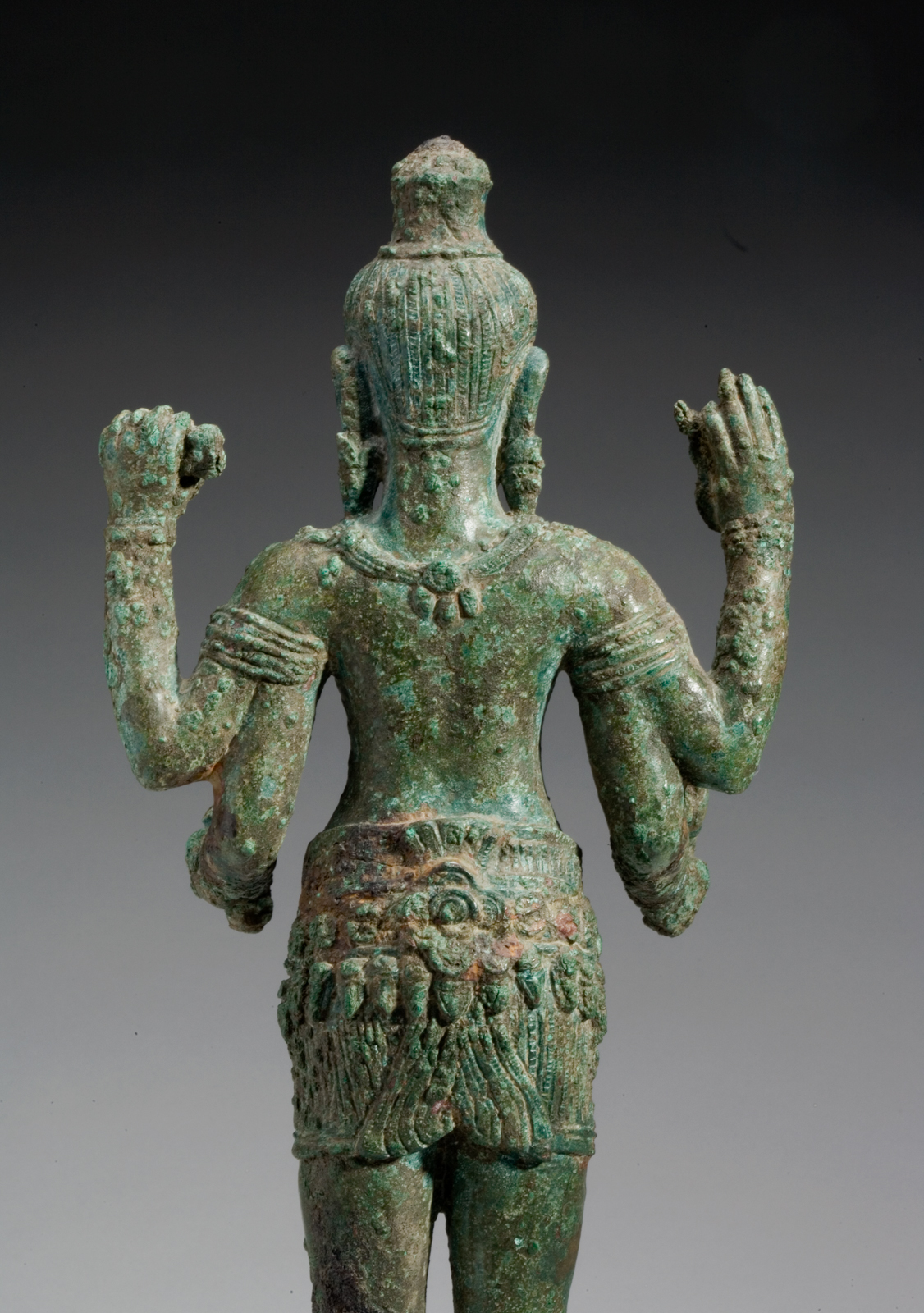


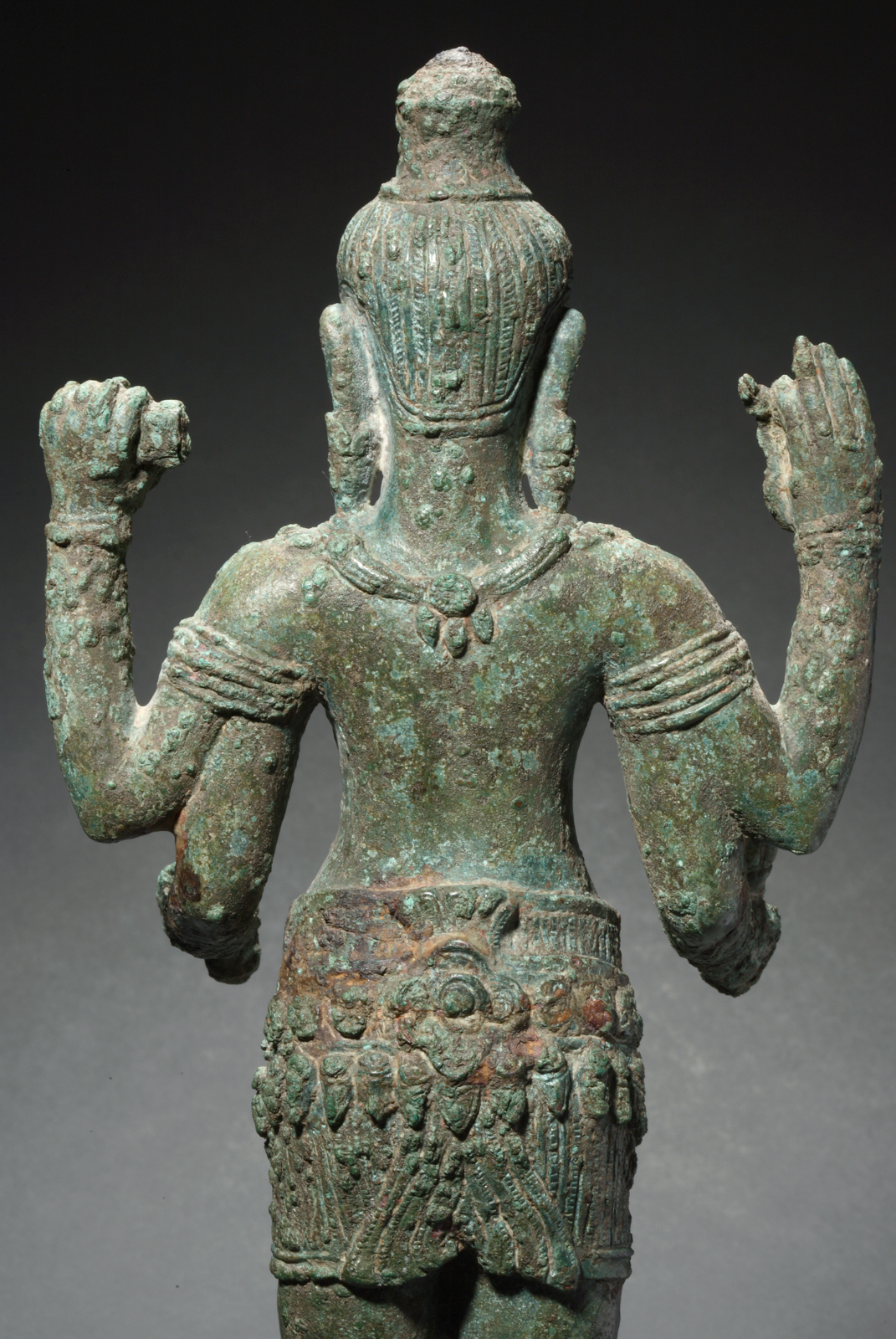 The bodhisattva Avalokiteshvara
Cambodia; former kingdom of Angkor, former kingdom of Angkor
Date approx. 1180-1220
来源:
Gift of Dr. and Mrs. David Buchanan
菩萨观世音乃大悲之化身,普济一切众生。
古代柬埔寨吴哥王朝的统治者通常信奉印度教神明湿婆或毗湿奴。然阇耶跋摩七世在位期间,复杂形态的大乘佛教曾一度盛行。其核心神祇体系由端坐于蛇王宝座上的佛陀构成,两侧分别侍立着观世音菩萨与代表般若智慧的女神。此尊造像很可能源自该三位一体组合。
在阇耶跋摩七世的佛教体系中,佛性被理解为慈悲与智慧的融合。象征这两种特质的菩萨分别关联着国王的双亲,暗喻其子与佛陀具有同质性。
The bodhisattva Avalokiteshvara embodies compassion for all living beings.
The rulers of the ancient Cambodian kingdom of Angkor usually worshiped the Hindu deities Shiva or Vishnu. For a time under King Jayavarman VII, however, complicated forms of Mahayana Buddhism were favored. The central triad of deities was made up of a serpent-enthroned Buddha flanked by Avalokiteshvara and a goddess representing transcendental wisdom. This image probably came from such a triad.
In Jayavarman VII’s version of Buddhism, buddhahood was understood to arise from the melding of compassion and wisdom. The deities representing these two qualities were associated with Jayavarman VII’s father and mother, suggesting a parallel between their son and the Buddha.
页面工具
