
侧边栏

这是本文档旧的修订版!
宋代金代木雕彩绘水月观音像(伦敦大英博物馆)
尺寸:H.170 cm
年代:宋代-金代(12-13世纪)
质地:木雕彩绘
风格:中原 山西
来源:伦敦大英博物馆
参阅:外部链接
鉴赏:
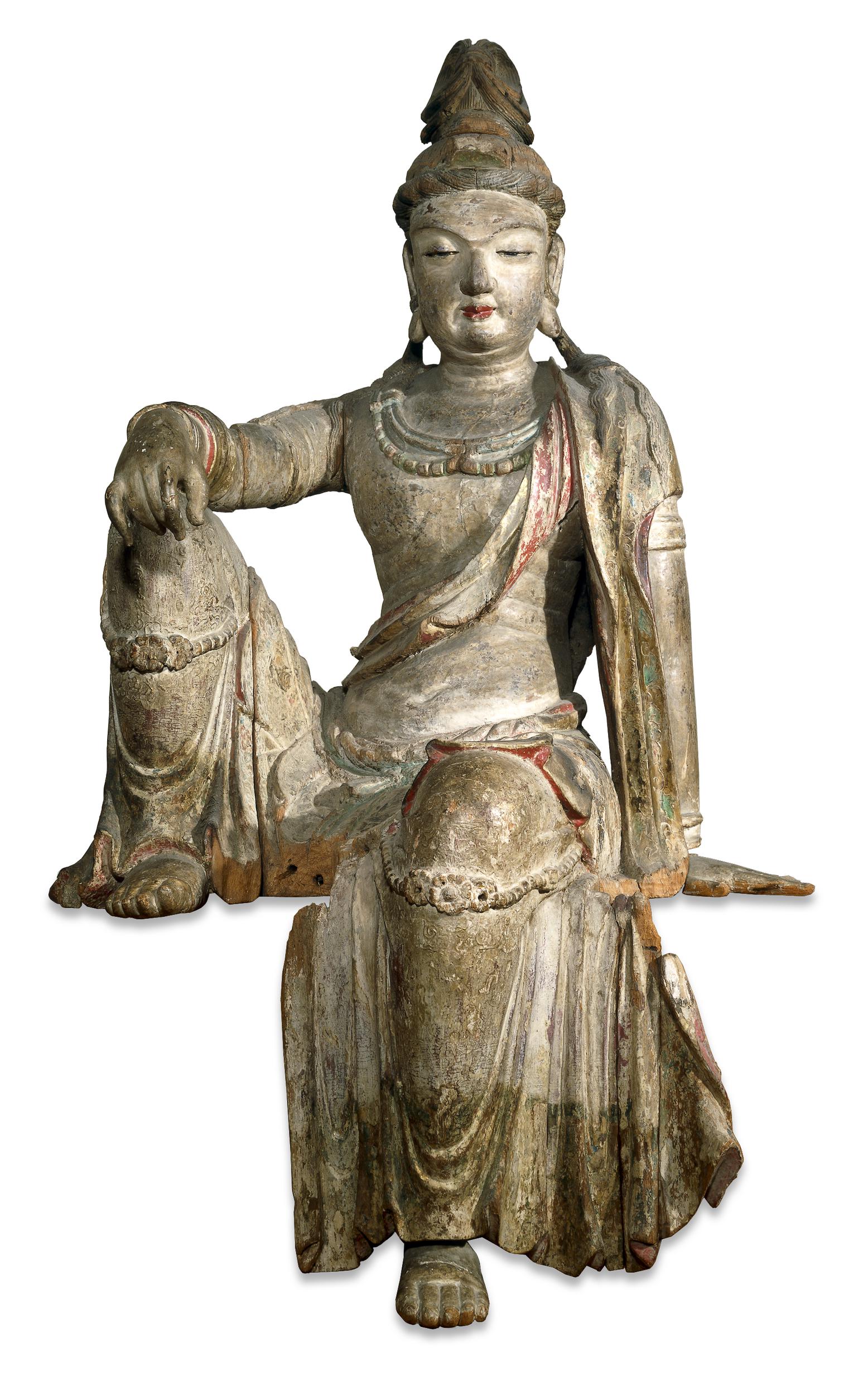
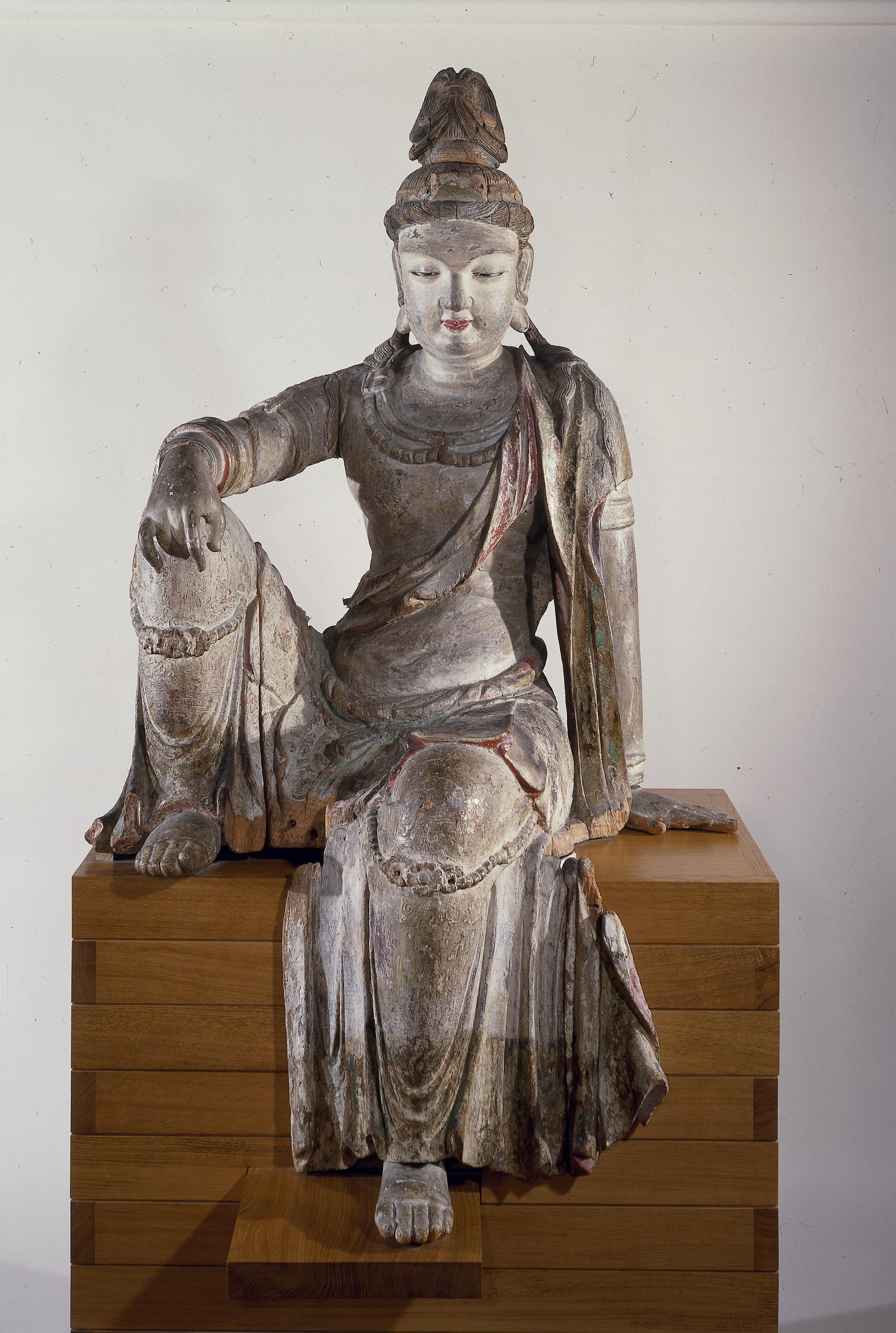

 Figure of Avalokiteśvara; with a naturalistic face and glassy, reflecting eyes; seated in position of a variant form of ‘rājalīlāsana’ (royal ease). Made of polychromed wood; the surface repainted; the limbs are partly restored.
观世音像;面容自然写实,双目炯炯有神,宛如玻璃;以“游戏坐”的变体姿态而坐。木胎彩绘,表面经重绘,四肢部分修复。来自山西省。
Curator's comments
The bodhisattva Avalokitesvara, or Guanyin
Wood, traces of pigment
China, about 1100–1300
This sculpture of Guanyin (known in Sanskrit as Avalokitesvara) would have been a key image in a Buddhist temple. He is a bodhisattva, or Buddhato-be, associated with compassion and said to have powers to rescue believers and bring them to salvation. Guanyin was widely revered and known to assume a number of different guises to help believers. Most wooden Buddhist sculptures undergo restorations, and this sculpture shows indications of multiple campaigns of painting it.
Zwalf 1985
Wooden sculptures, often life-size or over, were common in north China from about the 10th to the 14th centuries. Their construction is particularly associated with Shanxi province, where the two pre-eminent centres of Buddhist activity were Taiyuan and Wutai shan. The style can generally be traced back to late 7th- and 8th-century Tang sculpture, as at the Tianlong shan caves, Taiyuan. Compared with the delicate-limbed deities there, these wooden figures are more fleshily modelled, with naturalistic faces and sometimes, as here, glassy, reflecting eyes; their voluminous yet relaxed bodies offer a compelling vision of the Bodhisattva ideal.
A number of the sculptures represent the ‘nanhai’ Guanyin (Avalokiteśvara of the Southern Seas), originally placed upon carved wooden plinths. This refers to Guanyin residing at Mt Potalaka on the southern coast of India, an idea introduced into China with the translation of the ‘Avataṃsaka’ (Huayan) Sūtra’ in the early 5th century. Few retain their original colour scheme - this image has been repainted, and the limbs are partly restored.
策展人评论
此尊观音菩萨像(梵文 Avalokitesvara)原应为佛寺中的主尊。作为菩萨,即觉悟之追寻者,他以慈悲为怀,据信具有救度信徒、引领其解脱的能力。观音信仰广泛,传说其能化现多种身形以济度众生。多数木雕佛像都曾经历修复,此像亦可见多次重妆的痕迹。
根据 Zwalf 1985 年的记述:
自公元10世纪至14世纪,真人大小或等身以上的木雕造像在中国北方十分普遍。此类造像的制作与山西省关系尤为密切,太原和五台山是该地区两个最重要的佛教中心。其风格大体可追溯至7世纪末至8世纪的唐代雕塑,如太原天龙山石窟所见。相较于天龙山石窟中体态纤细的神祇,这些木雕造像的身躯塑造更为圆润饱满,面容自然写实,有时如眼前这尊,嵌有晶莹透亮的眼睛;其体量丰硕而又姿态舒展,生动地展现了菩萨的理想形象。
其中一些造像表现的是“南海观音”,原本应置于木雕须弥座之上。“南海”指的是观音菩萨在印度南海岸的驻地补陀落伽山,这一概念随着5世纪初《华严经》的汉译而传入中国。这些造像鲜少保留原始的色彩——此像经过重绘,四肢也有部分修补。
著录:
Zwalf 1985 / Buddhism: Art and Faith (296)
展览:
Nov 2017 onwards, British Museum, G33 Hotung Gallery, permanent display
来源:
Recorded as the gift of the National Art Collections Fund and other subscribers. 1920年
页面工具
