
侧边栏

元代铜鎏金水月观音像(伦敦大英博物馆)
尺寸:H. 28.7 cm
年代:元代(13-14世纪)
质地:铜鎏金
风格:中原
来源:伦敦大英博物馆
参阅:外部链接
鉴赏:
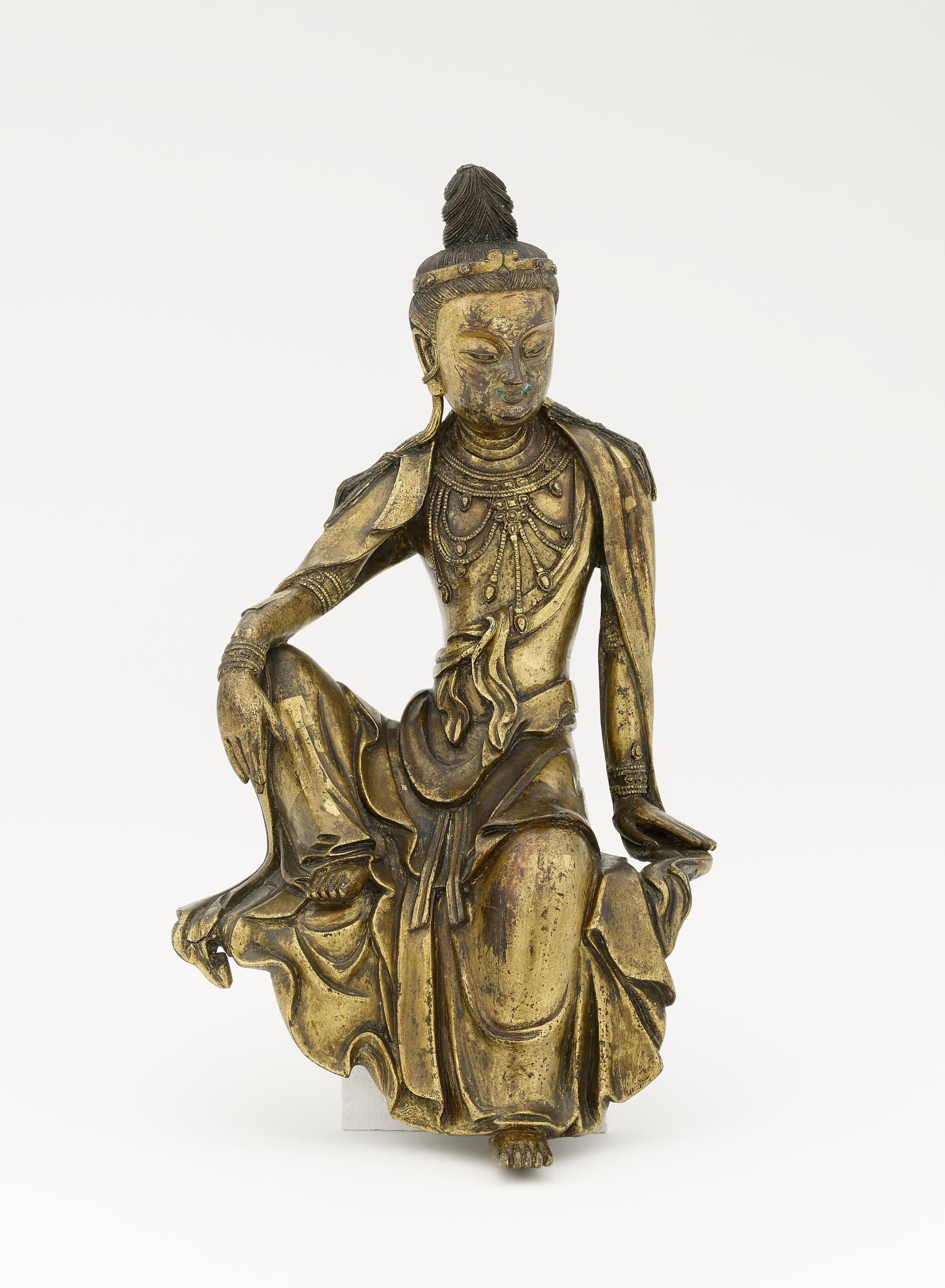
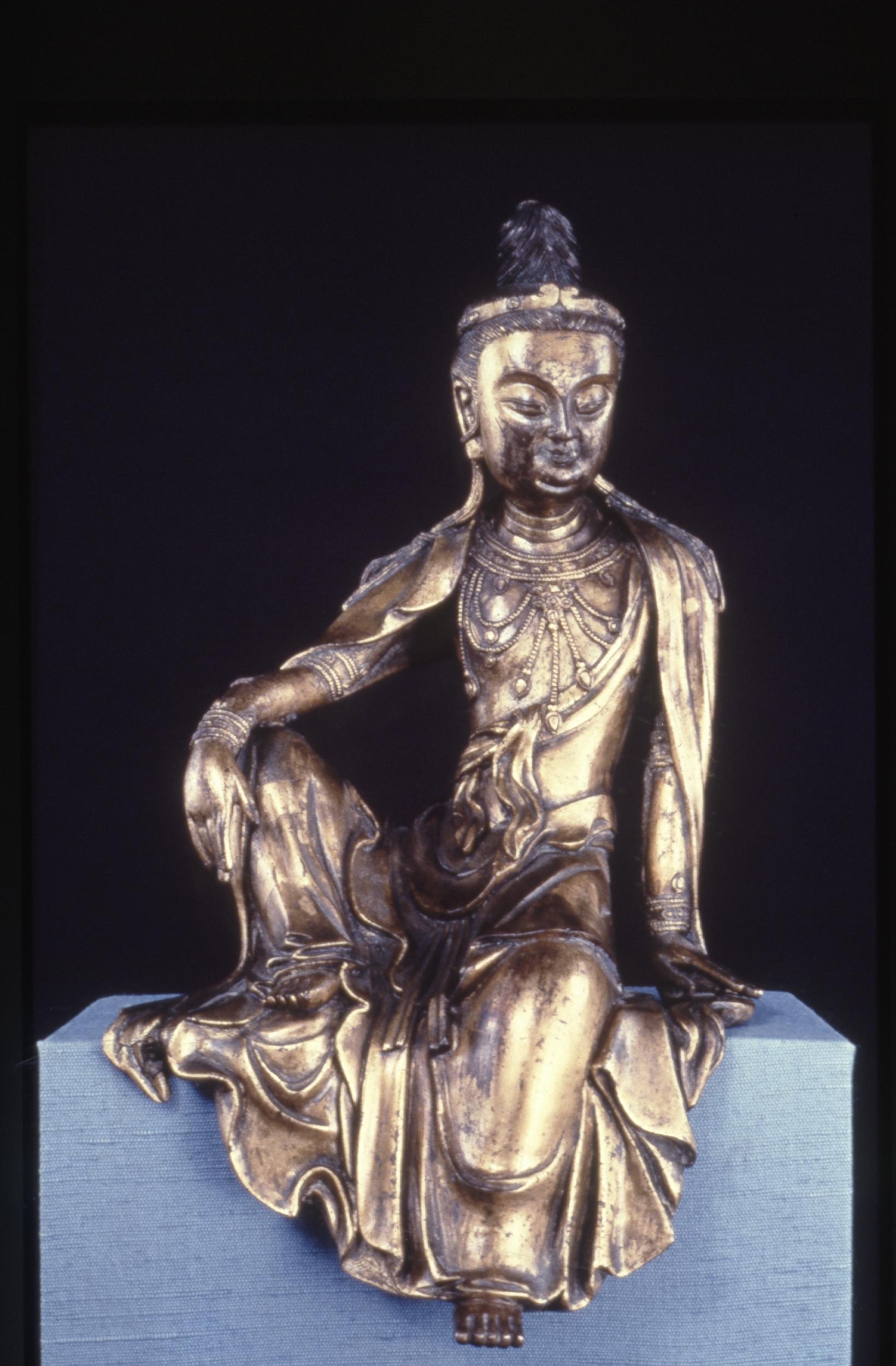
 Described by von Schroeder (1981, 514) as a “water moon guanyin” and dated to ca. 1400 AD.
Zwalf 1985
The position in which this Avalokiteśvara is seated, a variant form of ‘rājalīlāsana’ (royal ease), was a popular sculptural formula between the 10th and 14th centuries. The earliest datable Chinese Bodhisattva thus seated is a finely cast gilt bronze made under the 10th-century Wu-Yue kingdom in east China, excavated from the Wanfo pagoda, Jinhua, Zhejiang province; its distinctive halo, a plain band with three flaming cusps, quite alien to contemporary Chinese styles, supports the supposition that this iconography was a post-Tang import.
冯·施罗德(von Schroeder, 1981, 514)将其描述为“水月观音”像,年代定为约公元1400年。
兹沃夫(Zwalf)1985年
此尊观世音菩萨的坐姿,是“游戏坐”(rājalīlāsana)的一种变体,为10至14世纪佛教造像中流行的范式。目前已知年代最早、采用此种坐姿的中国菩萨像,是一件精美的十世纪吴越国鎏金铜像,出土于浙江金华万佛塔;其独特的头光——素面圆环饰以三朵火焰纹,与当时中原风格迥异——印证了此种图像学特征为唐以后传入的观点。
著录:
von Schroeder 1981 / Indo-Tibetan Bronzes (143D)
Zwalf 1985 / Buddhism: Art and Faith (298)
Cowell, et al. 2003 / A Study of Later Chinese Metalwork
馆藏时间:
1947年
页面工具
