
侧边栏

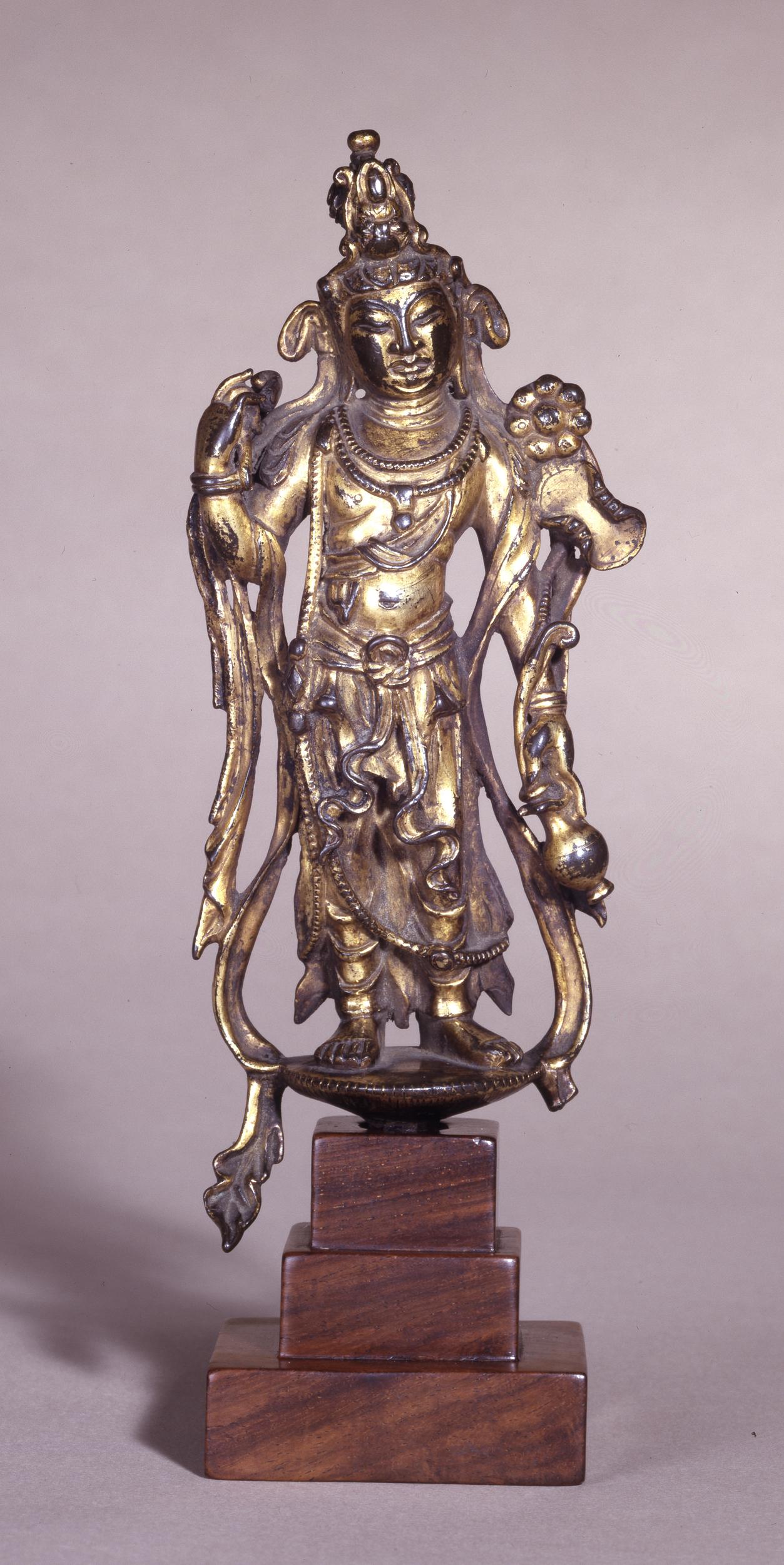
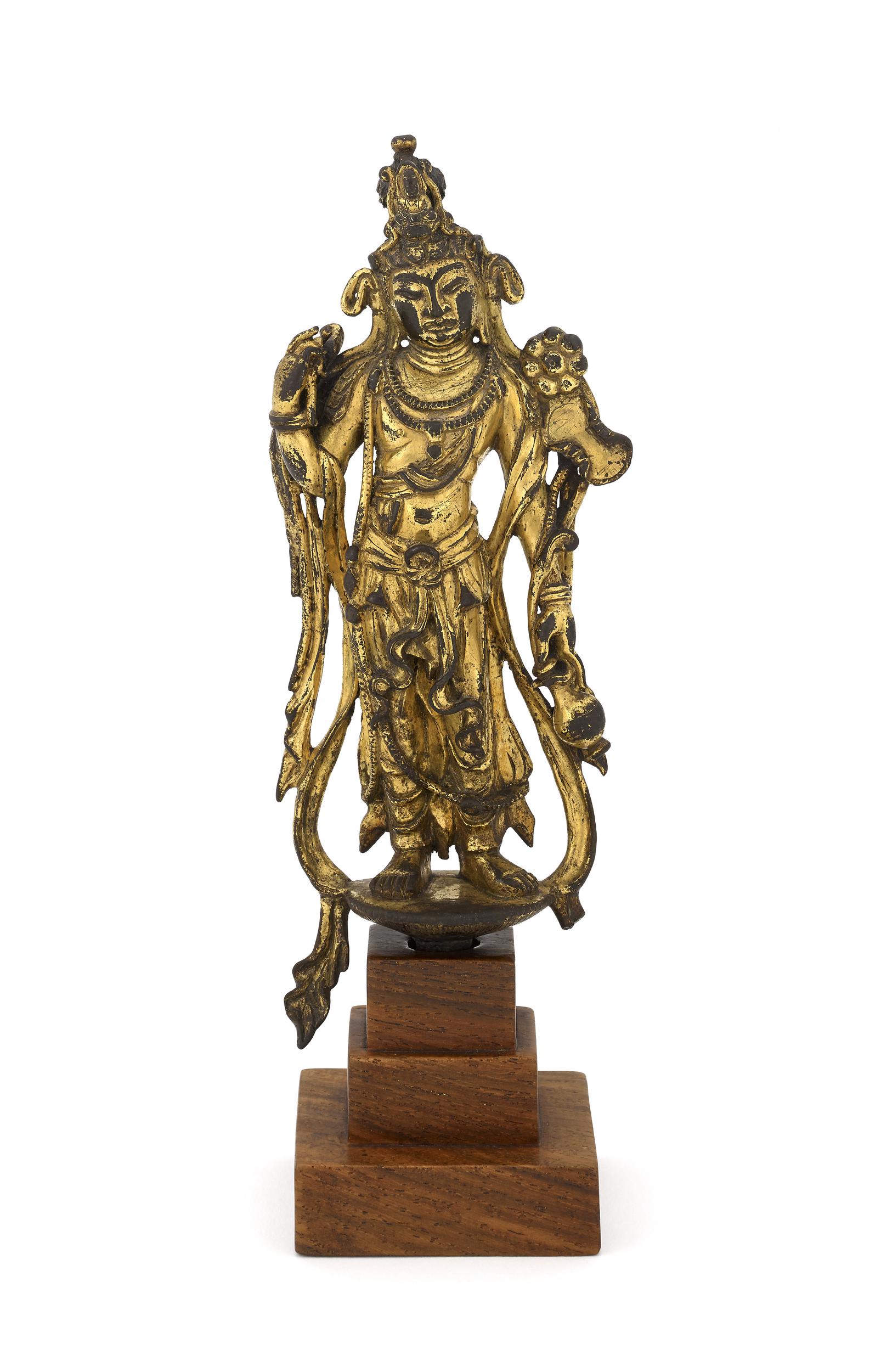
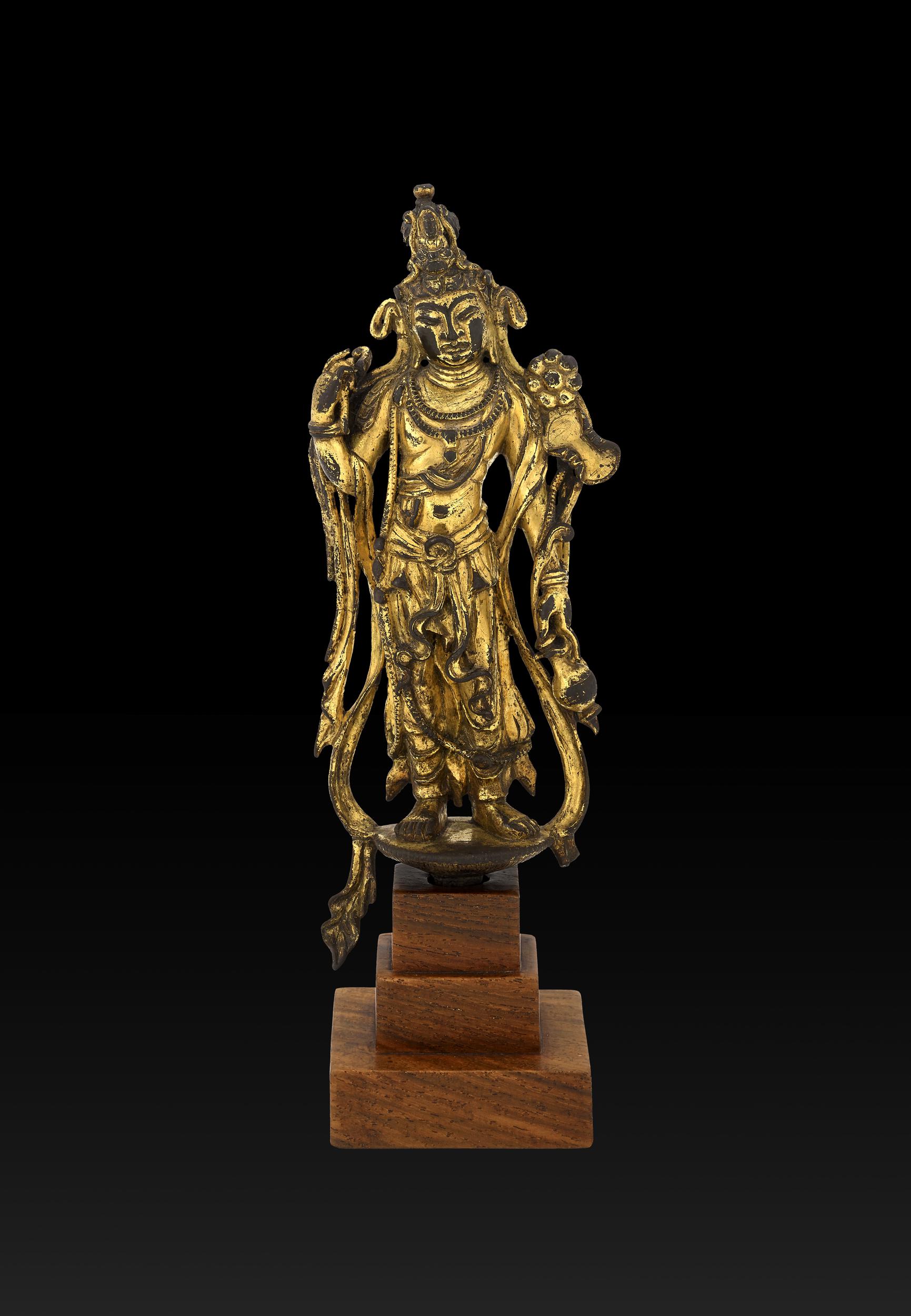
8世纪唐代铜鎏金杨柳观音菩萨(伦敦大英博物馆)
尺寸:高18.5 cm
年代:唐代 8世纪
质地:铜鎏金
风格:中原
来源:伦敦大英博物馆
参阅:外部链接
鉴赏:
 策展人评论
策展人评论
Zwalf 1985:
中亚与印度笈多艺术风格对中国佛教艺术的影响一直持续至唐代。在7世纪至8世纪早期国力昌盛、社会安定的背景下,地方与都城的佛教风格开始趋于融合。此尊青铜造像上飘拂的帔帛与刻画细腻的身躯,可与甘肃省敦煌及炳灵寺的壁画(窟壁与幡画)与雕塑中的菩萨形象相互印证。都城的石雕版本见于多处重要石窟遗址;其中最能体现“盛唐”风格的典范,包括山西省天龙山石窟以及陕西省西安市(唐代都城长安)周边的石刻造像。
Rawson 1992:
这尊小型铜鎏金造像是一尊用于私人供奉的圣像,可能原置于家庭佛龛,或为信众个人敬献给寺庙之物。
Curator's comments
Zwalf 1985
Central Asian and Indian Gupta styles continued to influence Chinese Buddhist art into the Tang, and against the secure and prosperous climate of the 7th and early 8th centuries regional and metropolitan Buddhist styles began to converge. The swirling scarves and sensitively modelled torso of this bronze can be matched with Bodhisattva images seen in the paintings (murals and banners) and sculpture of Dunhuang and Bingling si, both in Gansu province. Metropolitan versions in stone survive at several major sites; amongst those which best reflect 'high Tang' styles are stone images at Tianlong shan, Shanxi province, and in the environs of Xi'an (the Tang capital Chang'an), Shaanxi province.
Rawson 1992:
This small gitl bronze is an intimate image, either from a household altar or possible made for dedication by an individual to a shrine.
著录:
Zwalf 1985 / Buddhism: Art and Faith (291)
Rawson 1992 / The British Museum Book of Chinese Art (figure 108)
Brunning et al 2024 / Silk Roads (p.53, fig.1.32)
展览:
2024-2025, 26 Sep – 23 Feb, British Museum, Gallery 30, Silk Roads
馆藏时间:
1970年
页面工具
