
侧边栏

3-5世纪犍陀罗石雕释迦牟尼佛苦行像(纽约大都会博物馆)
尺寸:H. 10 15/16 in. (27.8 cm)
年代:3-5世纪
质地:片岩(Schist)
风格:犍陀罗(古巴基斯坦)
来源:纽约大都会博物馆
参阅:外部链接
鉴赏:
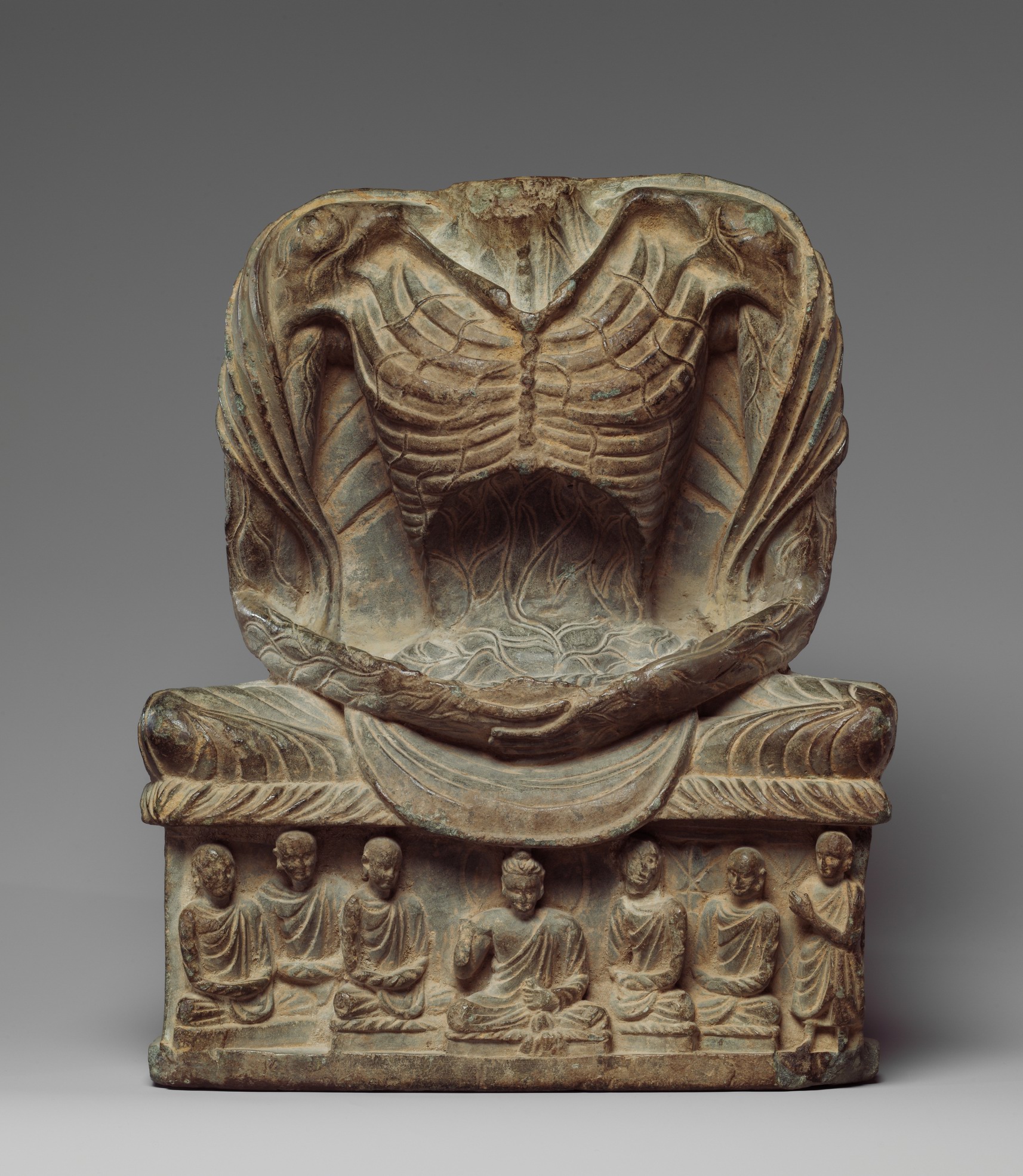 底座描绘的是释迦在鹿野苑初转法轮的场景.
Fasting Buddha Shakyamuni
3rd–5th century
Pakistan (ancient region of Gandhara)
After reaching enlightenment at Bodhgaya, Shakyamuni meditated and fasted for forty-nine days. Thus, showing him as an emaciated renouncer relates to his enlightenment and his status as a yogic ascetic who has ultimate control over his body. Other characteristics that relate to his enlightenment include the kusha grass on which he sits and the scene on the base, which shows the Buddha's first sermon, at Sarnath.
来源:
Samuel Eilenberg , New York (by 1985–1986; donated to Columbia University); [ Columbia University , New York, 1986–1987, sold to MMA]
展览:
New York. The Metropolitan Museum of Art. “The Lotus Transcendent: Indian and Southeast Asian Art from the Samuel Eilenberg Collection,” October 2, 1991–June 28, 1992.
Barcelona. Casa Àsia. “Divine Presence: Arts of India and the Himalayas,” March 15, 2003–June 22, 2003.
Museo Nacional de Antropología, Mexico City. “Las Huellas de Buda,” July 19, 2018–October 14, 2018.
著录:
Pal, Pratapaditya. Light of Asia: Buddha Sakyamuni in Asian art. Exh. cat. Los Angeles: Los Angeles County Museum of Art, 1984, p. 95, cat. no. 39b.
Lerner, Martin, and Steven Kossak. The Lotus Transcendent: Indian and Southeast Asian Art from the Samuel Eilenberg Collection. Exh. cat. New York: The Metropolitan Museum of Art, 1991, pp. 84–85, cat. no. 51.
Casey, Jane, Naman P. Ahuja, and David Weldon. Divine Presence: Arts of India and the Himalayas. Exh. cat. Barcelona and Milan: Casa Àsia, 2003, pp. 54–55, cat. no. 3.
Behrendt, Kurt. The Art of Gandhara in The Metropolitan Museum of Art. New York: The Metropolitan Museum of Art, 2007, p. 57, cat. no. 46.
Little, Stephen, Tushara B. Gude, Karina Romero Blanco, S. Seligson Berenfeld, and Marco A. Karam. Las Huellas de Buda (Footprints of the Buddha). Exh. cat. Ciudad de México: Instituto Nacional de Antropología e Historia, [2018], p.96, cat. no. 8.
页面工具
