
侧边栏

9世纪尼泊尔风格红铜镀金释迦牟尼佛立像(美国肯贝尔艺术博物馆)
尺寸:50.2 x 20.3 x 8.6 cm
年代:9世纪
质地:红铜镀金
风格:尼泊尔
来源:美国肯贝尔艺术博物馆
参阅:外部链接
鉴赏:
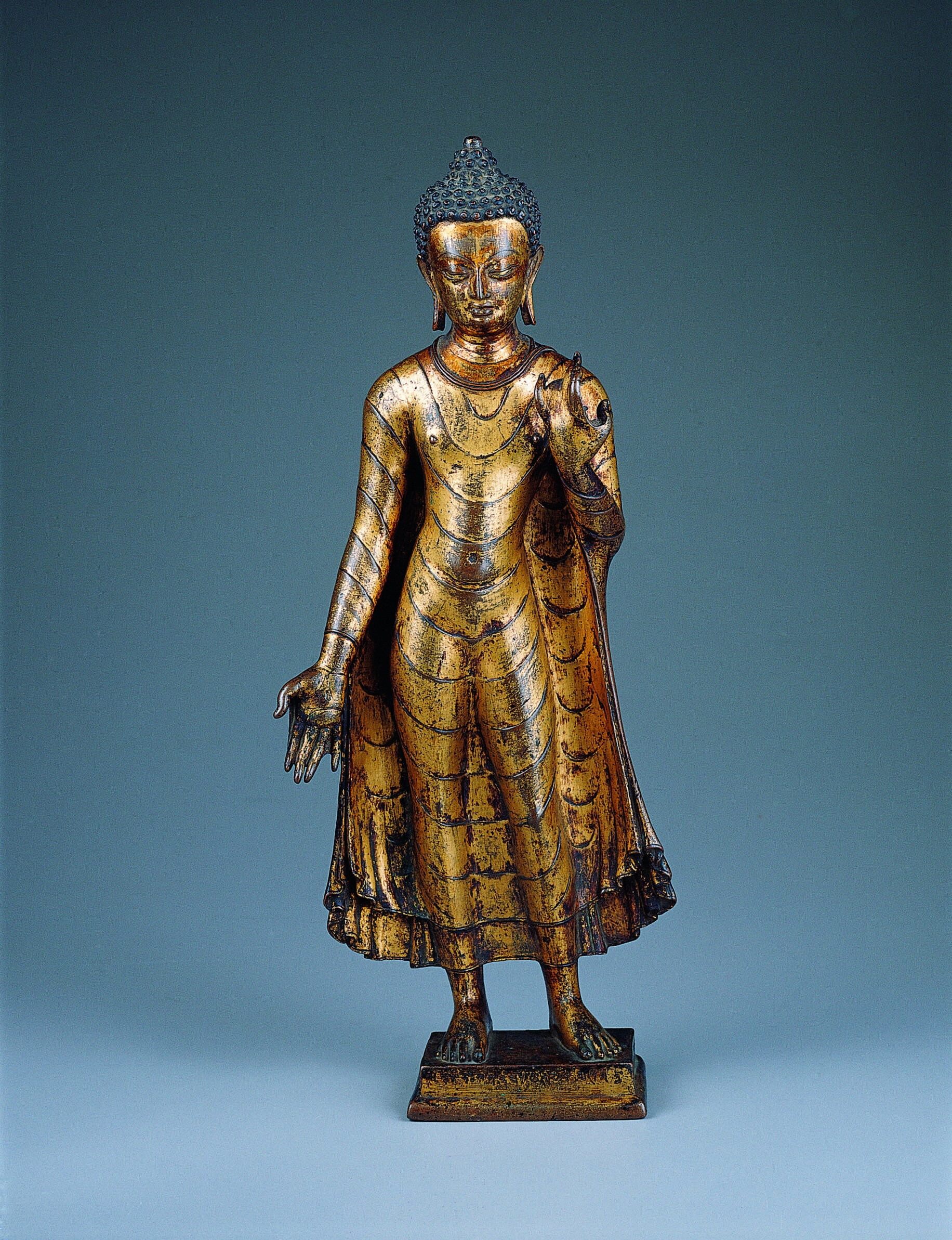 博物馆标注是7世纪, 这种样式的尼泊尔仿笈多造像应该为9世纪
Standing Buddha Shakyamuni, 7th century A.D.
Nepalese
This slim, richly gilded figure represents the historical Buddha, Shakyamuni, Sage of the Shakya clan. He displays a number of the physical signs that had come to represent the Buddha’s divinity—the cranial protuberance (ushnisha), elongated earlobes, three parallel folds in the neck, webbed fingers and toes, and palms marked by a wheel. He stands in a graceful pose with the weight on the right leg and the hip thrust gently out. The smooth, fleshy contours of the body are revealed by a thin, clinging garment with cascading pleats delineated into a threadlike surface design. The upper end of the robe is gathered in the left hand, the right bestowing the gesture of charity (varadamudra).
Licchavi Buddha images were directly inspired by Indian Gupta-period (A.D. 320–600) images. This sculpture reveals the mannered elegance, introspective expression, and taut but smooth modeling characteristic of Gupta Buddhas. The “snail-shell” pattern of curled hair, the half-closed eyes, and the lack of an urna between the eyebrows are also typical Gupta features. The Nepalese origin of the sculpture is most evident in the expression of the face. The important inscription on the base is in a script derived from Gupta India that was in use in Nepal during the Licchavi period.
页面工具
