
侧边栏

15世纪明代唐卡金刚总持文殊菩萨观音菩萨坛城图(纽约大都会博物馆)
尺寸:画芯 147.3 x 95.3 cm
年代:15世纪明代(dated 1479)
质地:Tangka; ink, opaque watercolor, and gold on cotton cloth
风格:中原 汉藏
来源:纽约大都会博物馆
参阅:外部链接
鉴赏:
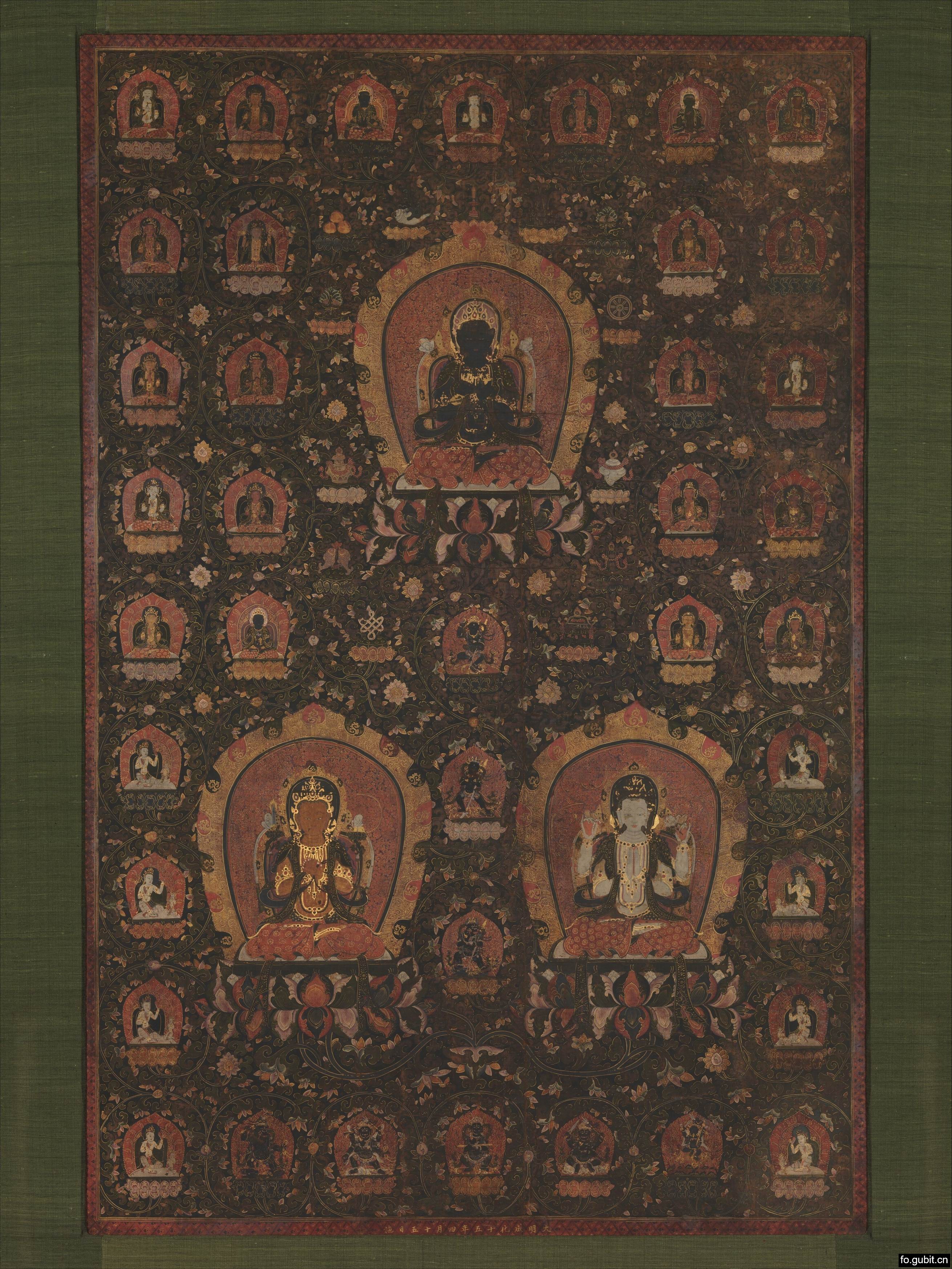
 Mandala of Vajradhara, Manjushri and Sadakshari-Lokeshvara(四臂六字观音菩萨)
明 佚名 釋教三尊曼陀羅圖 軸
藏传密教自蒙元时期(1279-1368)传入汉地,继续得到明代初期诸帝的护持。整个十五世纪,仍有相当规模的藏传喇嘛僧团活跃于北京——此地前身为元大都,1402年后成为明代主要都城。
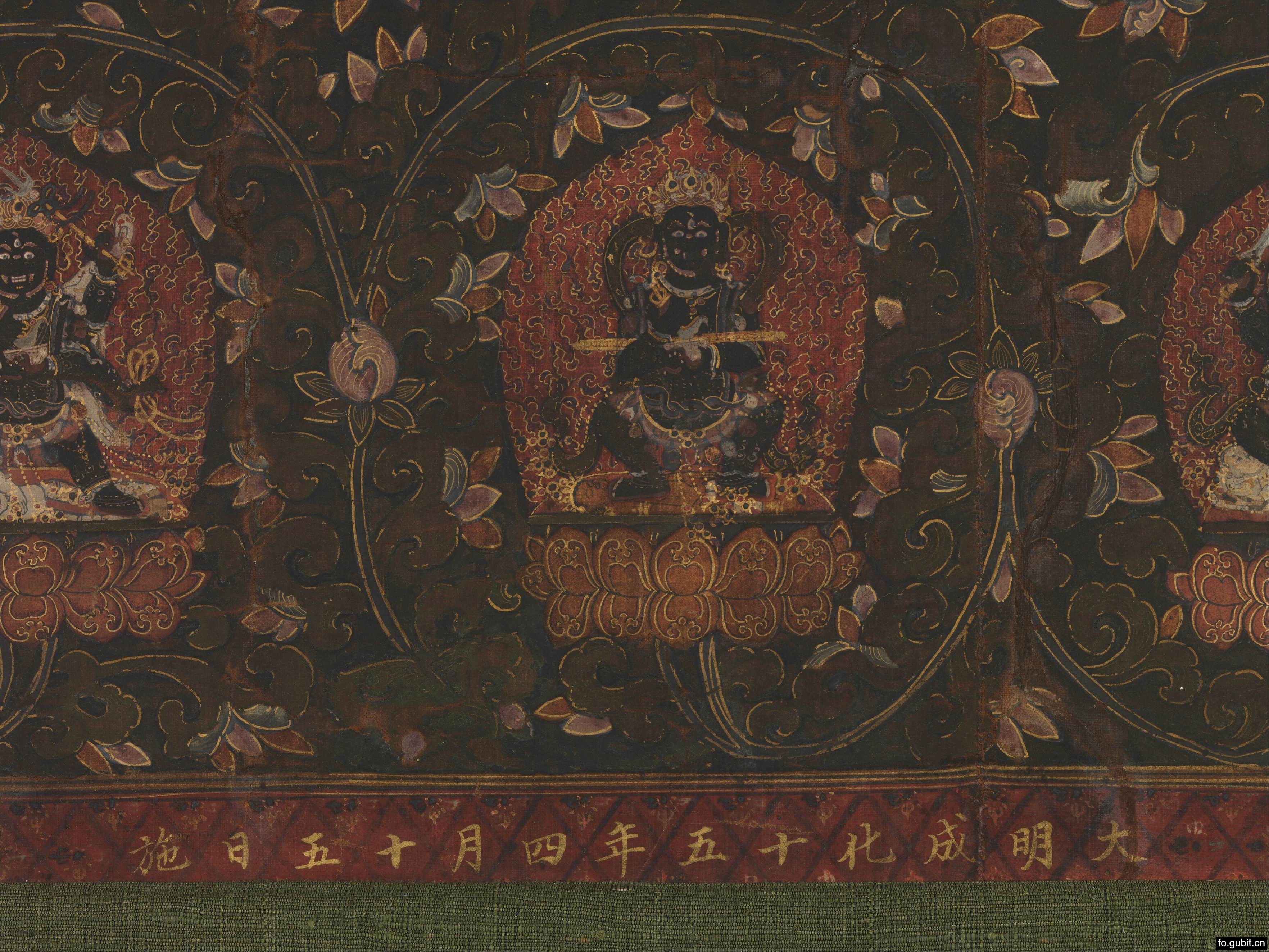
此幅曼荼罗(用于禅观的宇宙图式)以藏式技法绘于粗织布面,色泽浓郁。然画面下缘的中文题记及若干独特风格特征表明,其应出自中国本土作坊,系依照藏传范本绘制的作品。从风格判断,此曼荼罗与另外三幅年代介于1477至1479年的作品密切相关,后者现藏于波士顿美术馆与伦敦维多利亚与阿尔伯特博物馆。
曼荼罗的图像体系以三尊主神为核心:上方为金刚总持佛,右下为文殊菩萨(智慧之象征),左下为六字观音(观音菩萨之化现)。三十九尊胁侍圣众环绕其间,诸尊皆结跏趺坐于莲台,身后衬以纹饰繁复的背光。双持金刚杵的金刚总持尤为殊胜,周身环绕十二种佛教吉祥符号。
The Tibetan branch of Esoteric Buddhism, introduced into China during the Mongol Yuan dynasty (1279–1368), continued to be patronized by early Ming dynasty emperors. Throughout the fifteenth century, a significant community of Tibetan lamas remained active in Beijing, the site of the former Mongol capital city, Dadu, and after 1402 the principal Ming capital.
This mandala, or cosmic diagram used in meditation, is painted in rich colors on a coarse cloth ground in the Tibetan manner, but the presence of a Chinese dedication along the lower margin as well as a number of distinctive stylistic features suggest that it was the product of an atelier in China that created images based on Tibetan prototypes. Stylistically, the mandala is related to three others, dated between 1477 and 1479, which are now in the collections of the Museum of Fine Arts, Boston, and the Victoria and Albert Museum, London.
The iconography of this mandala consists of three main deities, the Buddha Vajradhara (above), together with Manjushri, the Bodhisattva of Wisdom (lower right), and Shadakshari-Lokeshvara, a manifestation of Avalokiteshvara, the Bodhisattva of Compassion (lower left), set within a field of thirty-nine subsidiary deities. Each deity is seated on a lotus throne and framed by an ornately figured halo. Vajradhara, who grasps two vajras or thunderbolts, is further distinguished by an encircling array of the twelve auspicious Buddhist symbols.
铭文:
Inscription: No artist’s inscription, signature or seal
Colophon
Unidentified Artist, 1 column in standard script, dated 1479 (on the frame, bottom center):
[Done or bestowed by owner] on the 15th day of fourth month of the 15th year of the Chenghua reign era [May 6, 1479] of the great Ming dynasty.
大明成化十五年四月十五日施。
来源:
John and Evelyn Kossak , New York (until 1985; donated to MMA)
展览:
New York. The Metropolitan Museum of Art. “Secular and Sacred: Scholars, Deities, and Immortals in Chinese Art,” September 10, 2005–January 8, 2006.
New York. The Metropolitan Museum of Art. “Another World Lies Beyond: Chinese Art and the Divine,” August 24, 2019–January 5, 2020.
New York. The Metropolitan Museum of Art. “Bodhisattvas of Wisdom, Compassion, and Power,” March 27, 2021–October 30, 2022.
页面工具
