
侧边栏

18世纪蒙古合金铜药师佛(美国鲁宾艺术博物馆)
尺寸:7 1/8 × 5 1/4 × 3 15/16 in.
年代:18世纪
质地:合金铜
风格:蒙古
来源:美国鲁宾艺术博物馆
参阅:外部链接
鉴赏:
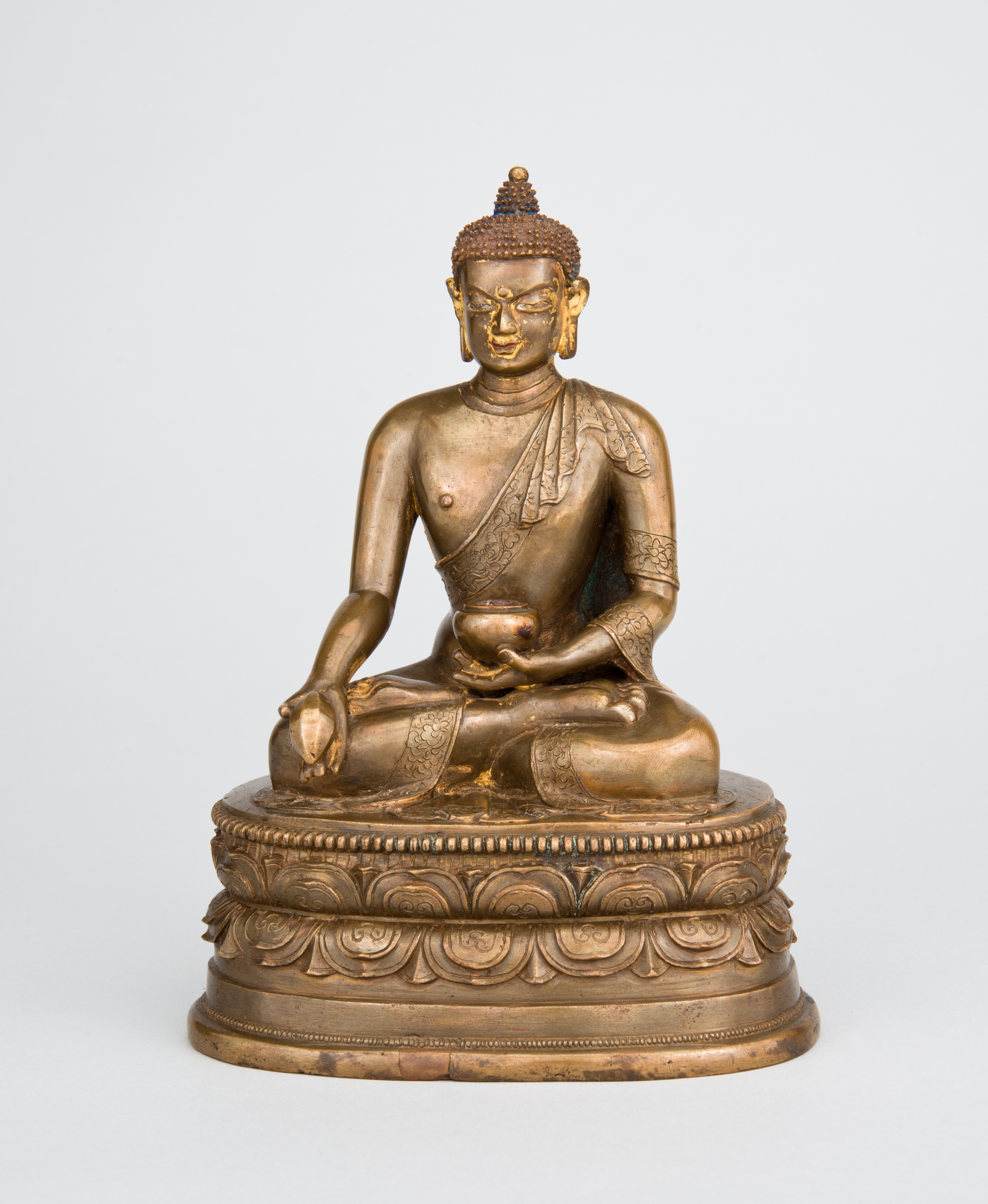


 Medicine Buddha
Mongolia
18th century
An image of the Medicine Buddha is often found in the houses and offices of traditional Tibetan doctors who consider him the source of their knowledge and practice. The Medicine Buddha sits on a high lotus seat of double rows of lotus petals. Hedisplays the recognizable attributes of a buddha, but his implements distinguish him as the King of Medicine (Menla Gyelpo), as he is known in Tibetan, Himalayan, and Mongolian cultures. His left hand supports a bowl of nectar, and his right hand holdsa myrobalan fruit, which is considered a universal remedy in Tibetan medical traditions and one of the main ingredients in Tibetan medical compounds.Tibetan Buddhism was first introduced to Mongolia in the thirteenth century by Buddhist teachers who were patronized by the ruling elite of the Mongol Empire, such as Qubilai Khan (1215–1294), the grandson of Chingghis Khan who conquered and ruled China. Mongolians traditionally held shamanistic beliefs, but between the sixteenth and eighteenth centuries many incorporated Buddhism into their belief systems. Similarly, Tibetan medicine was integrated with the Mongolian indigenous healing practices and is widely practiced today.
页面工具
