
侧边栏

13世纪大理国晚期铜鎏金阿嵯耶观音菩萨立像(旧金山亚洲艺术博物馆)
尺寸:H. 33 cm x W. 8 1/4 cm x D. 7.3 cm
年代:13世纪 大理国时期或之后
质地:铜鎏金
风格:大理
来源:旧金山亚洲艺术博物馆
参阅:外部链接
鉴赏:
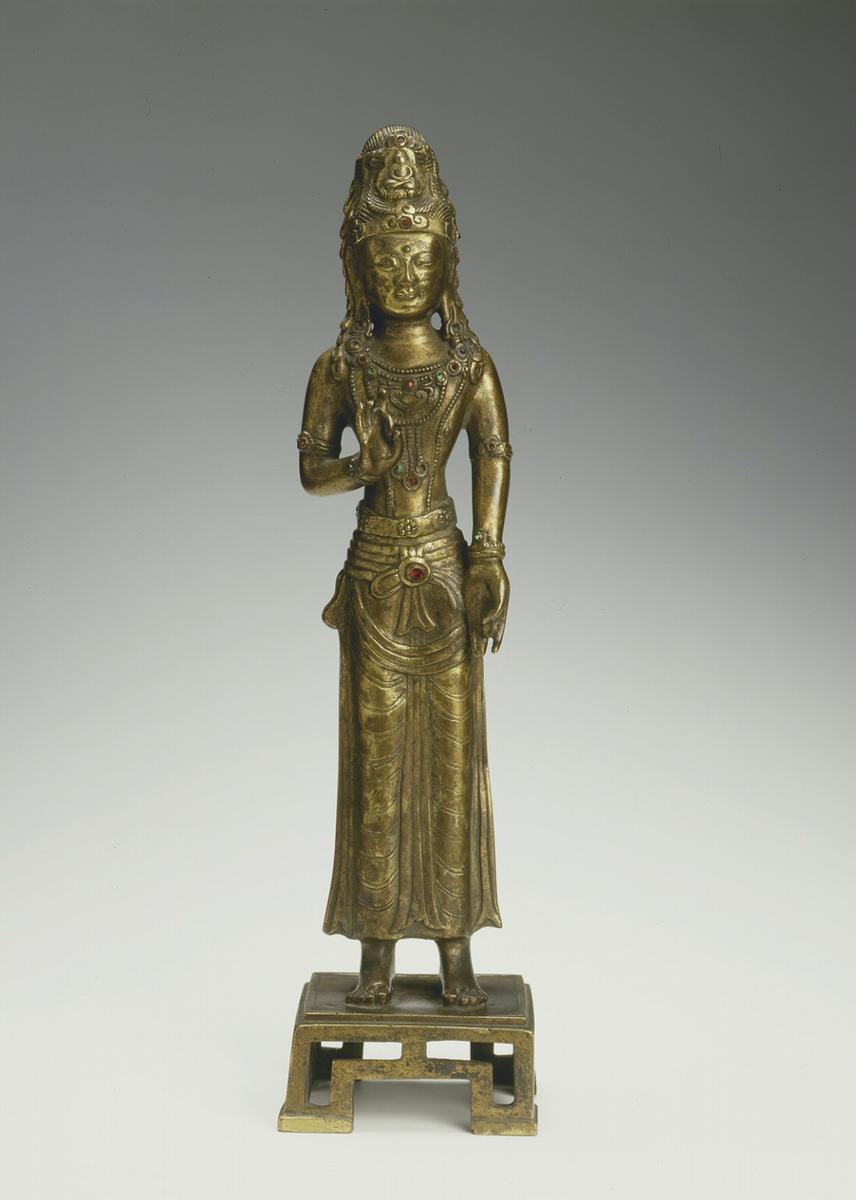
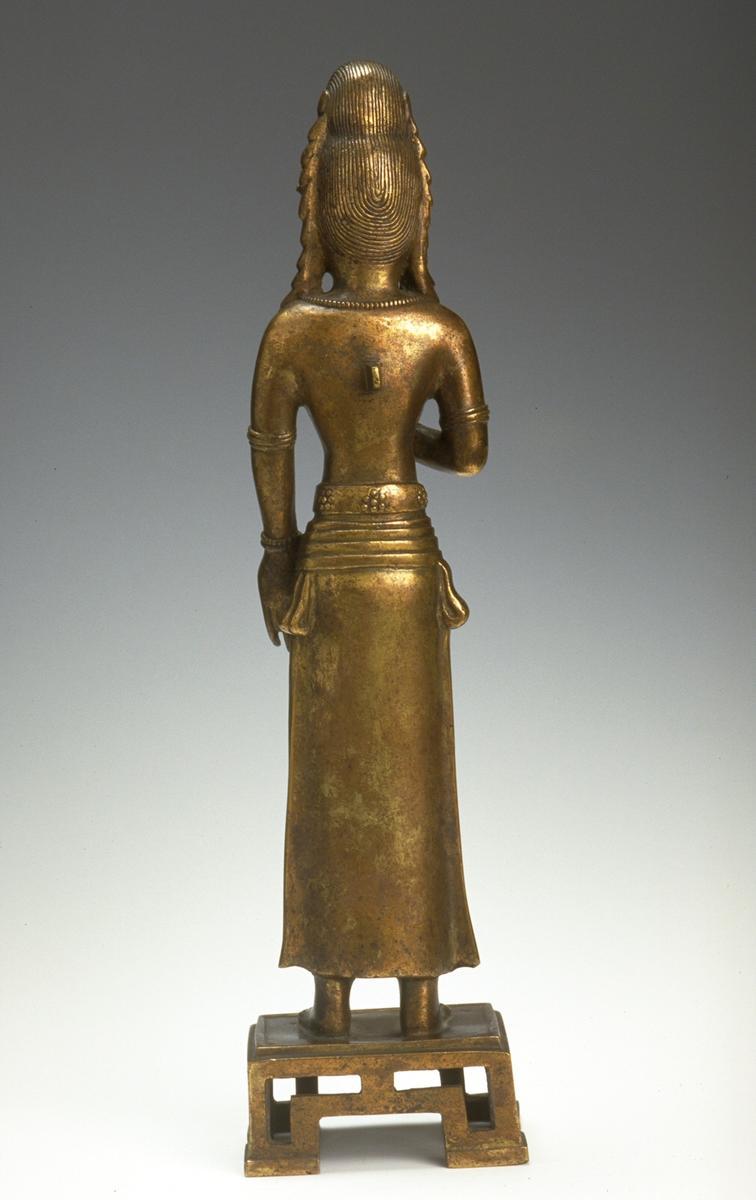
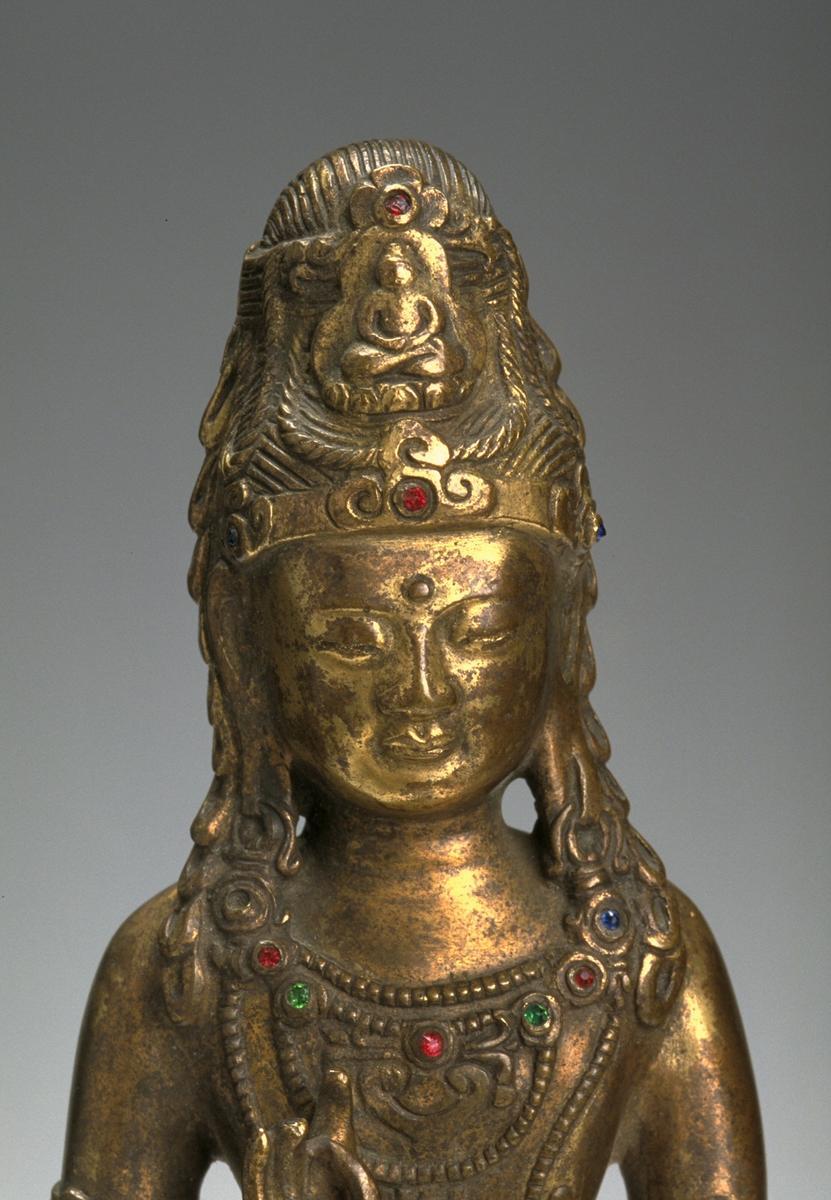
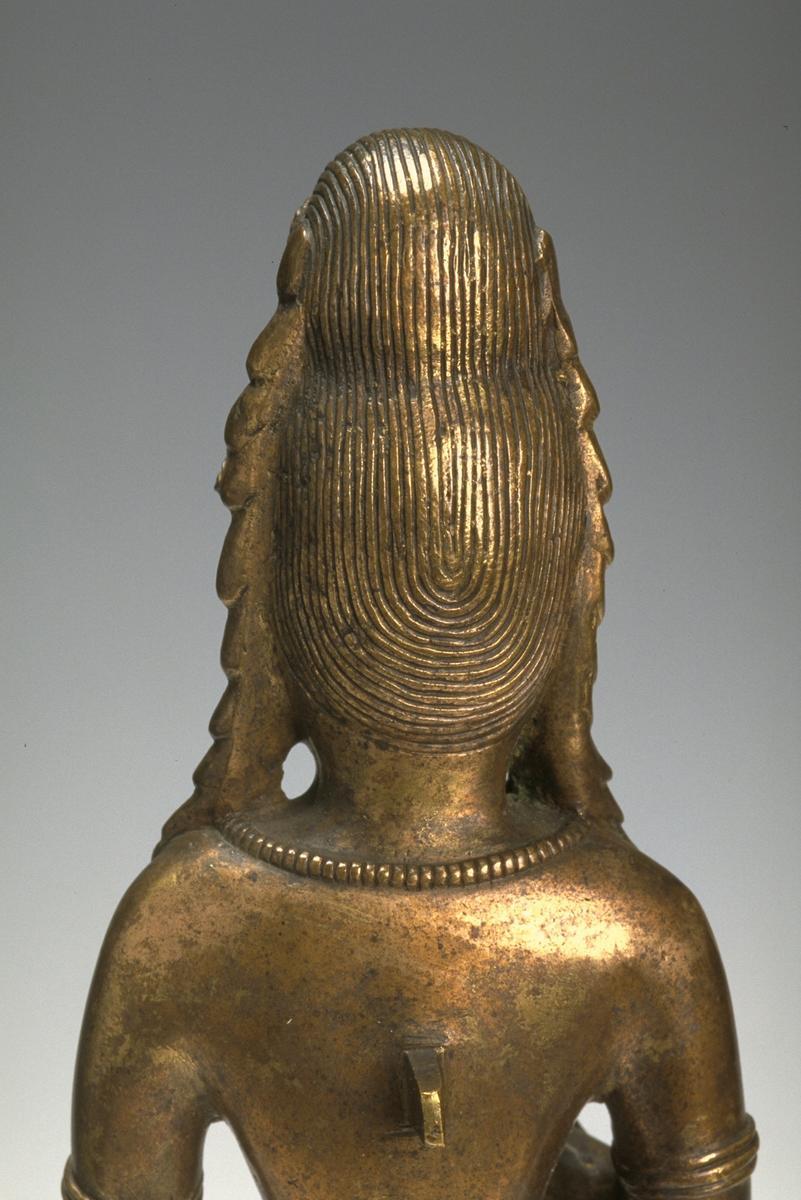 Standing bodhisattva Avalokiteshvara (Guanyin)
大理王国由段氏家族于937年起在中国西南的云南地区建立。云南在唐宋时期一直抵制中原王朝的扩张,直到1253年大理段氏被元朝蒙古军队征服后,才正式并入中国版图。大理都城位于中国与东南亚主要贸易通道(即著名的滇缅公路)的起点。当地居民多信奉佛教,且以非汉族民族为主。此展柜中的青铜造像即为该时期佛教艺术的代表作品,其图像融合了中原、东南亚及本土艺术风格,形成了独具地域特色的造像体系,尤以阿嵯耶观音等菩萨造像最为典型。
此尊造像虽具大理造像典型特征,但其身型比例和之前不同,面庞更显丰腴,璎珞饰物亦更为厚重。此类艺术特征表明,该造像应制作于1253年蒙古征服大理王国之后。
The Dali kingdom was ruled from 937 by the Duan family in Yunnan in southwestern China. Having been resistant to Chinese expansion during the Tang and Song dynasties, Yunnan was not incorporated into China until the Duan clan was defeated by the Mongols of the Yuan dynasty in 1253. The Dali capital was located on one end of the major trade route between China and Southeast Asia popularly known as the Burma Road. The majority of its residents were predominately Buddhist and not ethnically Han people. The bronze sculptures in this case are examples of Buddhist art produced during this time. The iconography represents a combination of Chinese, Southeast Asian, and indigenous styles unique to this area; notable examples are figures of the bodhisattva Avalokiteshvara, also known as Acuoye Guanyin in Chinese.
While this piece is clearly related to other examples from the Dali kingdom, it has different body proportions, a more rounded face, and heavier jewelry. This style suggests that the object postdates the conquest of the Dali kingdom by the Mongols in 1253.
页面工具
