
侧边栏

7-8世纪泰国合金铜嵌银四臂观音立像(旧金山亚洲艺术博物馆)
尺寸:H. 69.9 cm x W. 29.2 cm x D. 14.6 cm
年代:approx. 675-725
质地:合金铜嵌银
风格:泰国
来源:旧金山亚洲艺术博物馆
参阅:外部链接
鉴赏:
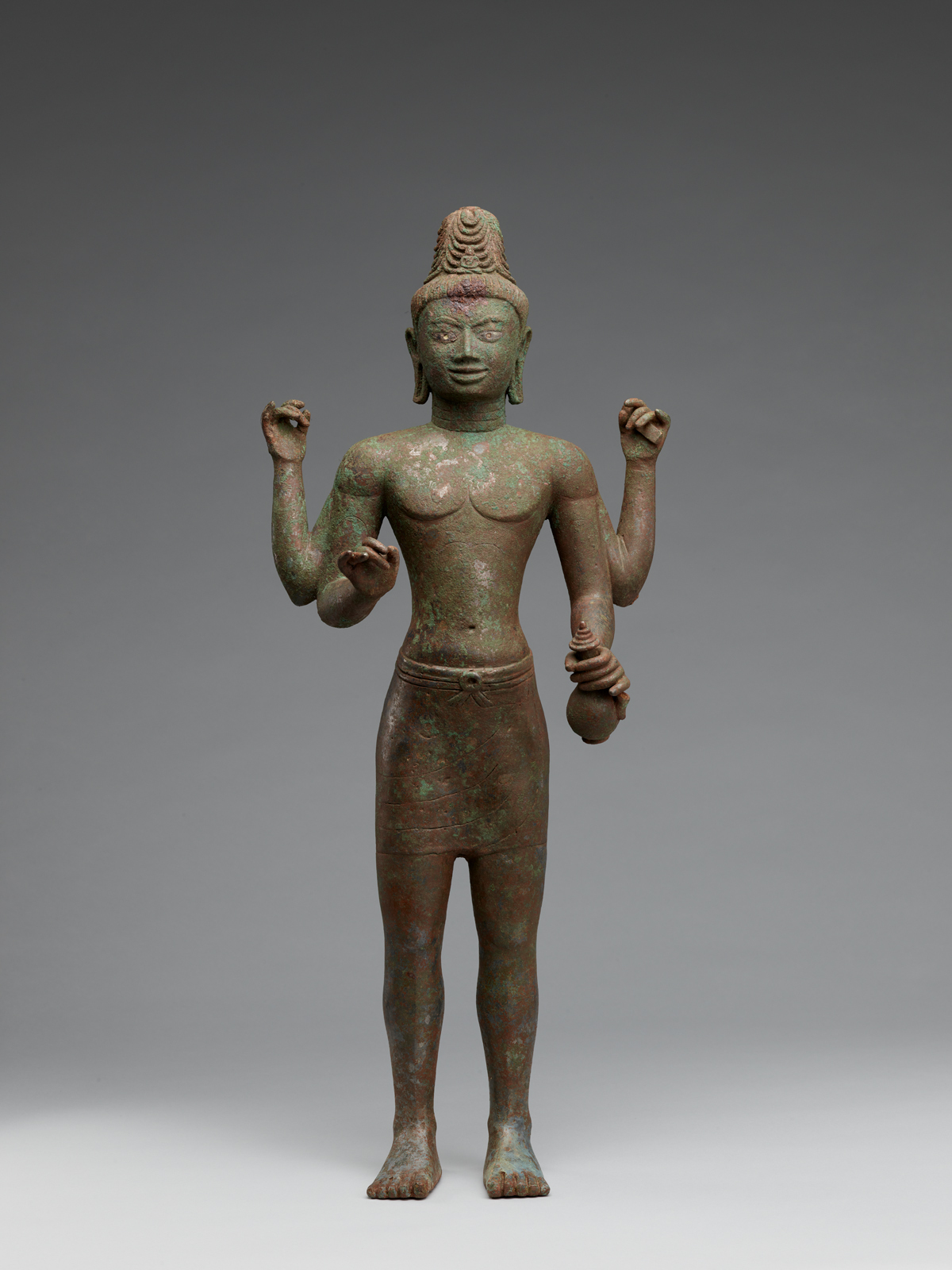
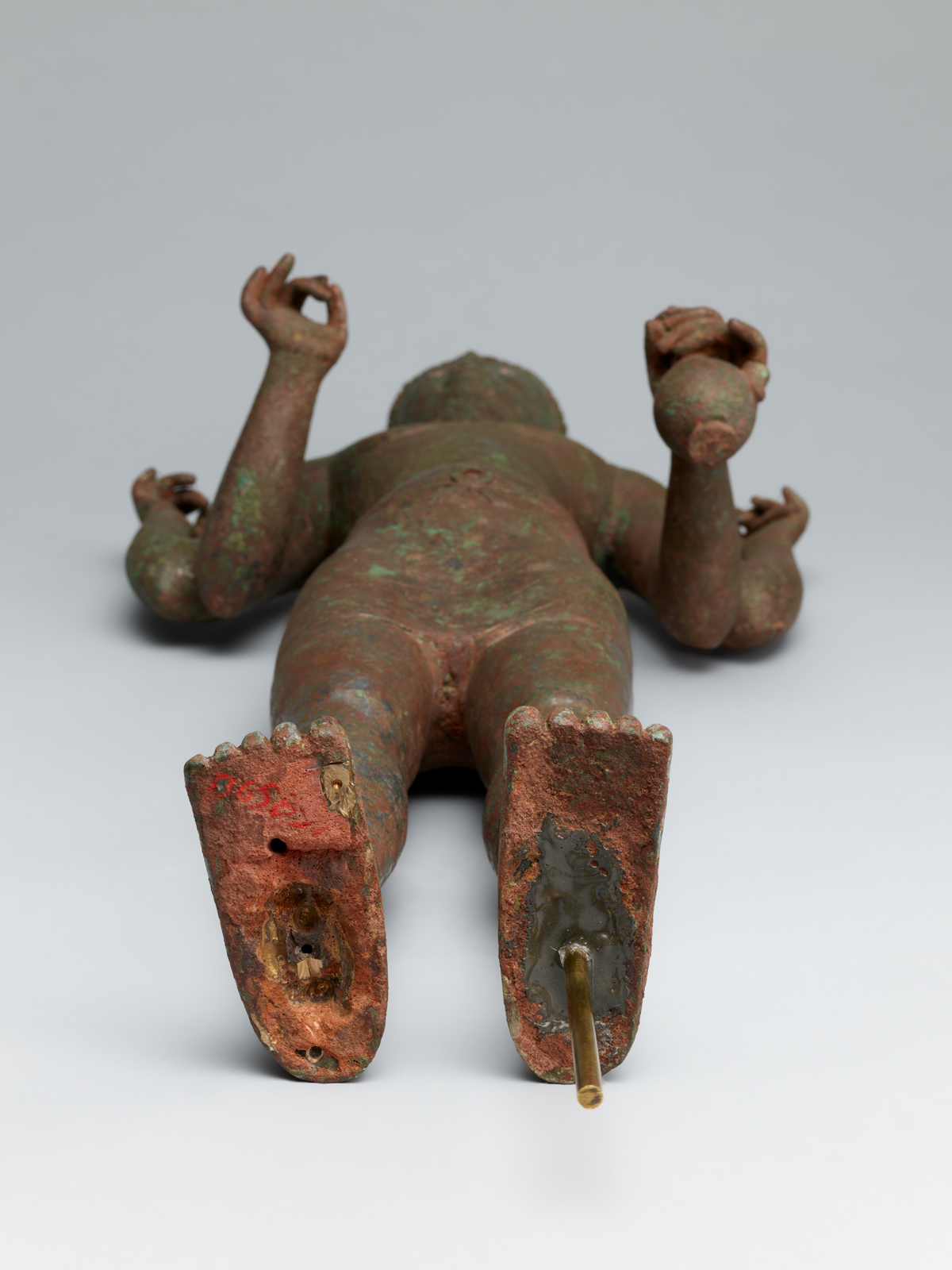
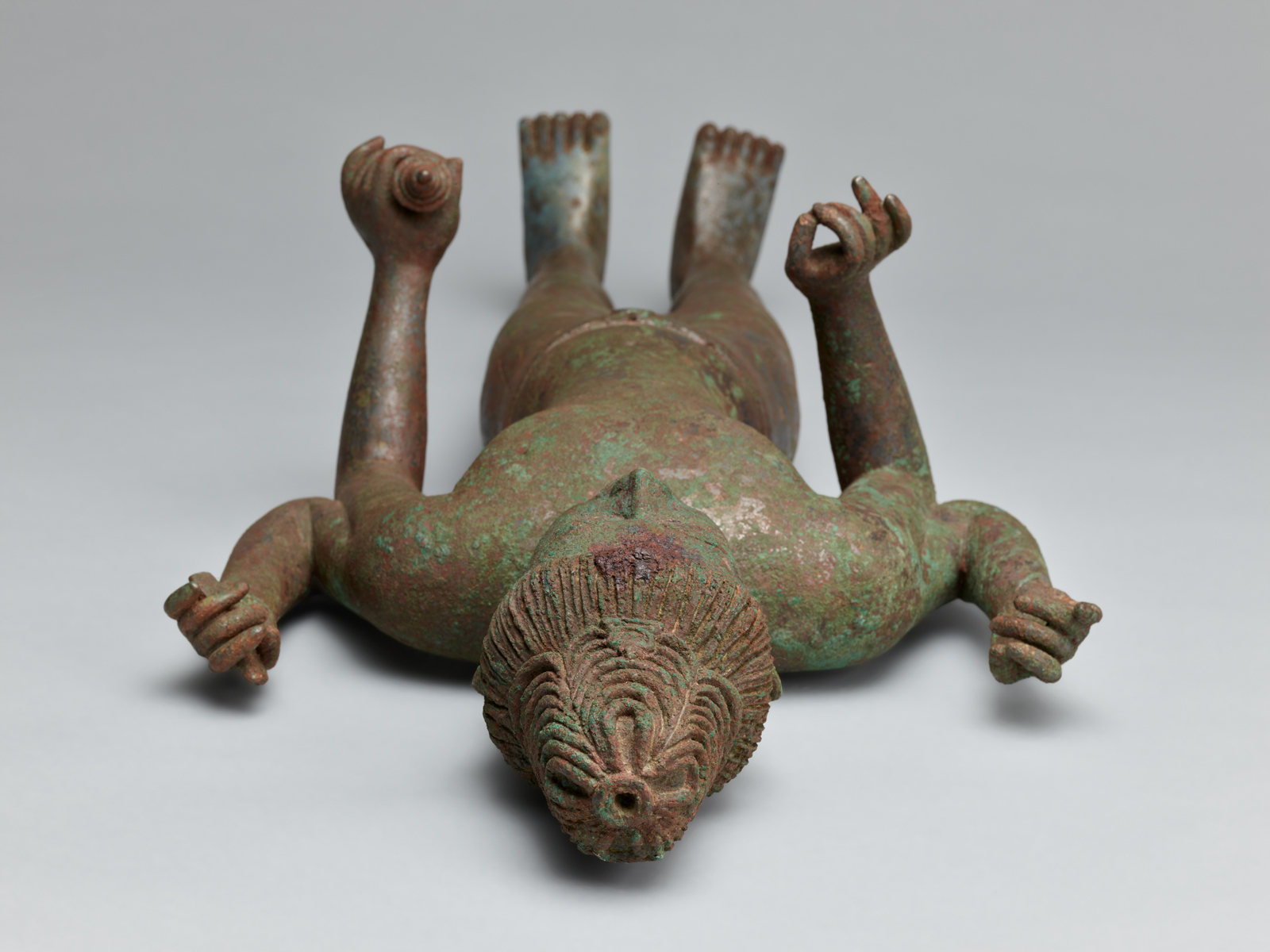
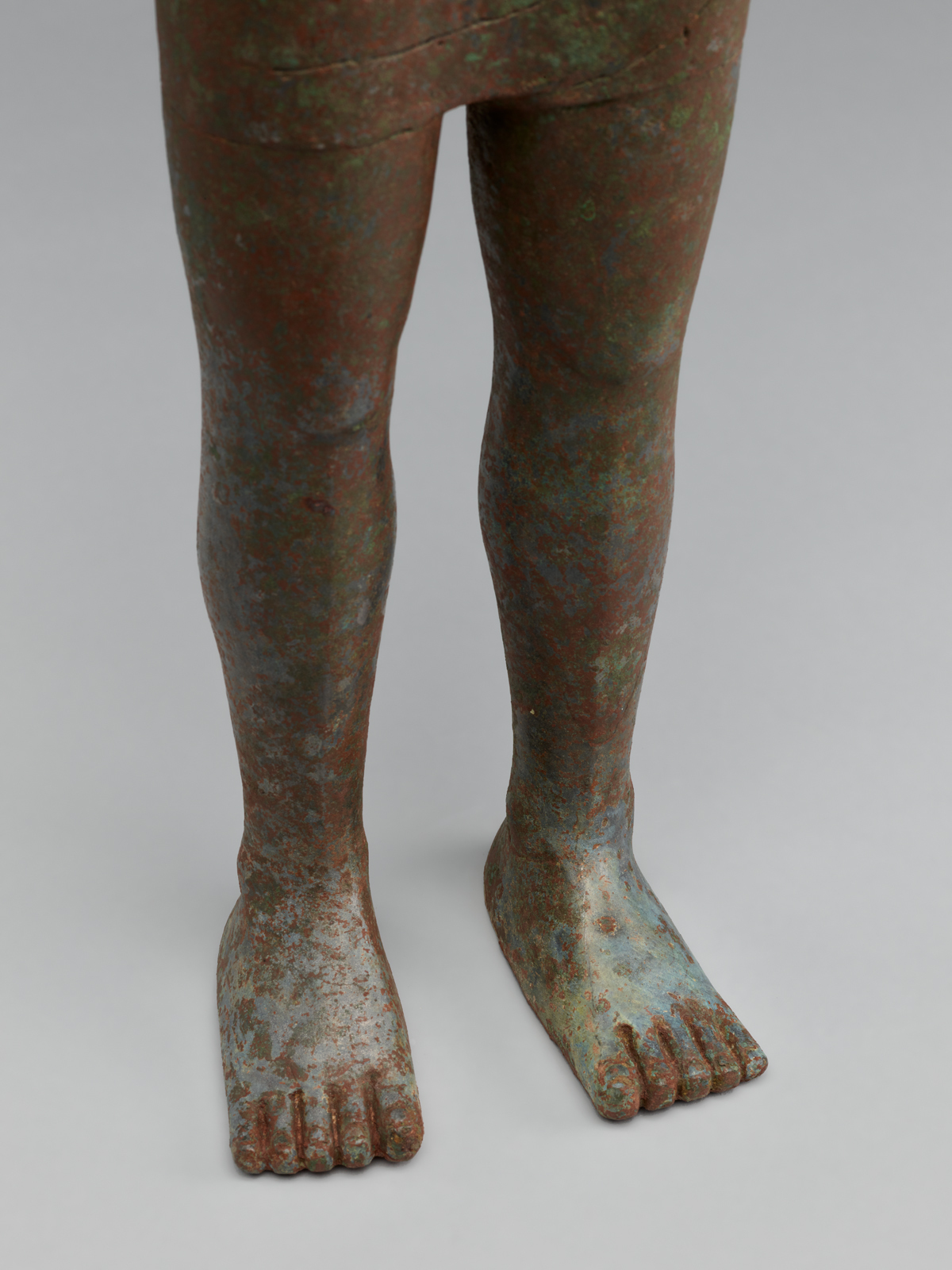
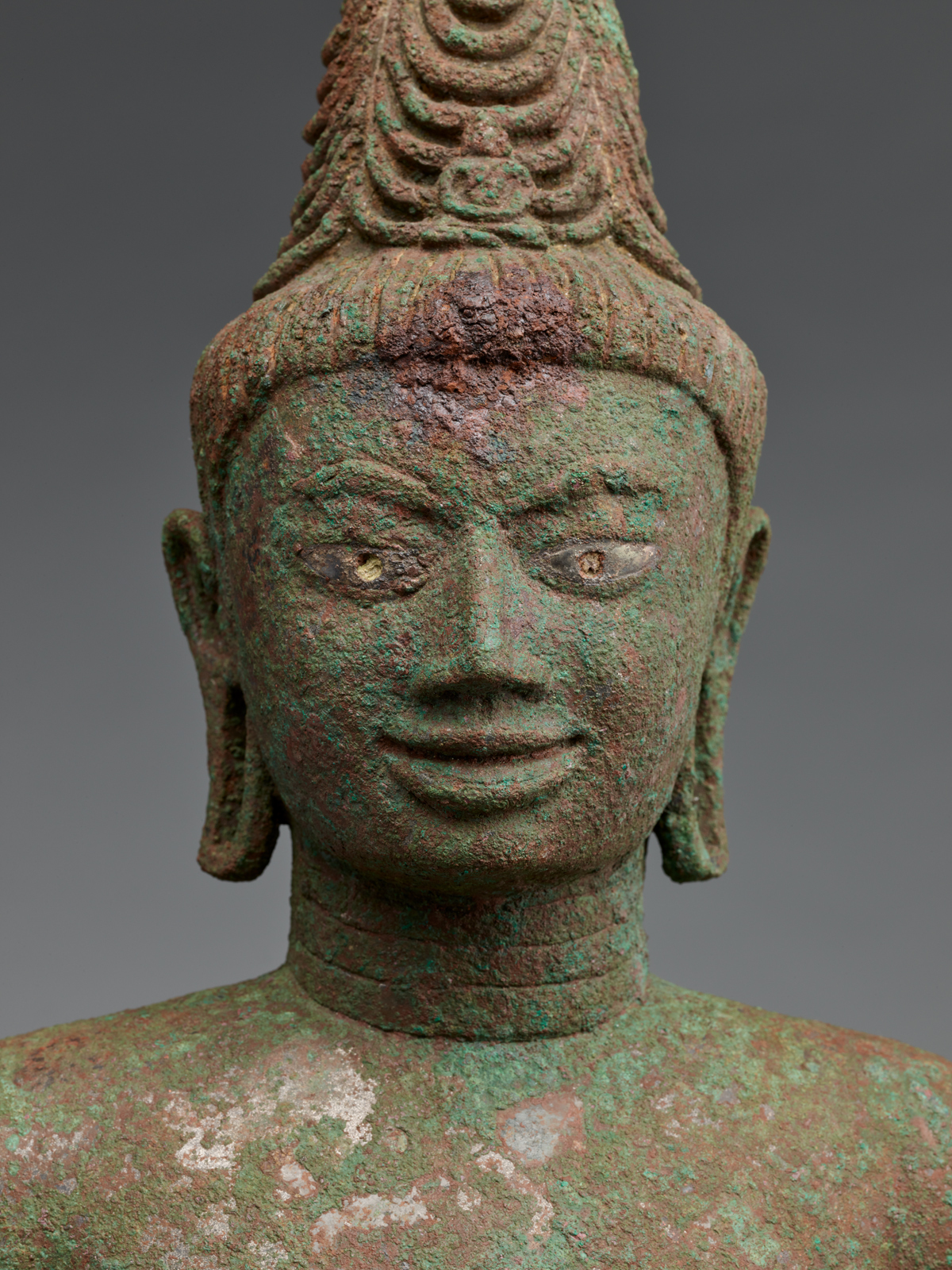
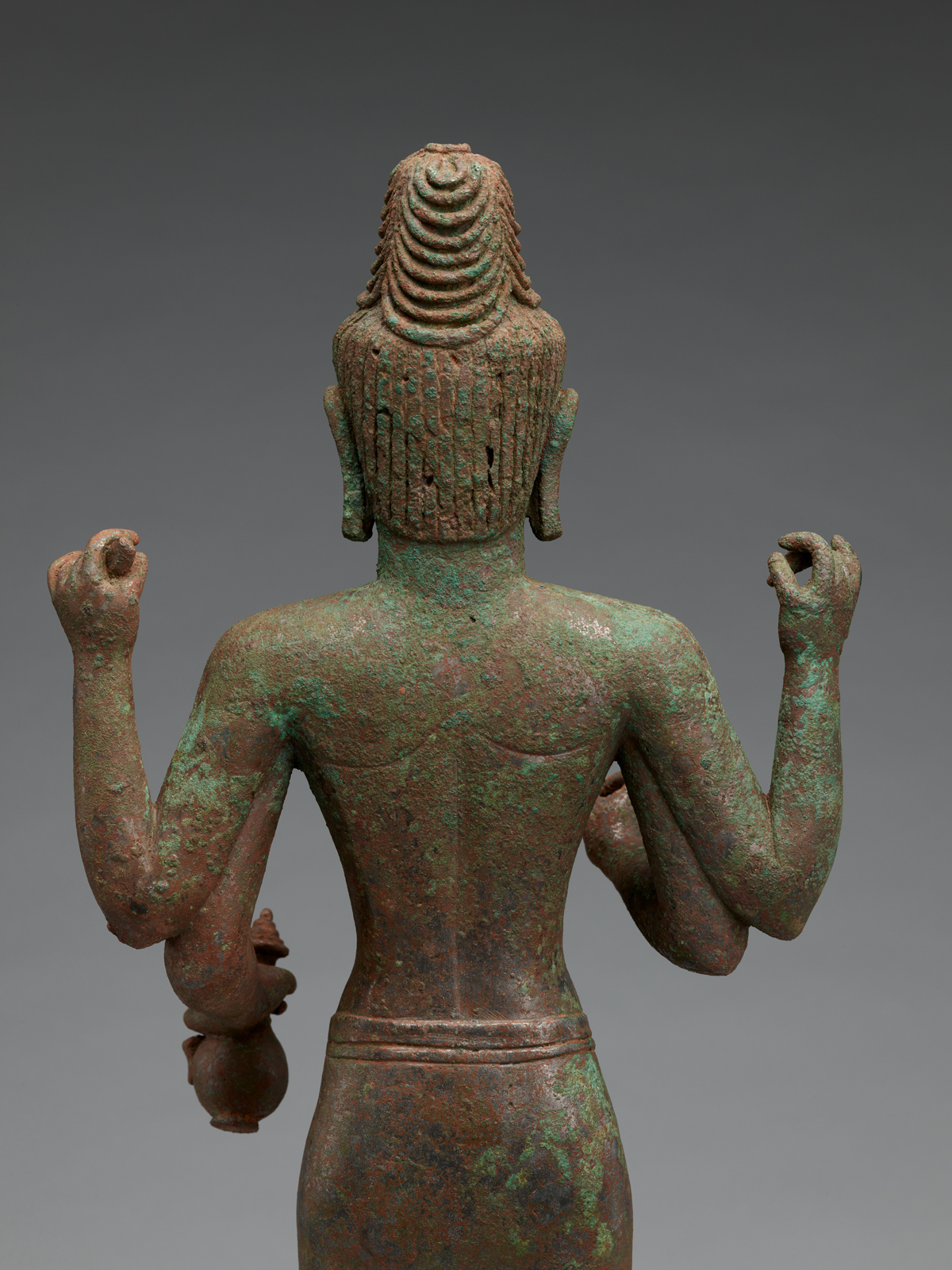
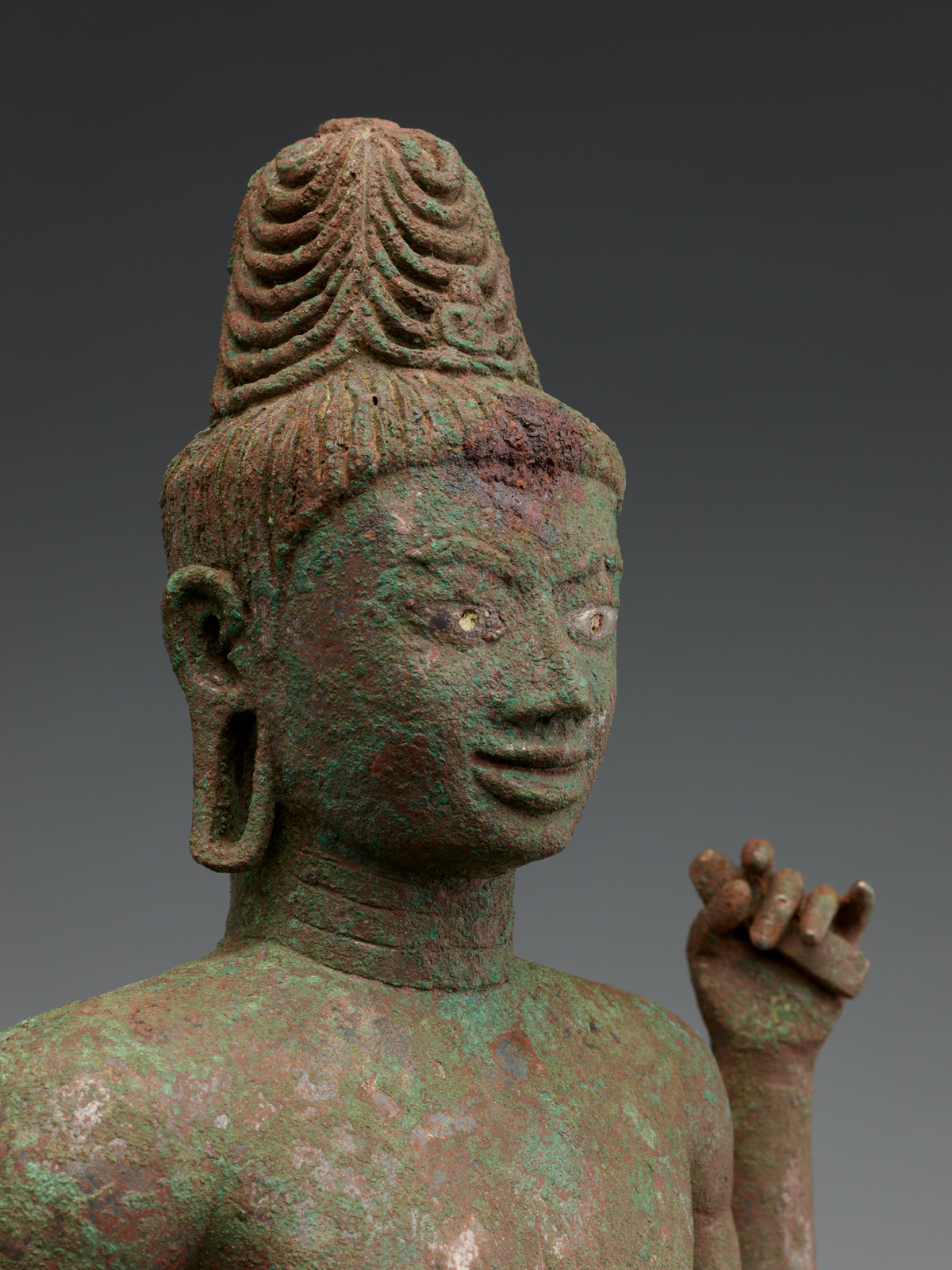
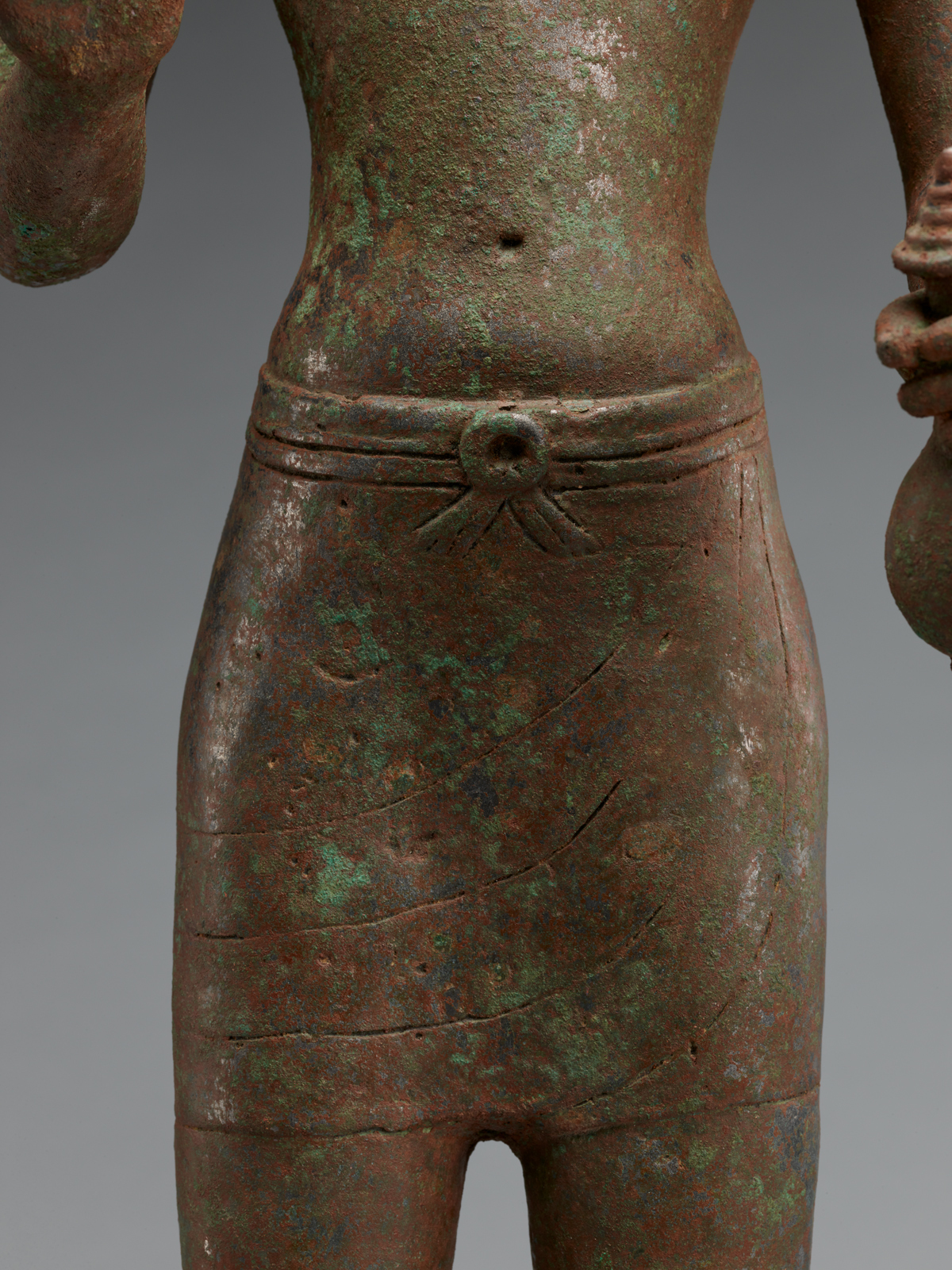
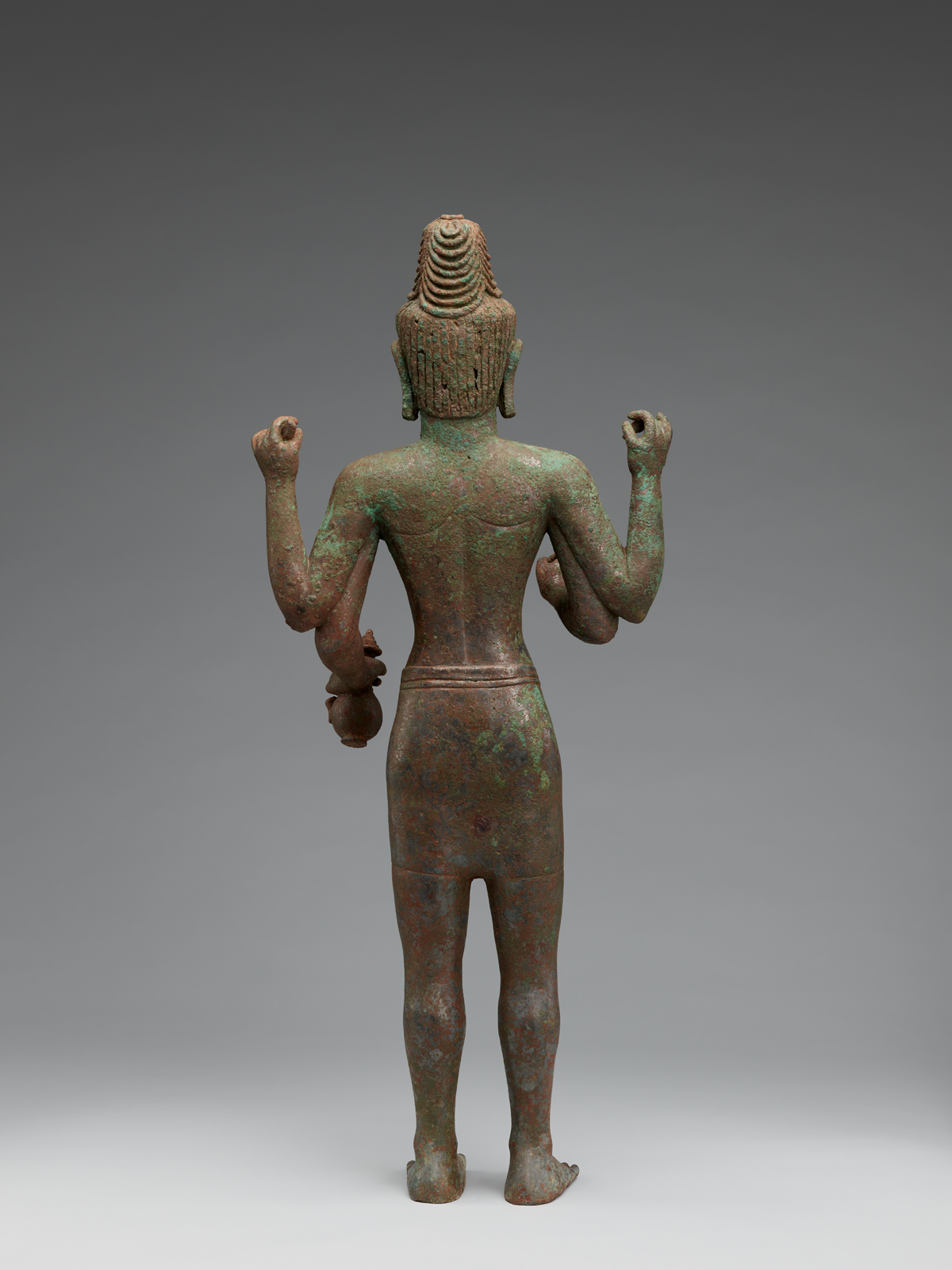
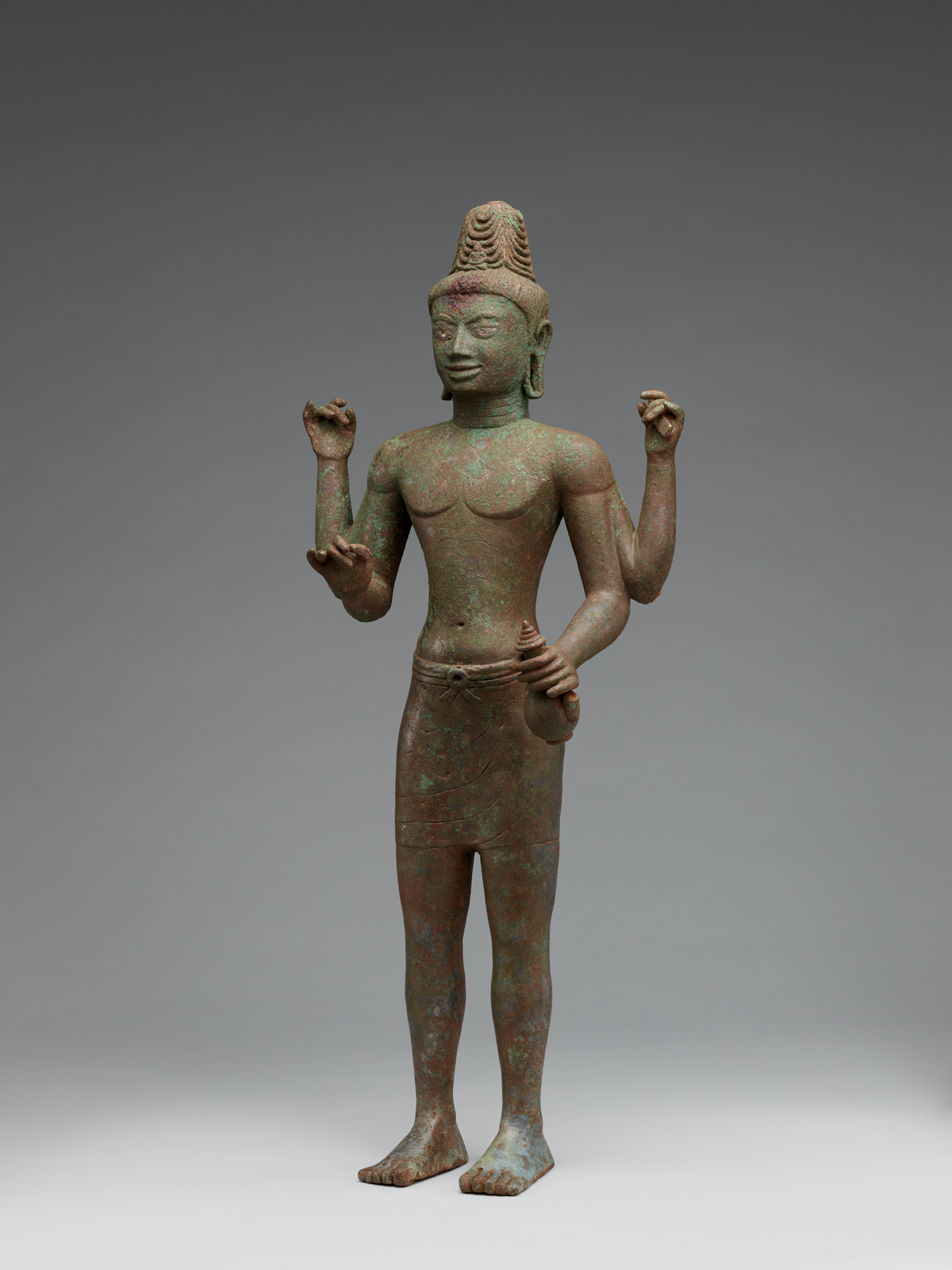
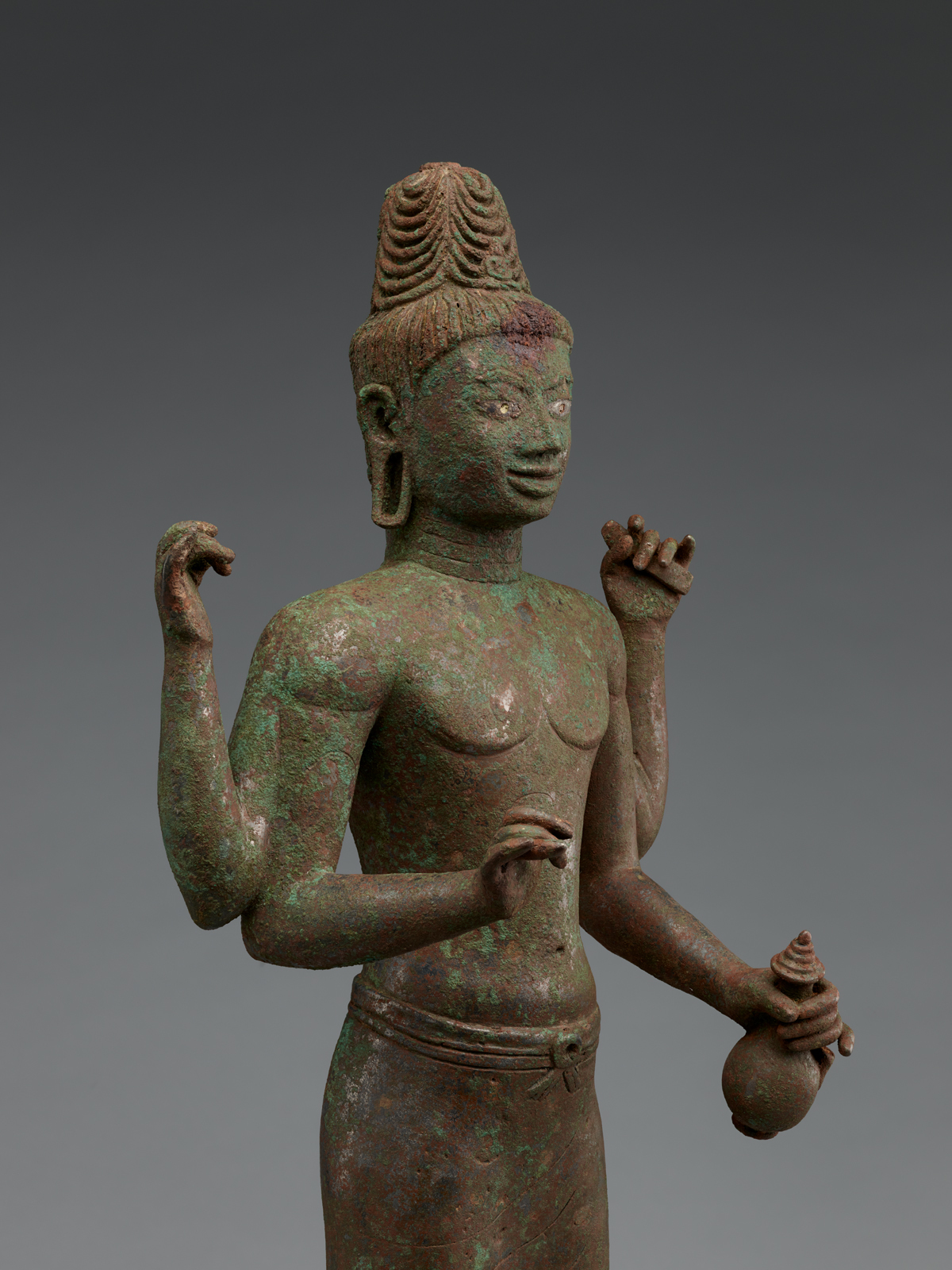
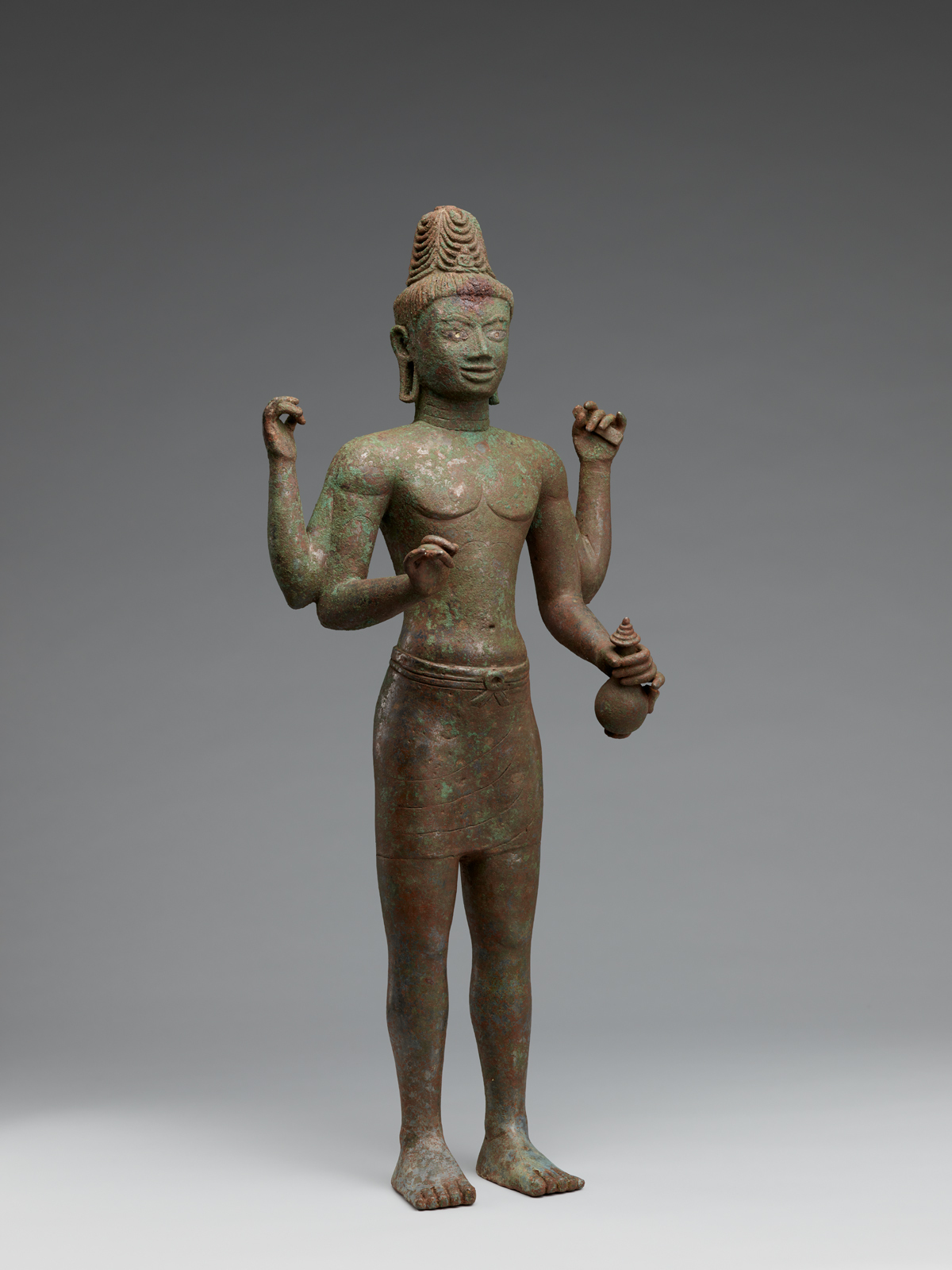
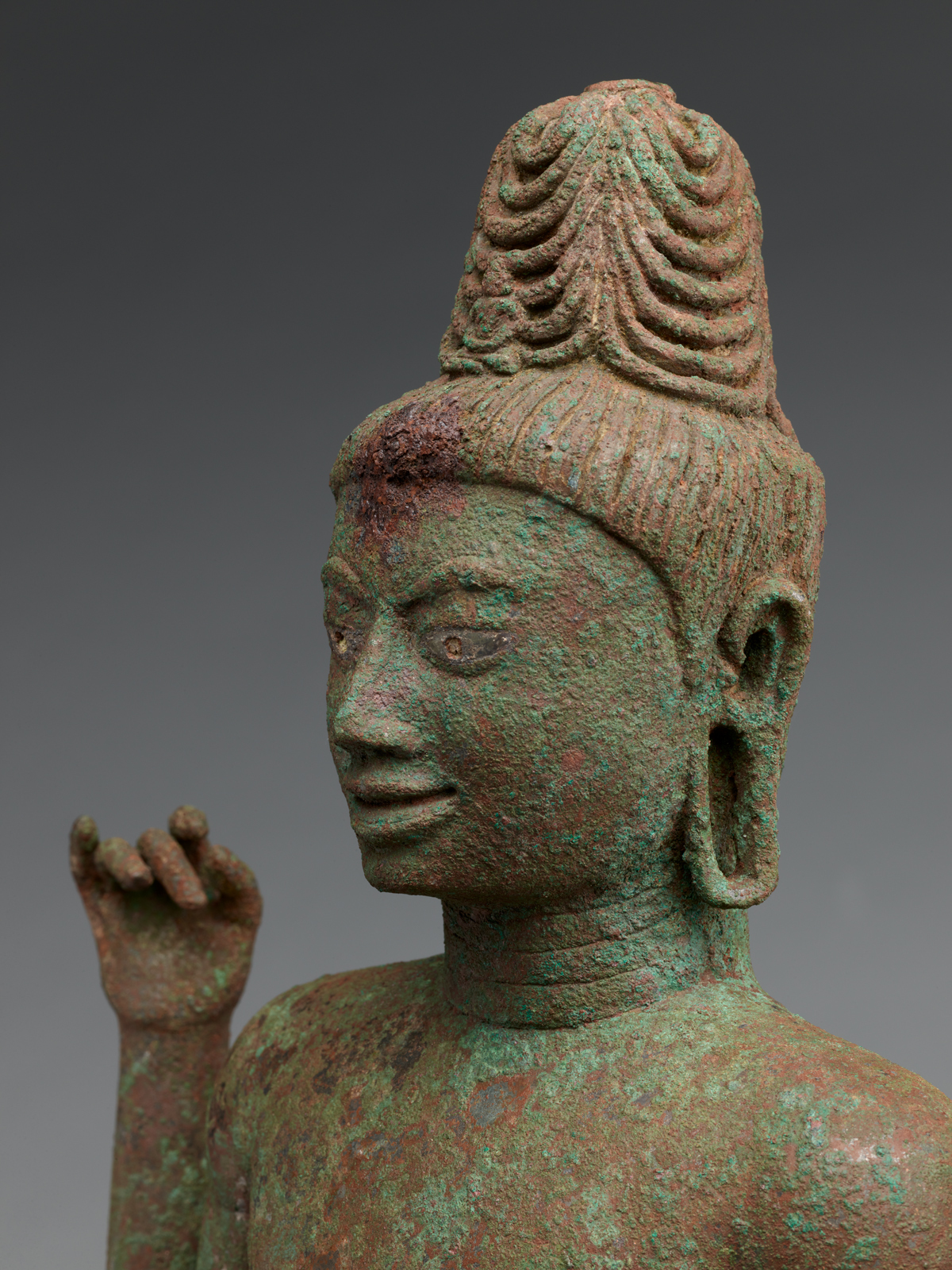 The bodhisattva Avalokiteshvara
Place of Origin: Plai Bat Hill, Buriram province, Thailand; Plai Bat Hill, Buriram province
Date: approx. 675-725
Materials: Bronze with silver inlay
Dimensions: H. 27 1/2 in x W. 11 1/2 in x D. 5 3/4 in, H. 69.9 cm x W. 29.2 cm x D. 14.6 cm
来源: Deaccessioned April 2025; repatriated December 2025; formerly from The Avery Brundage Collection
这尊佛像出自1964年在泰国东北部寺庙附近出土的一组重要佛教青铜造像。在此之前,无人料想该地区早在一千二百多年前就已拥有能铸造如此精湛的大型青铜雕塑的工坊。从风格推断,部分造像的年代比其他早两个世纪,可见当地雕塑工坊必然延续了相当长的创作周期。此像因具备方形站姿、略显庄重的面容特征、清晰的胸肌轮廓以及松散发辫盘绕的发式,被认定为其中年代最早者。
这批造像为何被集中掩埋至今成谜,关于铸造者的族属与语言亦鲜有线索可循。
发髻前饰有小佛像,据此可辨认为观世音菩萨造像。
【博物馆收藏溯源】1964年于普莱巴特山出土的数十尊造像,不久便被运离泰国,并由西方重要艺术商进行交易。本馆创始捐赠人于1964或1965年购得此尊造像。
This figure comes from a group of remarkable Buddhist bronze sculptures found buried near a temple in northeastern Thailand in 1964. No one had suspected that workshops in that area might have been producing large bronze sculptures of such quality and technical assurance more than twelve hundred years ago. Their styles suggest that some of the sculptures were two centuries older than others, so the sculpture workshops in the area must have been in operation for an extended period. This one is thought to be the earliest on the basis of its square stance, somewhat severe facial features, sharp definition of the chest muscles, and hairdress of loosely looped braids.
Why the sculptures were buried together is not known, and there is little evidence about the ethnicity or language of the people who made them.
The figure can be identified as the bodhisattva Avalokiteshvara by the small Buddha image at the front of the hairdress.
How Did This Sculpture Reach the Museum? The dozens of sculptures unearthed at Plai Bat Hill in 1964 were removed from Thailand soon after and were put on sale by major Western art dealers. The museum’s founding donor bought this one in 1964 or 1965.
页面工具
