
侧边栏

11-12世纪印度帕拉片岩石雕空行观音(美国肯贝尔艺术博物馆)
尺寸:124.9 x 80.3 x 35.9 cm
年代:11-12世纪
质地:片岩石雕(Gray schist)
风格:印度 帕拉
来源:美国肯贝尔艺术博物馆
参阅:外部链接
鉴赏:
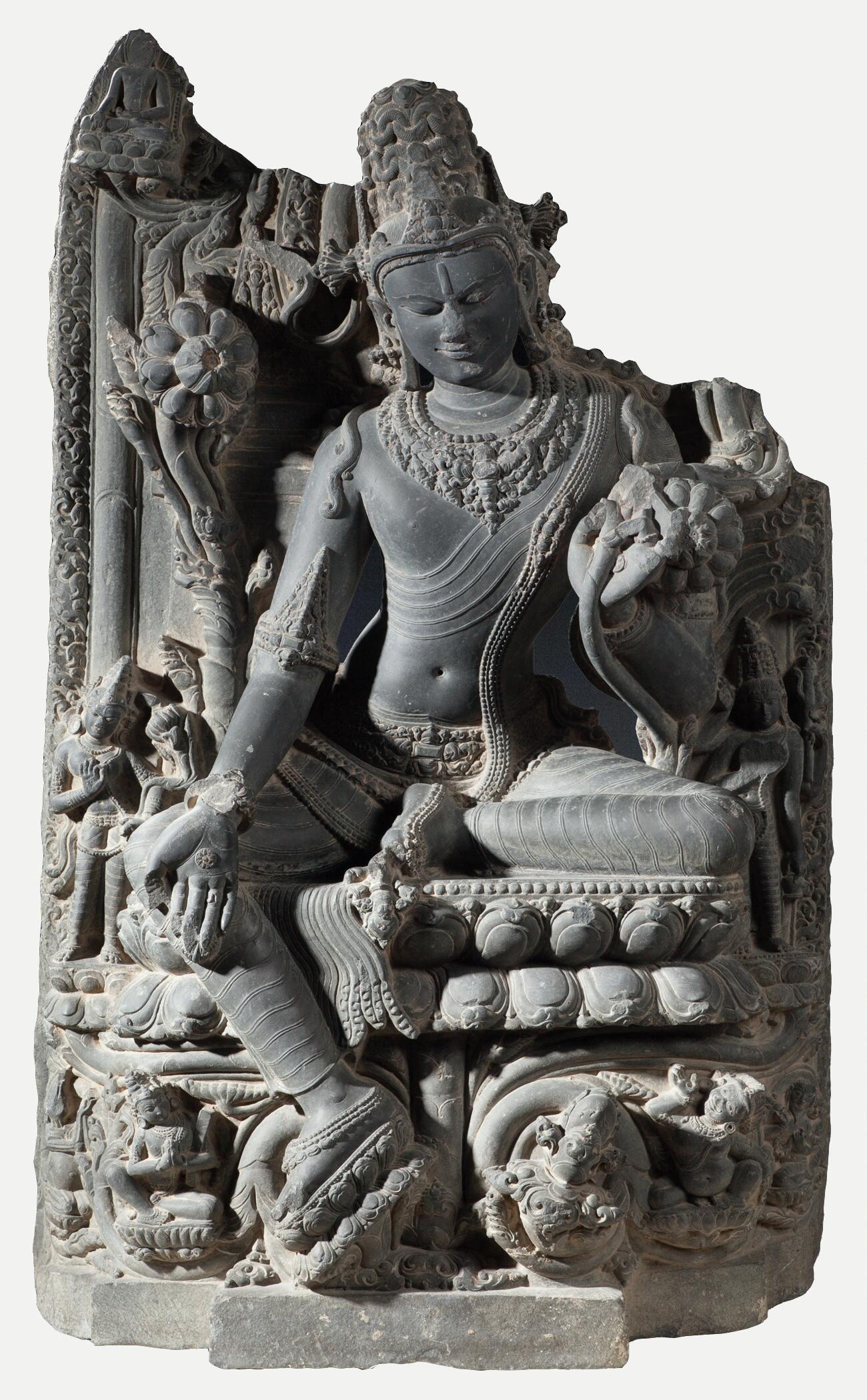 Bodhisattva Khasarpana Lokeshvara, c. 11th–12th century
Indian
The increasing complexity of imagery and iconographic detail in late Pala art paralleled the growing popularity of Esoteric Buddhism in eastern India. Khasarpana Lokeshvara, the Esoteric form of the immensely popular bodhisattva of compassion, Avalokiteshvara, was created by the absorption of Hindu elements into Buddhism and appears frequently in Pala art. In this stela, the youthful, bejeweled figure is seated on a double-lotus throne, surrounded by lotus blossoms and the deity’s four standard attendants: the goddesses Tara and Bhrikuti to the left and right of the bodhisattva’s knees; and, on the base, the needle-nosed Sucimukha, who imbibes the nectar of grace, at the left rear, and the plump, fearsome Hayagriva at the right front. In addition, the princely Sudhanakumara, who carries a book under his left arm, is shown at the front left of the base, while two tiny figures of the donor couple are shown kneeling behind Hayagriva. Due to damage to the upper part of the stela, only one remains from the figures of the five jina Buddhas, the rulers of the Buddhist universe. The elegant proportions, attenuated waistline, richly carved surface decoration, complex iconography, and almost feminine poise of the bodhisattva are hallmarks of the mature Pala style.
波罗王朝晚期艺术的图像学细节日趋繁复,恰与密教在东印度地区的弘传相呼应。观世音菩萨的密教化身——卡萨帕那洛开湿伐罗(Khasarpana Lokeshvara, 空行观音),正是吸纳印度教元素后的佛教新造像,在波罗艺术中频繁出现。此碑中,饰以璎珞的年轻菩萨结跏趺坐于双层莲台,周身环绕莲华及四位常侍胁侍:膝侧左右分别为度母(Tara)与毗俱胝(Bhrikuti);台座左后方为针口饿鬼苏吉穆卡(Sucimukha),正吮吸甘露法味;右前方则是威猛相的马头明王(Hayagriva)。此外,台座左前方刻有左臂挟经卷的善财童子(Sudhanakumara),马头明王身后则跪着两位微型供养人像。因碑额残损,原本统御佛教世界的五方佛(jina Buddhas)仅存一尊。菩萨优雅的身形比例、纤细的腰肢、繁缛的浮雕装饰、复杂的图像组合以及近乎女性柔美的姿态,皆是波罗艺术成熟期的典型特征。
来源:
(Ben Heller, Inc., New York);
purchased by Kimbell Art Foundation, Fort Worth, 1970.
页面工具
