
侧边栏

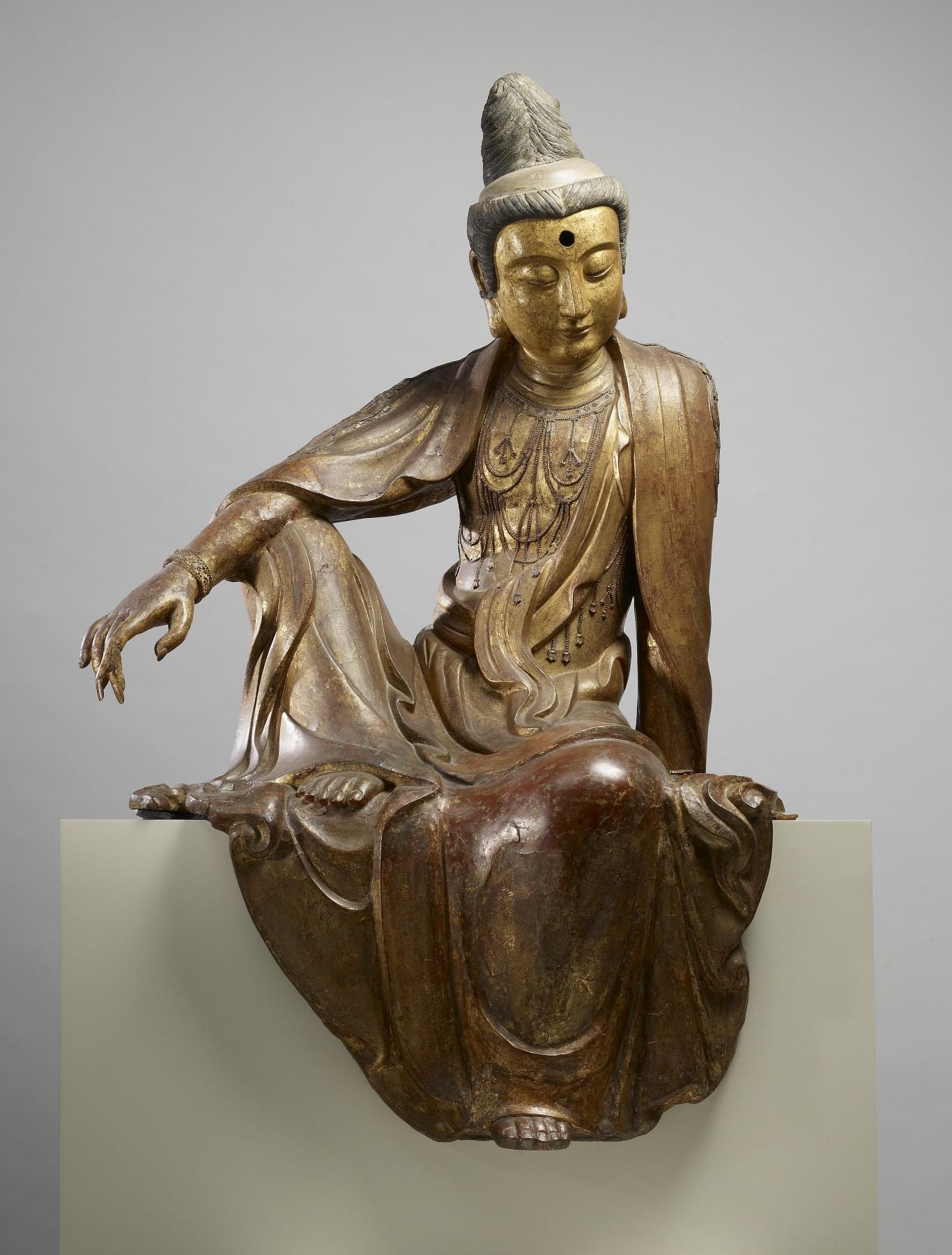
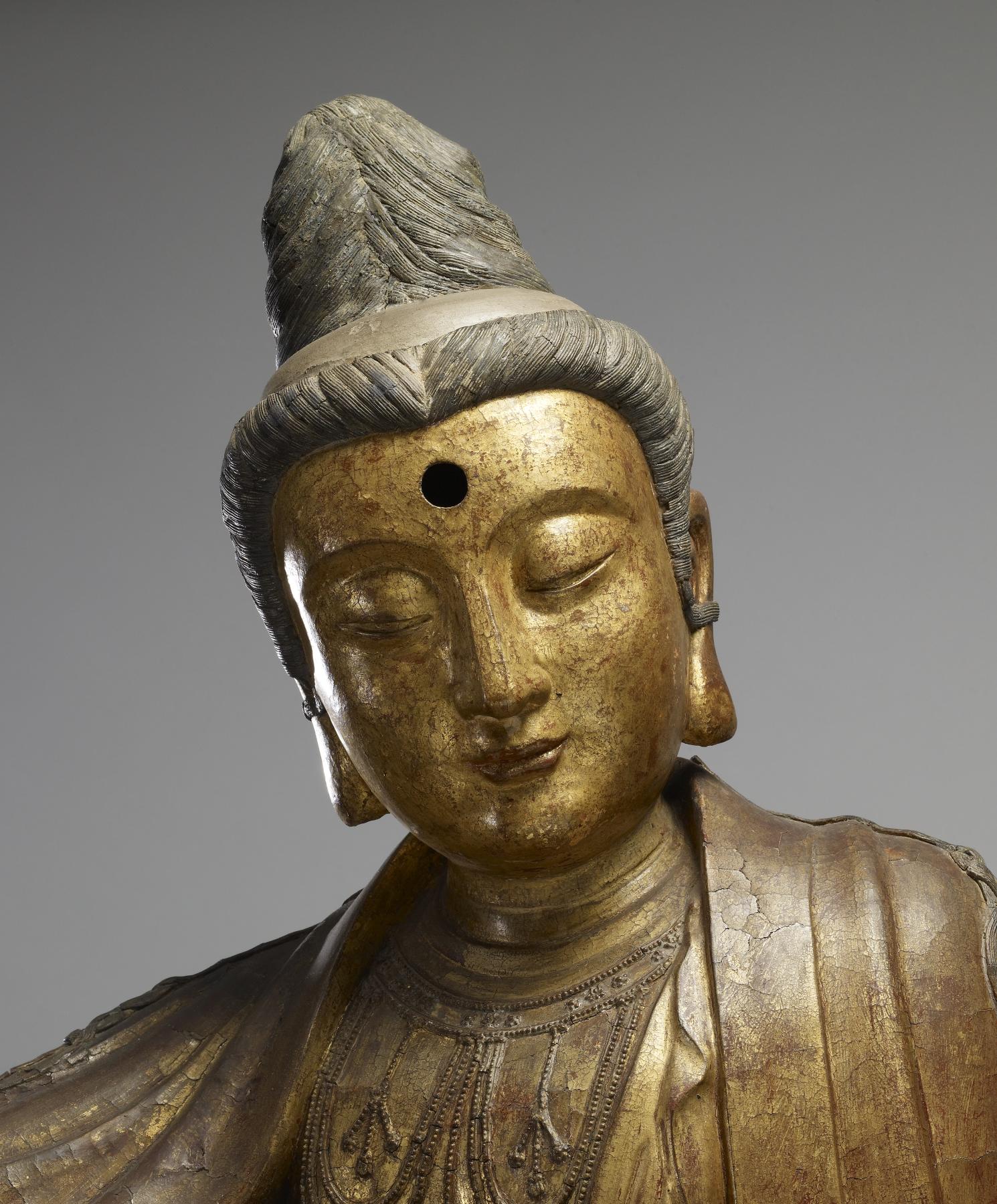
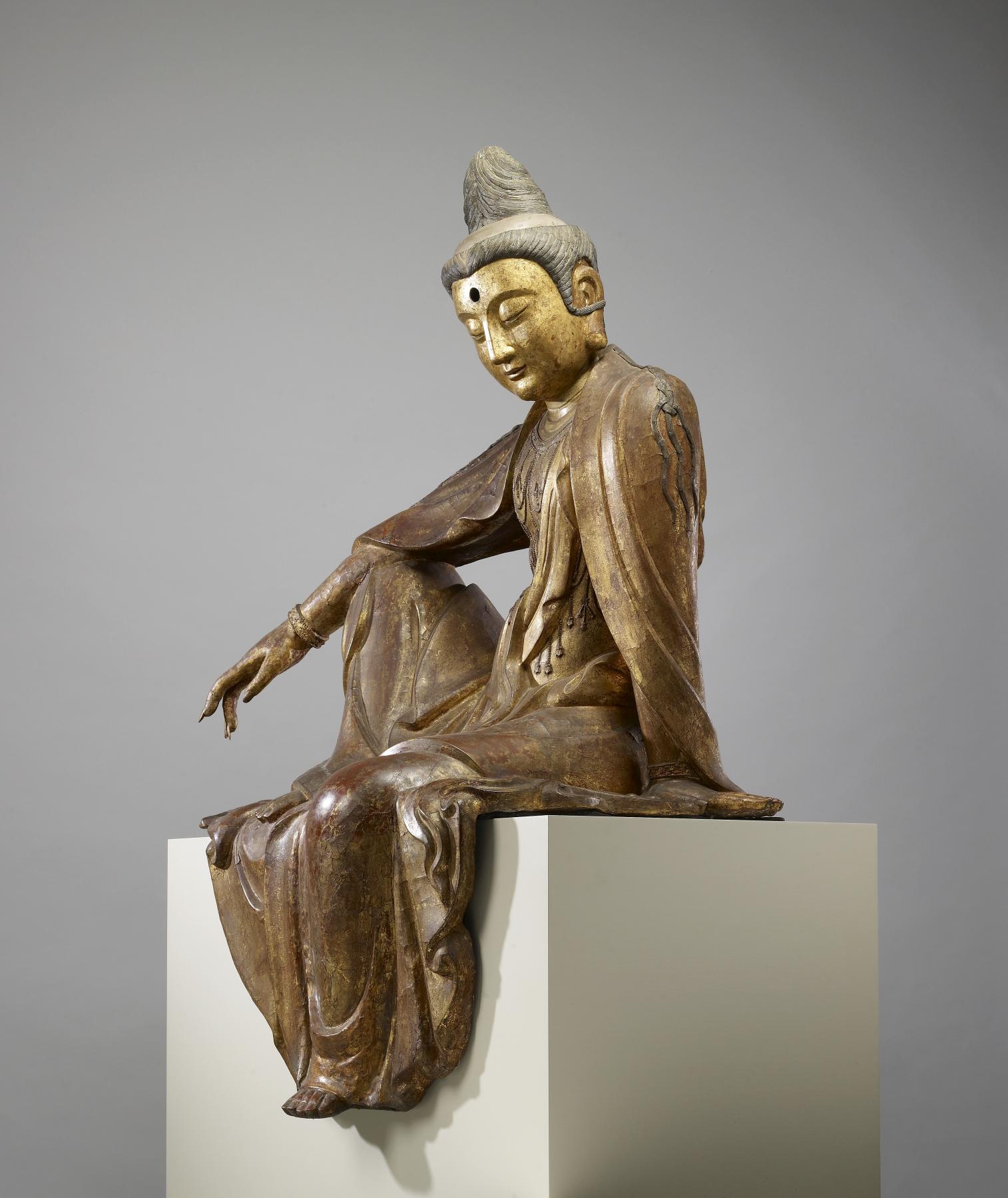
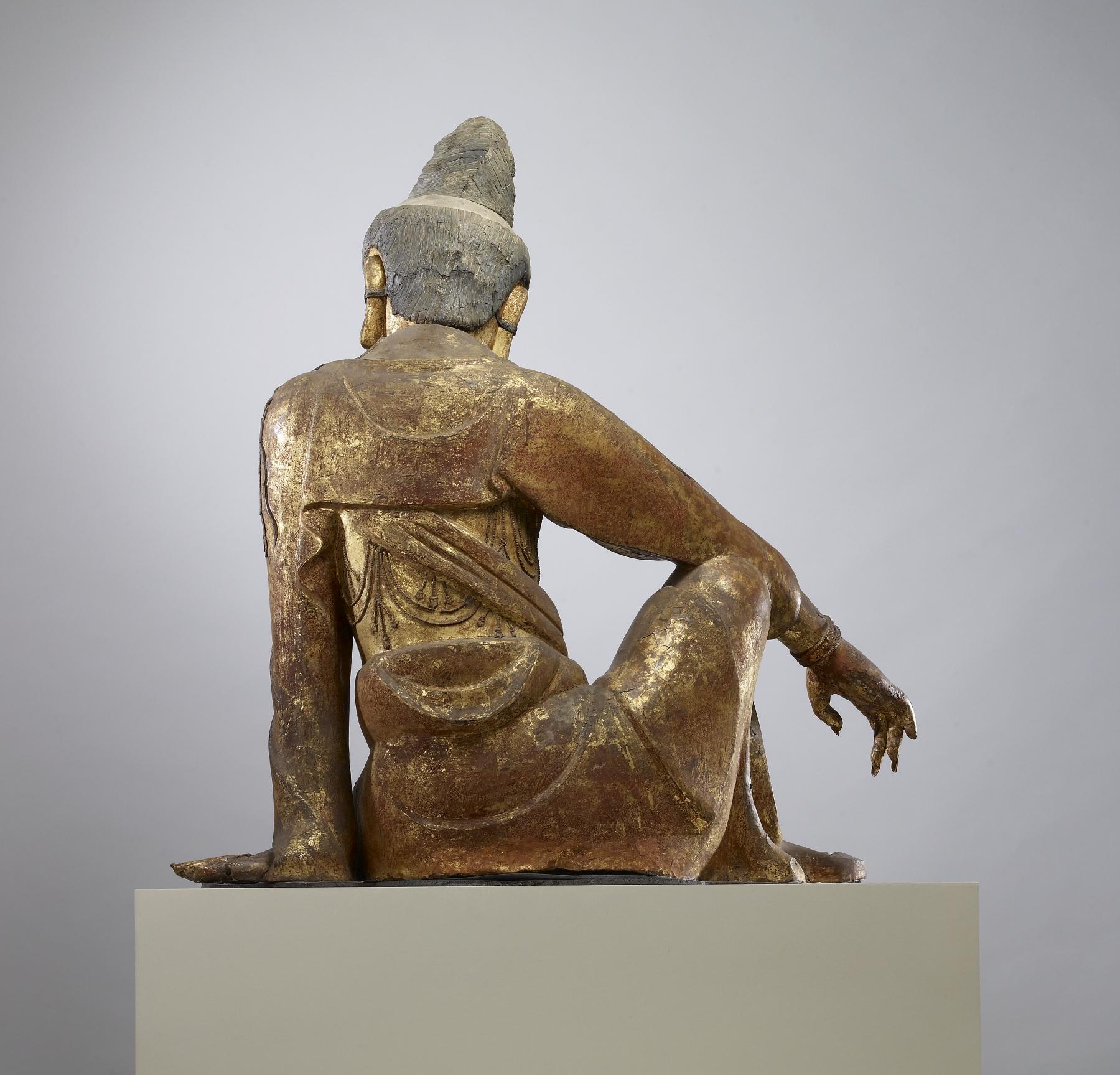
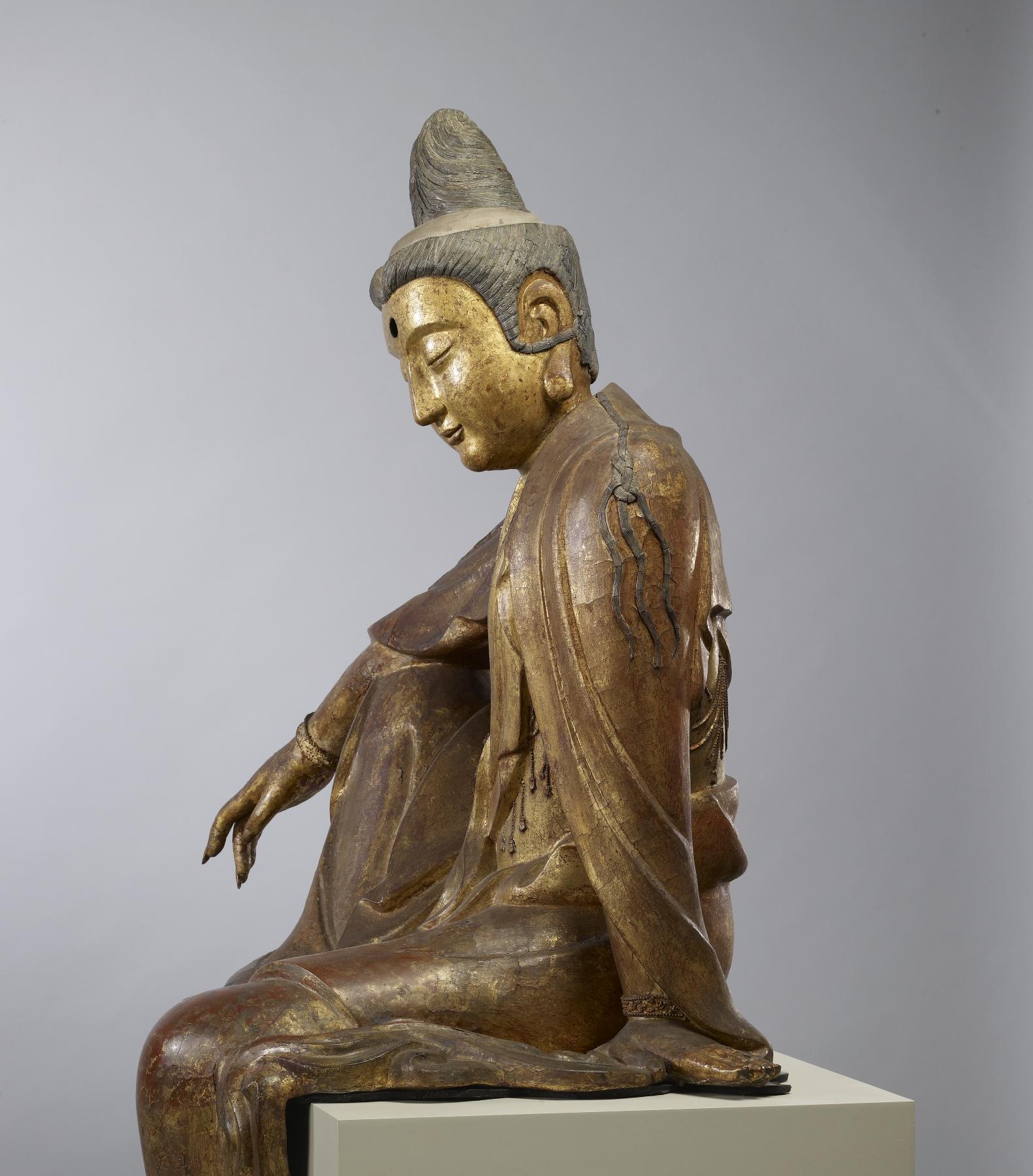
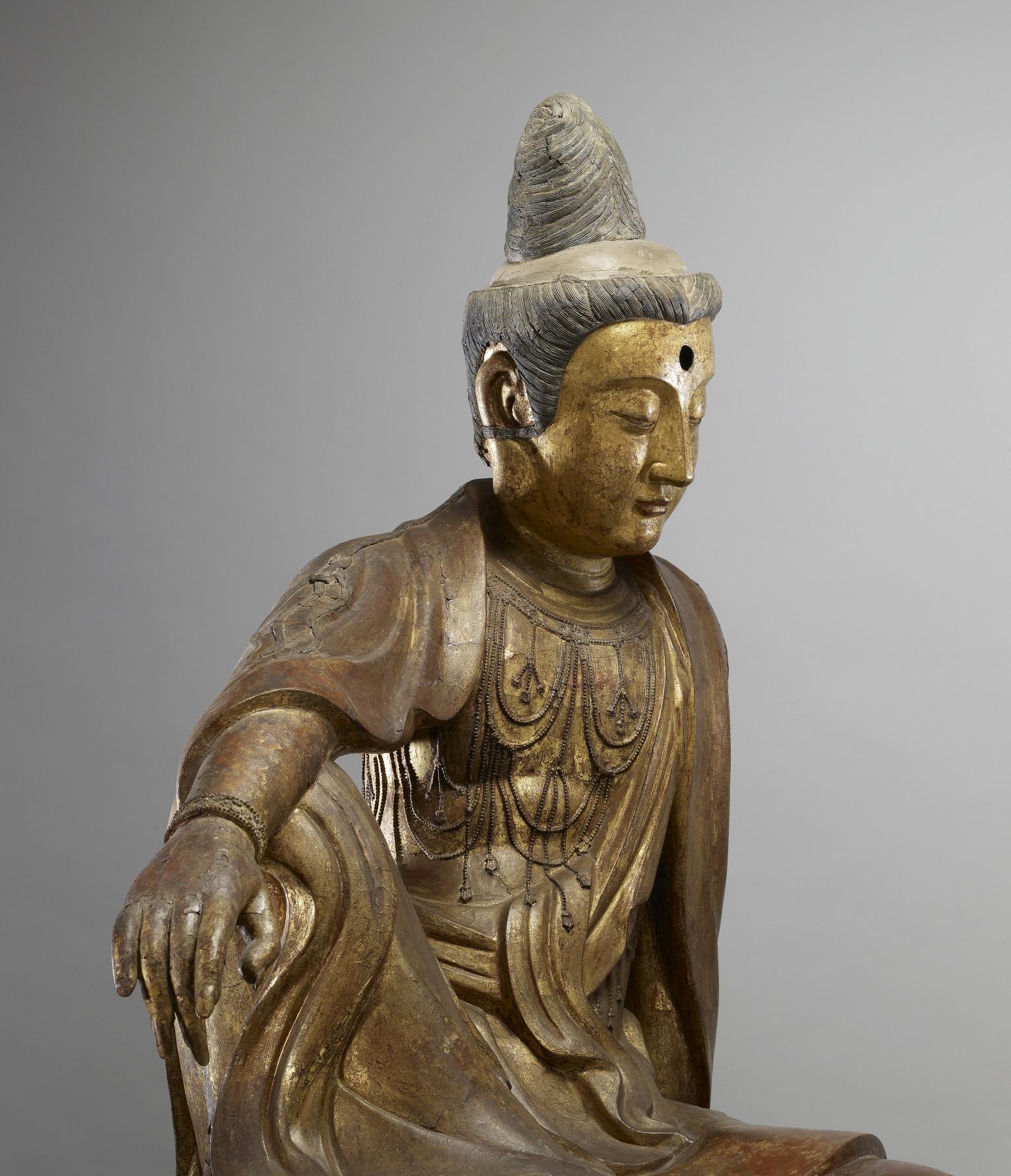
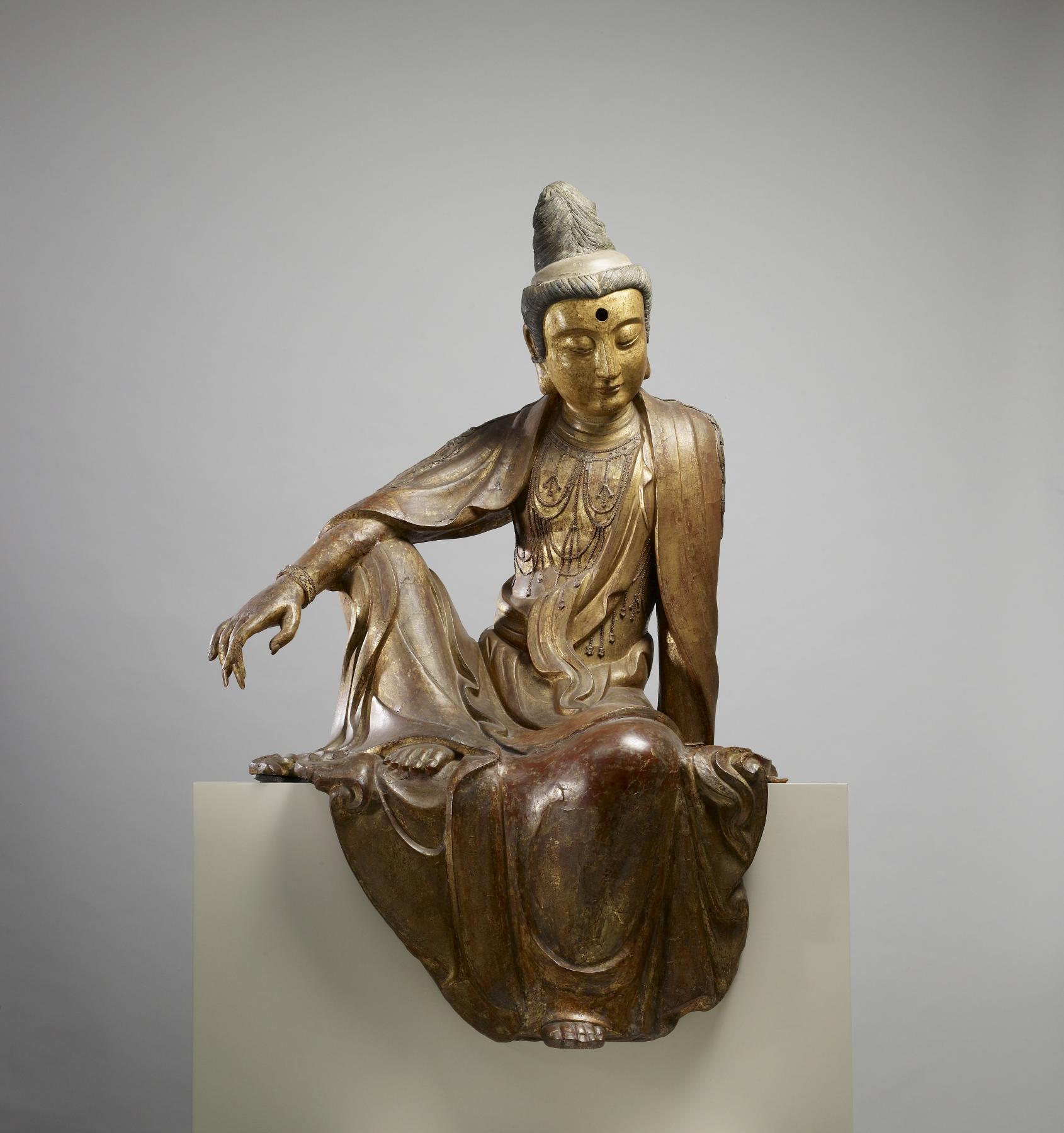
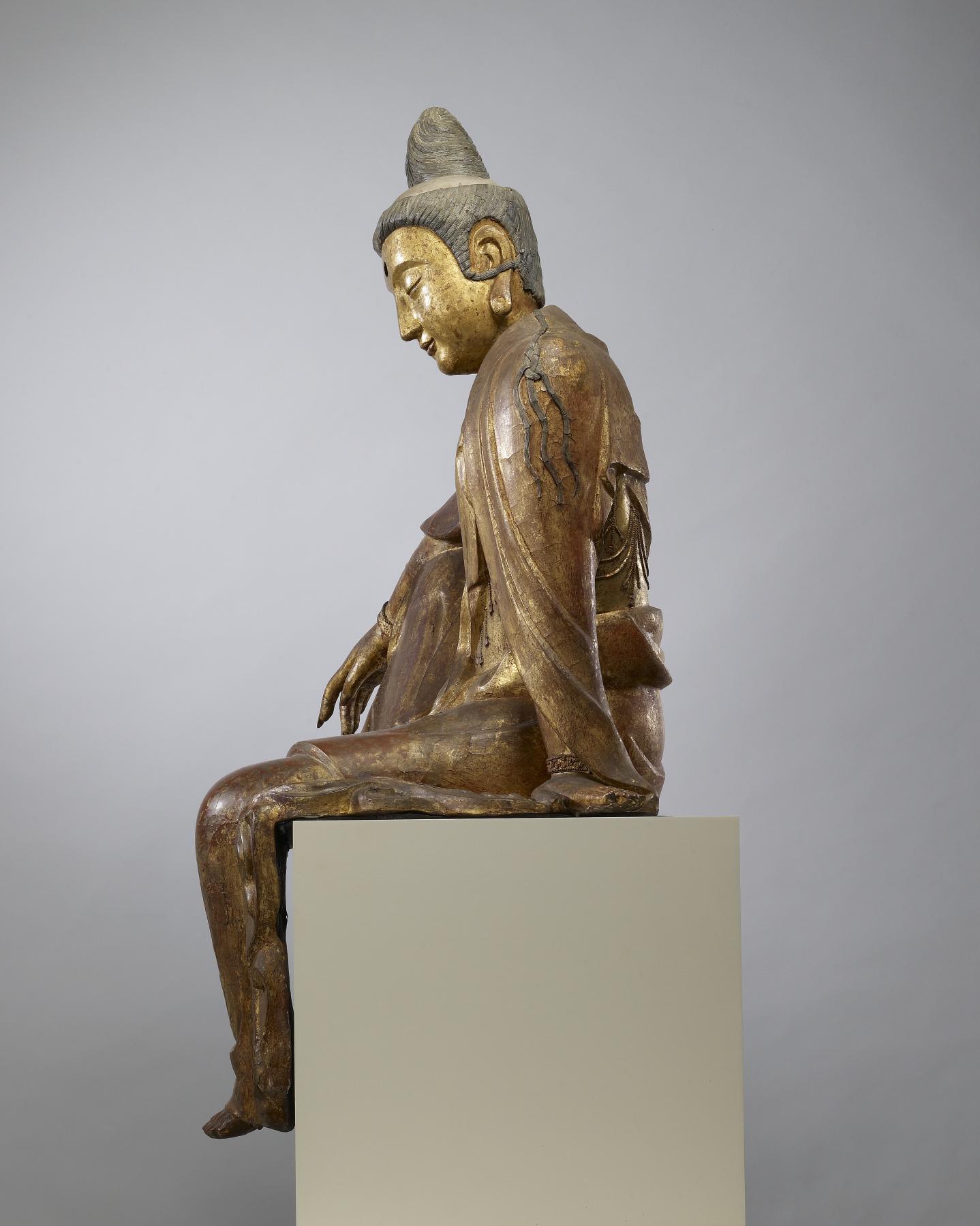
15世纪明代干漆夹纻水月观音(美国Walters艺术博物馆)
尺寸:127 x 87 x 57.5 cm
年代:明代 15世纪
质地:干漆夹纻(Bulked lacquer, gold, paint)
风格:中原
来源:美国Walters艺术博物馆
参阅:外部链接
鉴赏:
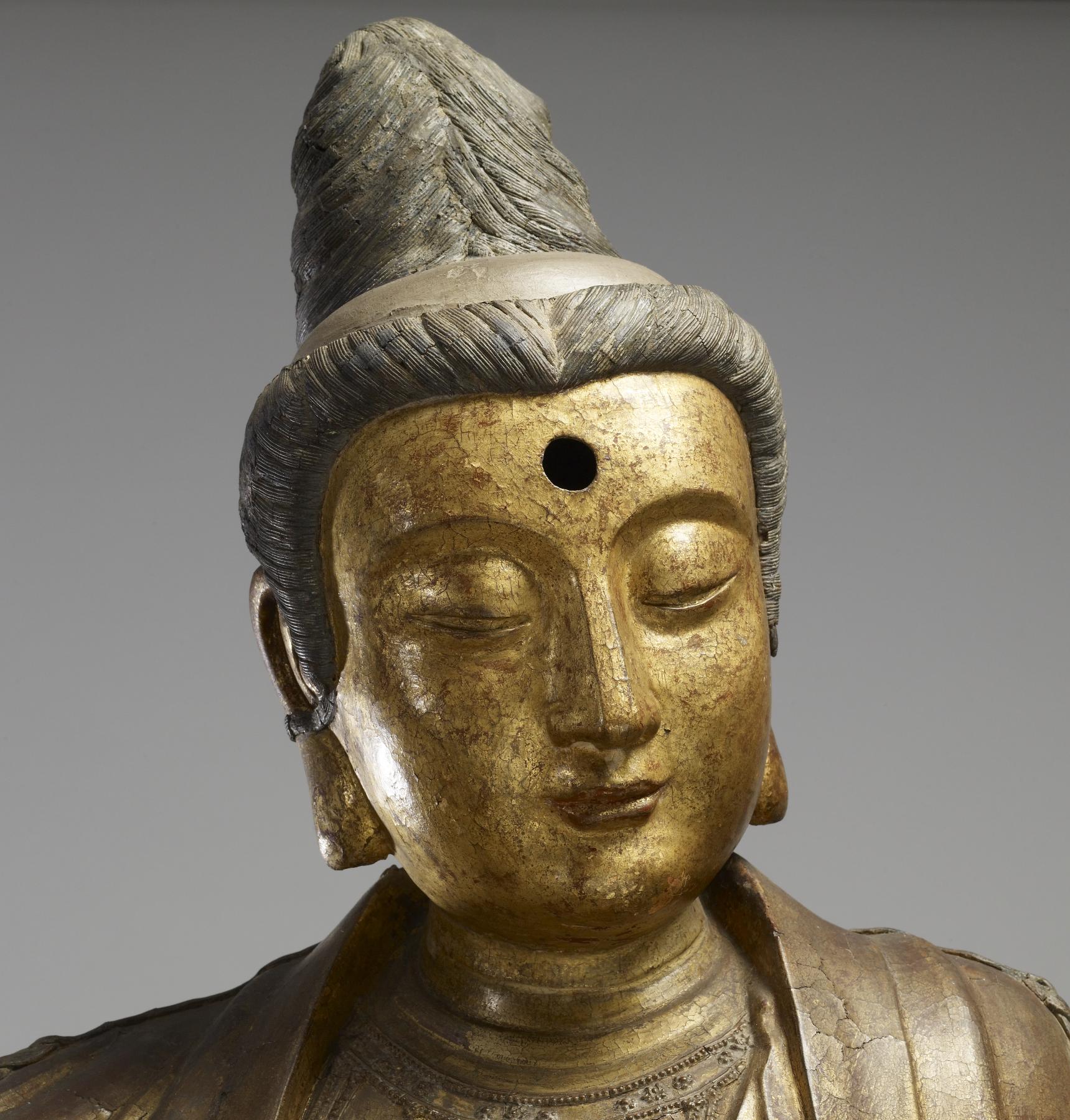
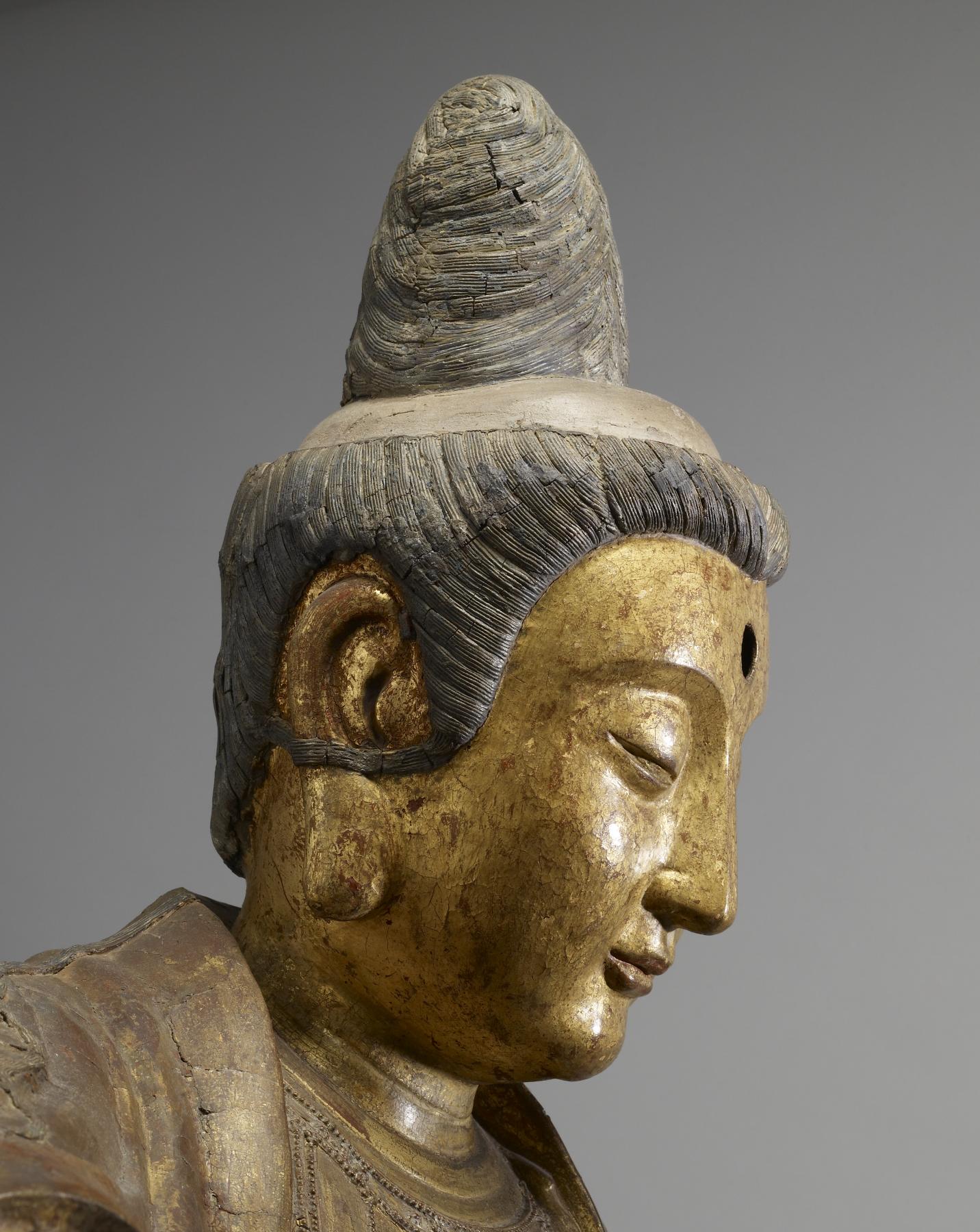
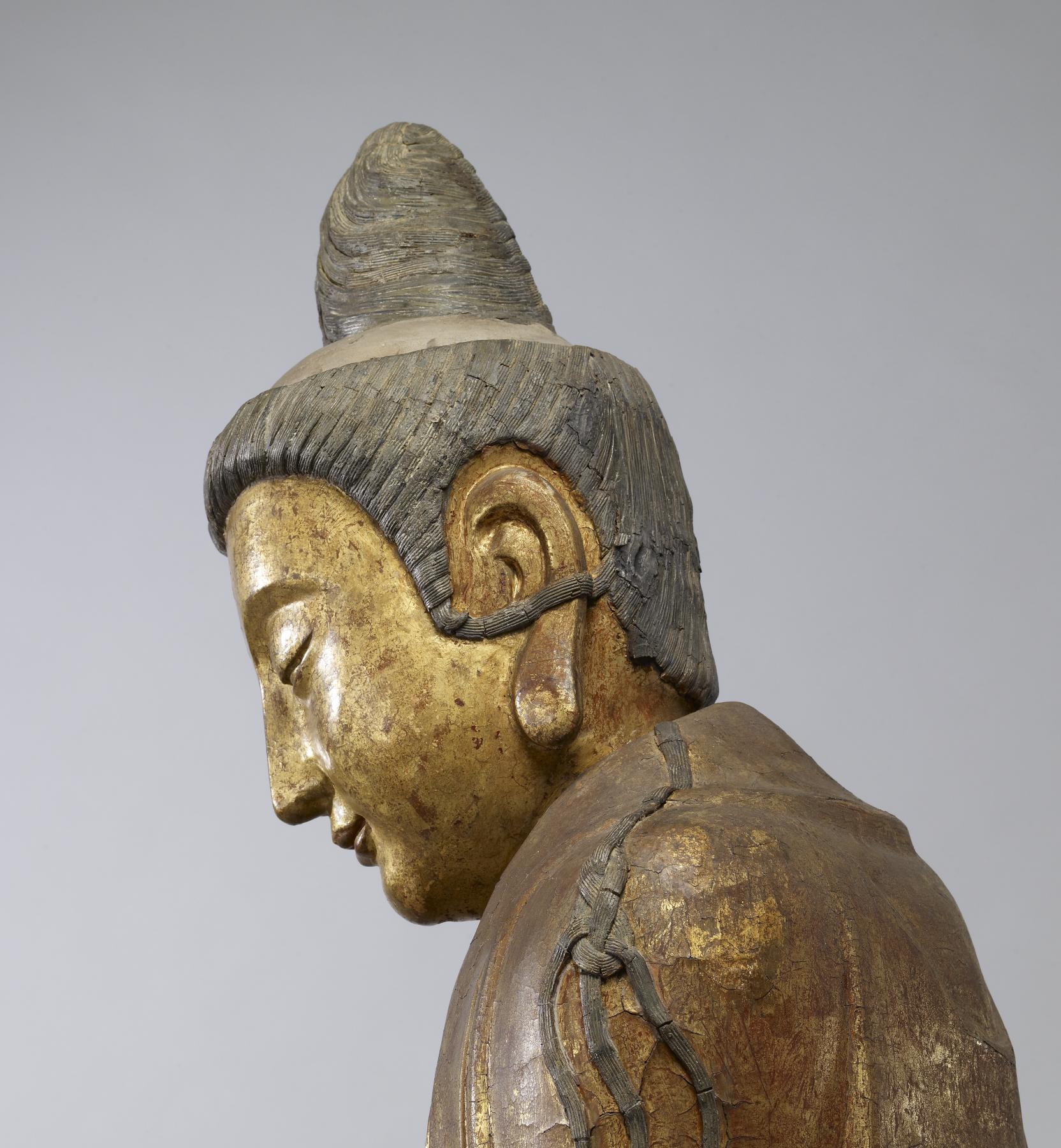
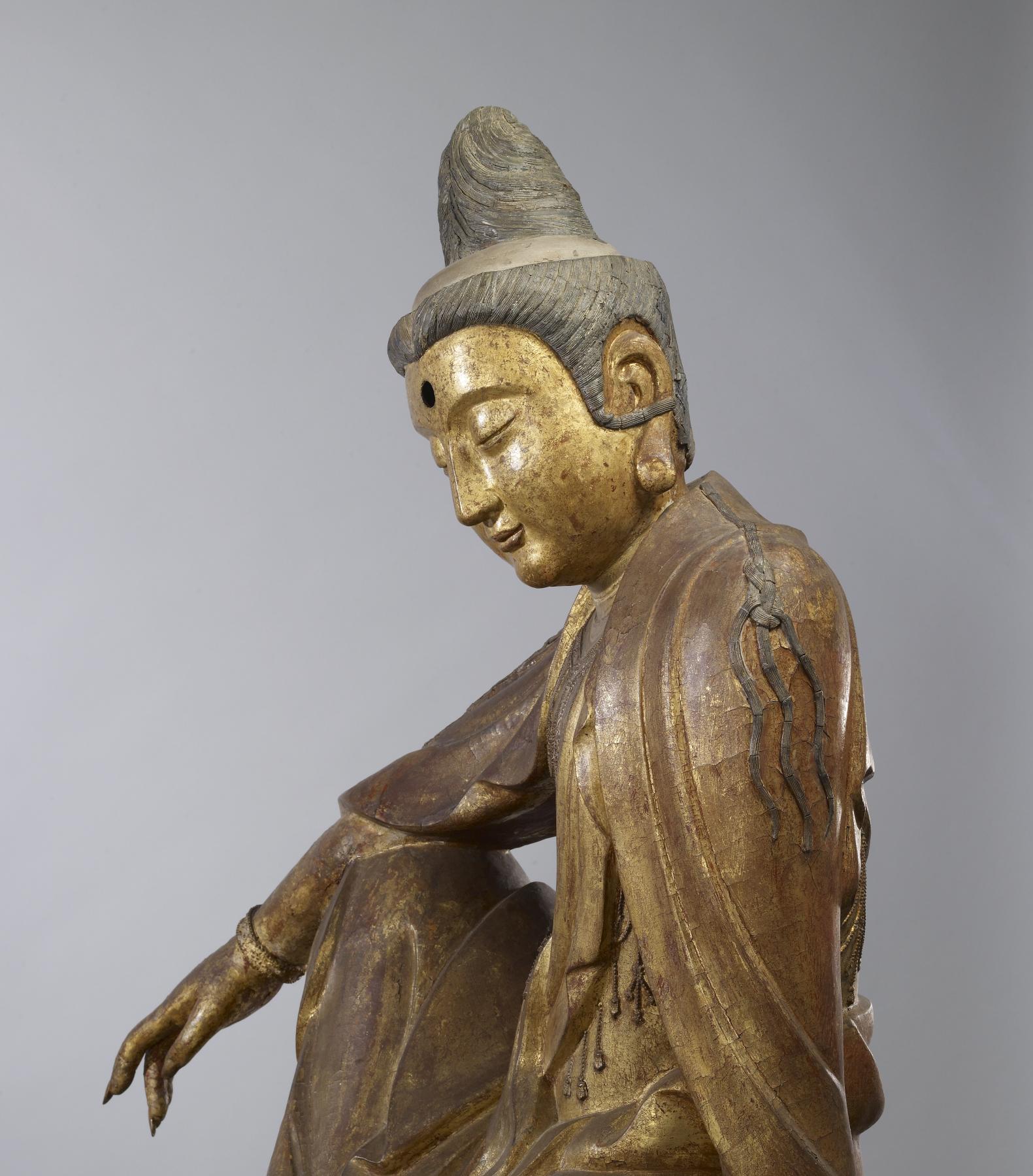
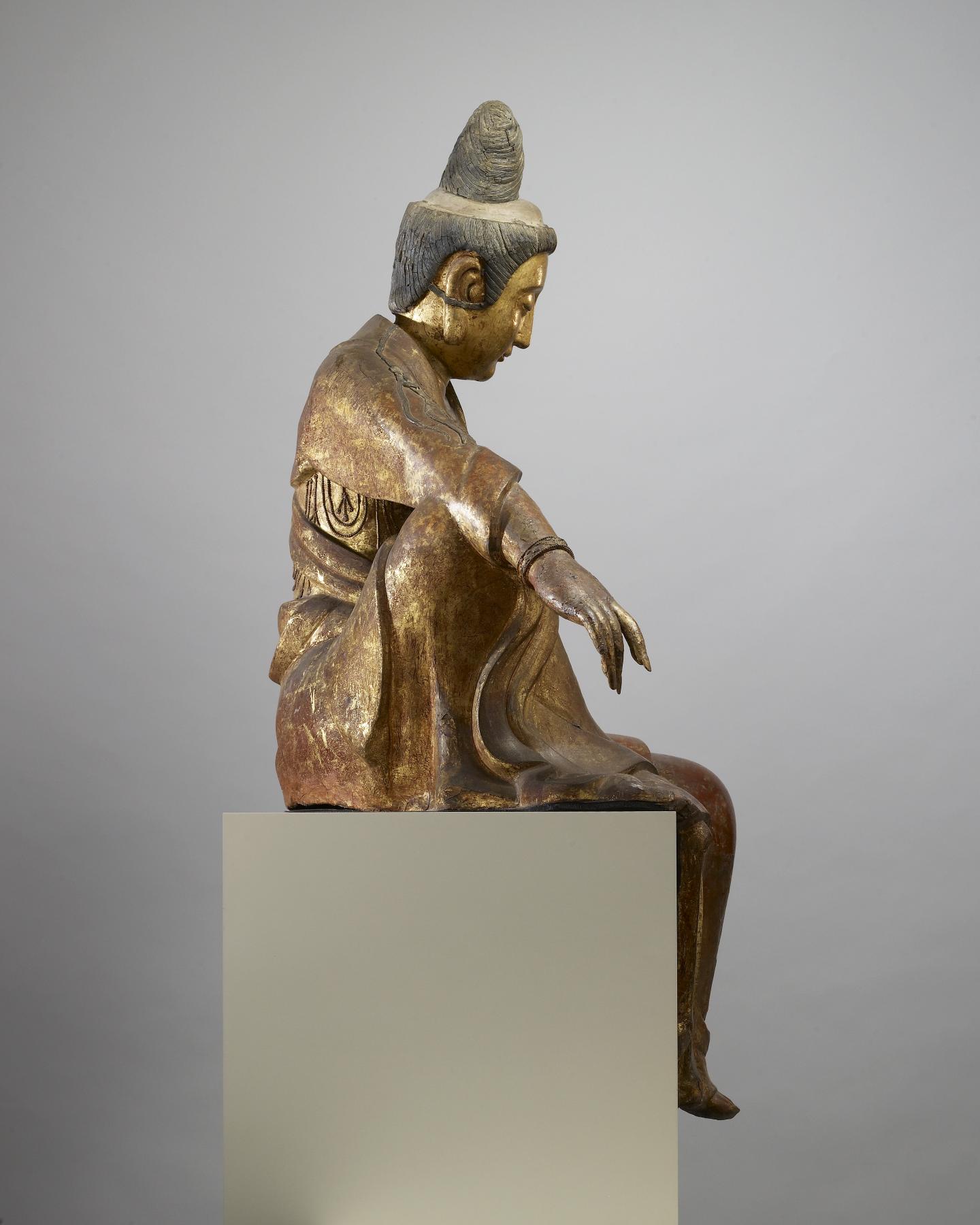
Bodhisattva Guanyin
Chinese (Artist)
late 14th-15th century (Ming dynasy (1368-1644))
Bulked lacquer, gold, paint
(China)
观音乃菩萨果位,为已证菩提却留驻世间普度众生之圣者。观世音(梵意“观照世间音声”)恒以慈悲眼观听众生呼救。
此尊造像呈自在坐姿,一臂倚膝,凝眸俯察水中月影;衣纹如涟漪层叠,垂落似流泉飞瀑。唐宋以降,观音渐以中性或女相示人,其信仰通过《妙法莲华经·普门品》等典籍、灵验记及民间传说深入民间,更与流水、明月等自然意象相融,喻示世事无常、万法皆空之理。
此像工艺堪称绝伦——通体中空,乃至纤纤指节皆承此技。以麻苎浸渍大漆,层层裱褙于泥芯之上,待漆胎干涸后淘空内胎。X光影像揭示,内壁通施朱砂(含汞朱红颜料)涂层,既蕴神圣加持之力,兼具防腐护持之功。
Guanyin is a bodhisattva, a divine being who has attained enlightenment but chooses to stay in the world to help others. Guanyin (an abbreviation of Guanshiyin: “Perceiver of the World’s Sounds”) responds to the calls of those in peril.
Here, Guanyin sits in an attitude of tranquil ease, an arm resting on one knee while gazing at the moon’s reflection in the water below; the bodhisattva’s rippling garments puddle downward in a seemingly liquid cascade. In China, devotion to Guanyin, who came to be represented as an androgynous or female being, was popularized through sacred texts (“sutras”), miracle tales, and legends by which the deity became associated with natural elements, such as water and the moon, that evoke themes of impermanence and change.
The sculpture is a technical marvel. The entire figure, down to the slender fingers, is hollow and made in a technique similar to papier-mâché. Layers of cloth soaked in lacquer, derived from a tree resin, were wrapped over an internal clay support that was removed after the lacquer had hardened. X-radiography shows that the hollow interior was covered in a pigment containing red mercury, called cinnabar, that may have had both sacred and preservative functions.
来源:
C.T. Loo & Co., Paris; purchased by Doris Duke, October 7 1937; Doris Duke Charitable Foundation; given to Walters Art Museum, 2006.
页面工具
