
侧边栏

14世纪尼泊尔迦舍末罗王朝铜鎏金释迦牟尼佛(美国鲁宾艺术博物馆)
尺寸:H 17 1/2 x W 15 x D 10 in.
年代:14世纪
质地:铜鎏金(Gilt copper alloy with turquoise inlay)
风格:西北尼泊尔 迦舍末罗 (Northwestern Nepal (Khasa Malla Kingdom))
来源:美国鲁宾艺术博物馆
参阅:外部链接
鉴赏:
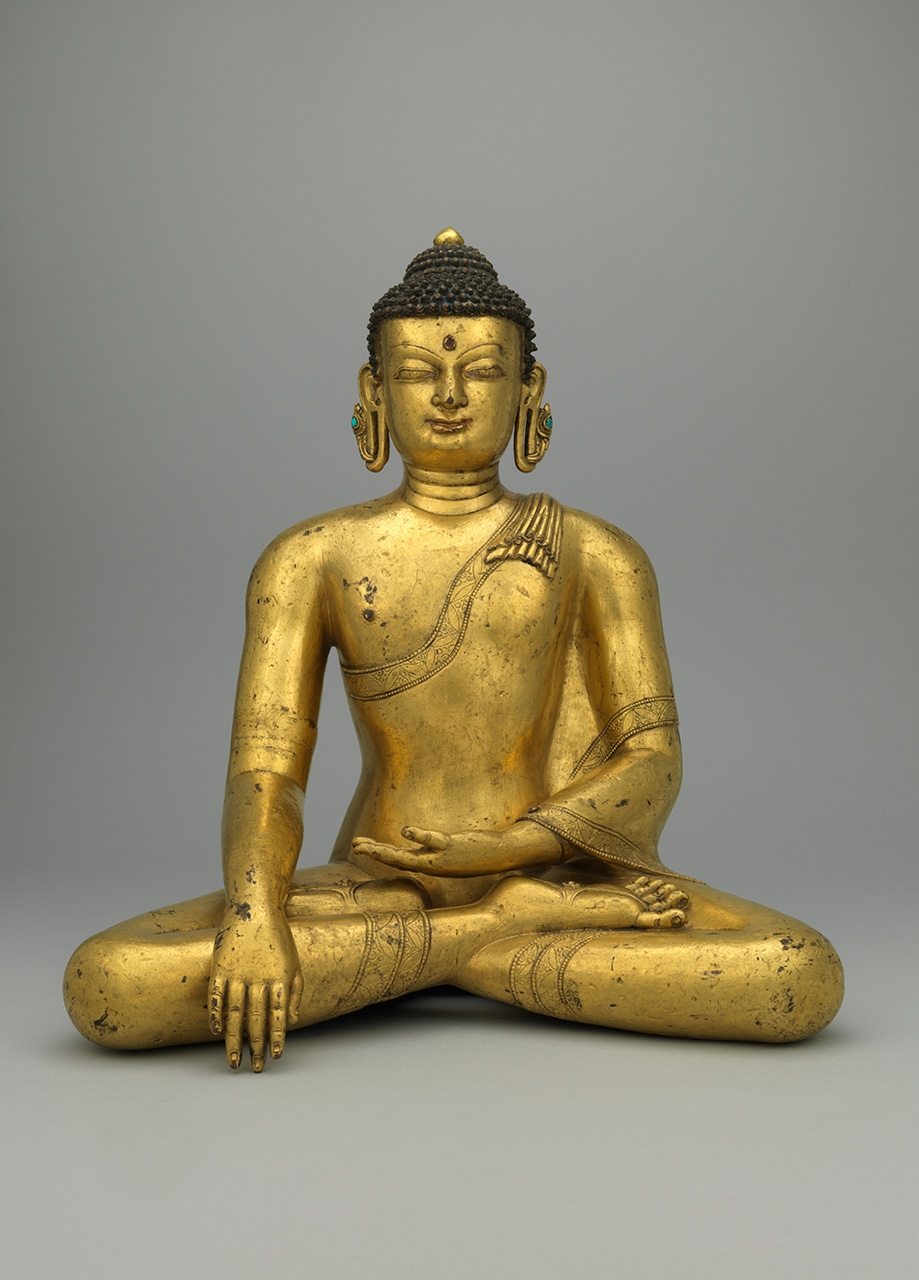
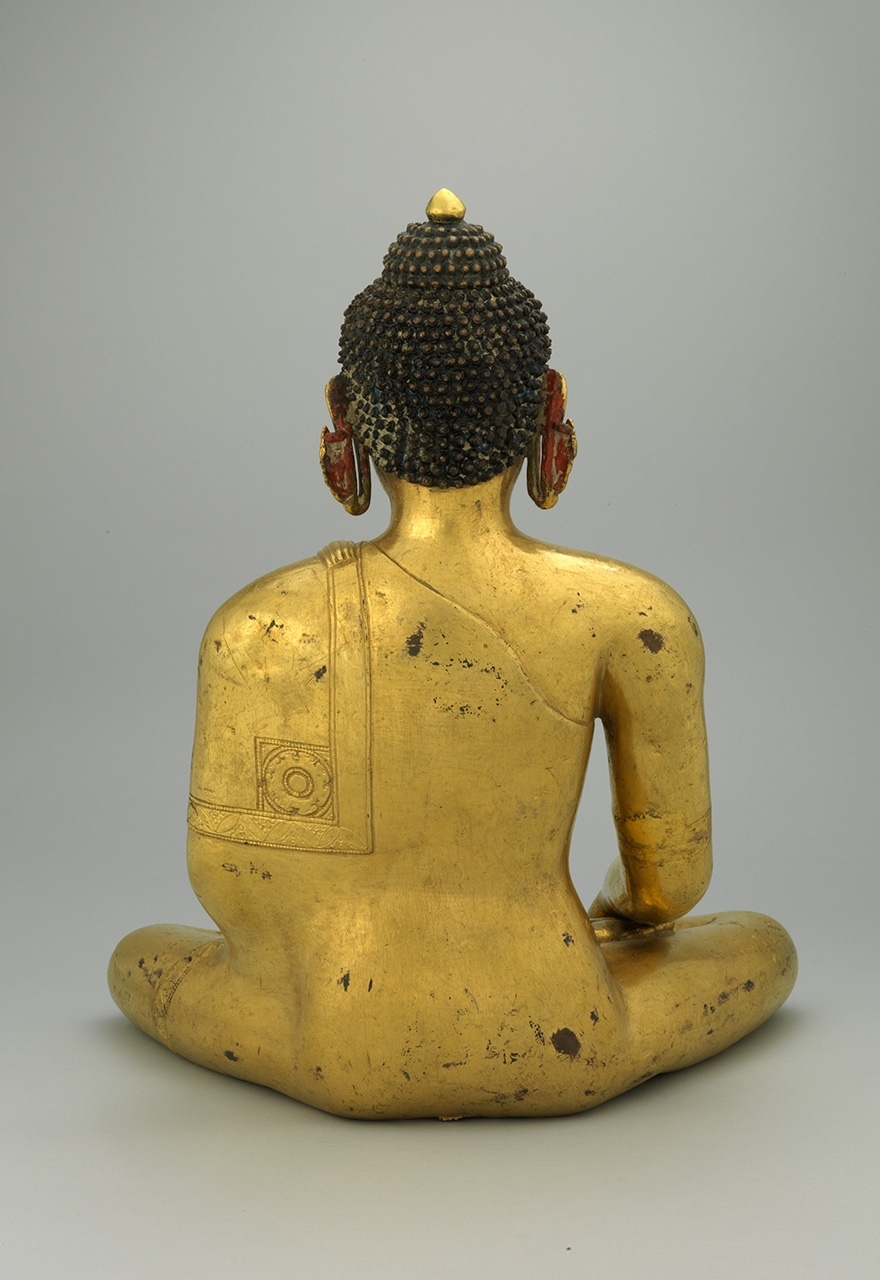 这尊表现释迦牟尼佛的造像,手足具莲花法轮印,身着僧衣,作触地印,象征其证悟成道。
喜马拉雅山脉沿线诸多王国曾形成艺术创作中心,此尊精美的佛陀造像可归属于尼泊尔西北部的卡萨马拉王国。雕塑体态浑厚,头部比例较大,前额低平,肩膀宽阔。卡萨马拉时期的典型特征体现在鹰钩状鼻梁与眼尾微扬的垂目。僧袍细节——胸前的装饰性衣缘与肩部的衣角褶尾——呈现高度程式化风格。所佩戴的绿松石镶嵌上卷式耳环,是卡萨马拉美学中独具特色的装饰元素。
This sculpture of the historical Buddha shows him with characteristic lotus wheel marks on his hands and feet, wearing monastic dress, and performing the gesture of touching the earth, a reference to his enlightenment.
Artistic centers developed in a number of kingdoms along the Himalayan range, including the Khasa Malla kingdom of northwestern Nepal, to which this fine image of the Buddha can be attributed. The sculpture is sturdy and has a proportionally large head with a low forehead and broad shoulders. Characteristic of the Khasa Malla period are the beak-like nose and the downcast eyes widening at the sides. The details of his monastic robe, the ornamented hem across the chest and the tail end on the shoulder, are quite stylized. He wears upturned earrings inlaid with turquoise, an unusual feature of the Khasa Malla aesthetic.
页面工具
