
侧边栏

11世纪印度帕拉黑石雕文殊金刚(六臂文殊菩萨)坐像(纽约大都会博物馆)
尺寸:H. 46 in. (116.8 cm); W. 24 in. (61 cm); D. 7 1/2 in. (19.1 cm)
年代:11世纪
质地:黑石(Black stone)
风格:印度或孟加拉
来源:纽约大都会博物馆
参阅:外部链接
鉴赏:
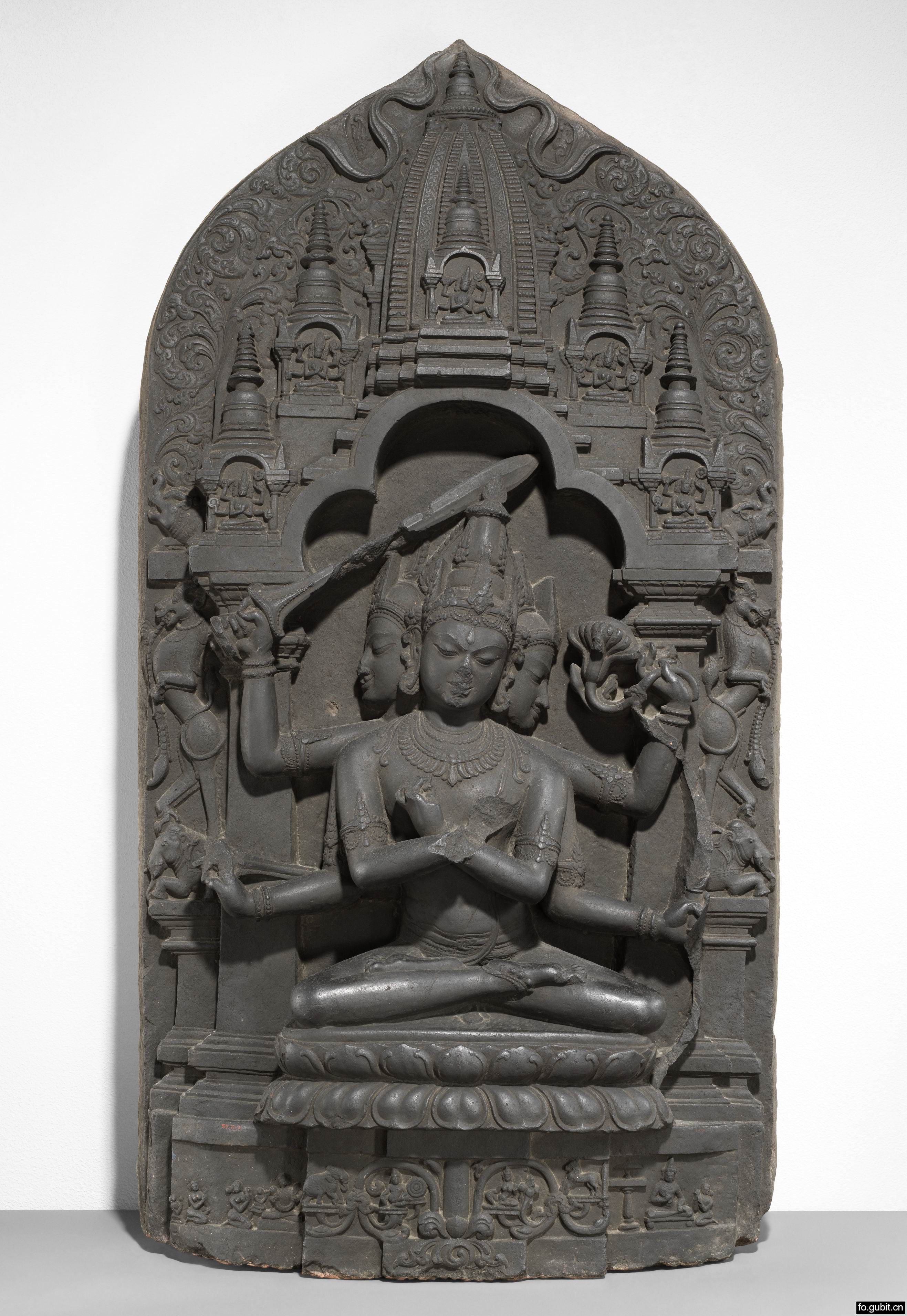


 佛像网, 编号: 文殊菩萨039
This sculpture represents an esoteric form of Manjushri, the Bodhisattva of Transcendent Wisdom. He has three heads and six arms; four hold a bow and arrow, a sword, and a lotus, while the remaining two hold vajras (thunderbolt scepters) and are crossed at the chest in an esoteric gesture (mudra) identifying supreme wisdom. Most prominent among this array of weapons is the sword, which cuts away ignorance and delusion. Leogryphs standing on lions frame the throne seat; mythical makara issue from the tripartite cusped nimbus; and garlands flutter from the central tower (sikhara).
The elaborate architectural setting is surmounted by five stupas, within which sit emanations of Manjushri. This is a grand conceptualization of the architectural plan of one of the great Buddhist monastic complexes (mahavihara) of medieval Bengal, probably in present-day Bangladesh. A frieze at the bottom shows a group of donors and worshipers adoring the bodhisattva.
来源:
Cora Timken Burnett , Alpine, NJ (by 1918 until d. 1956; bequeathed to MMA)
展览:
New York. Asia Society. “Mandala: The Architecture of Enlightenment,” September 4, 1997–January 4, 1998.
著录:
Coomaraswamy, Ananda K. “Some Indian Sculptures in American Museums.” Rūpam, no. 18 (April 1924). p. 66, fig. 5.
Coomaraswamy, Ananda K. History of Indian and Indonesian Art. London: E. Goldston, 1927, pp. 114, 244, pl. 71, fig. 229.
Lippe, Aschwin. “The Sculpture of Greater India.” The Metropolitan Museum of Art Bulletin, n.s., 18, no. 6 (February 1960). pp. 188, 199.
Enamul Haque. “The Pala Patrimony in the Metropolitan Museum of Art.” Orientations, 25, no. 3, March 1994. p. 58, fig. 7.
Leidy, Denise Patry, and Robert A. F. Thurman. Mandala: The Architecture of Enlightenment. Exh. cat. New York: Asia Society Galleries Gallery, 1997, pp. 52–53, cat. no. 3.
Lee, Eun-Su. “A Preliminary Note on Buddhist Sculptures from Dhaka Region.” Journal of Bengal Art 11/ 12 (2006–2007). p. 269, pl. 24.2.
Behrendt, Kurt. “Tibet and India: Buddhist Traditions and Transformations.” The Metropolitan Museum of Art Bulletin 71, no. 1 (Winter 2014). p. 40, fig. 40.
Behrendt, Kurt. “Tantric Buddhist Art of Tibet.” Arts of Asia 46, no. 2 (March-April 2016). pp. 79–89, fig. 15.
页面工具
