
侧边栏

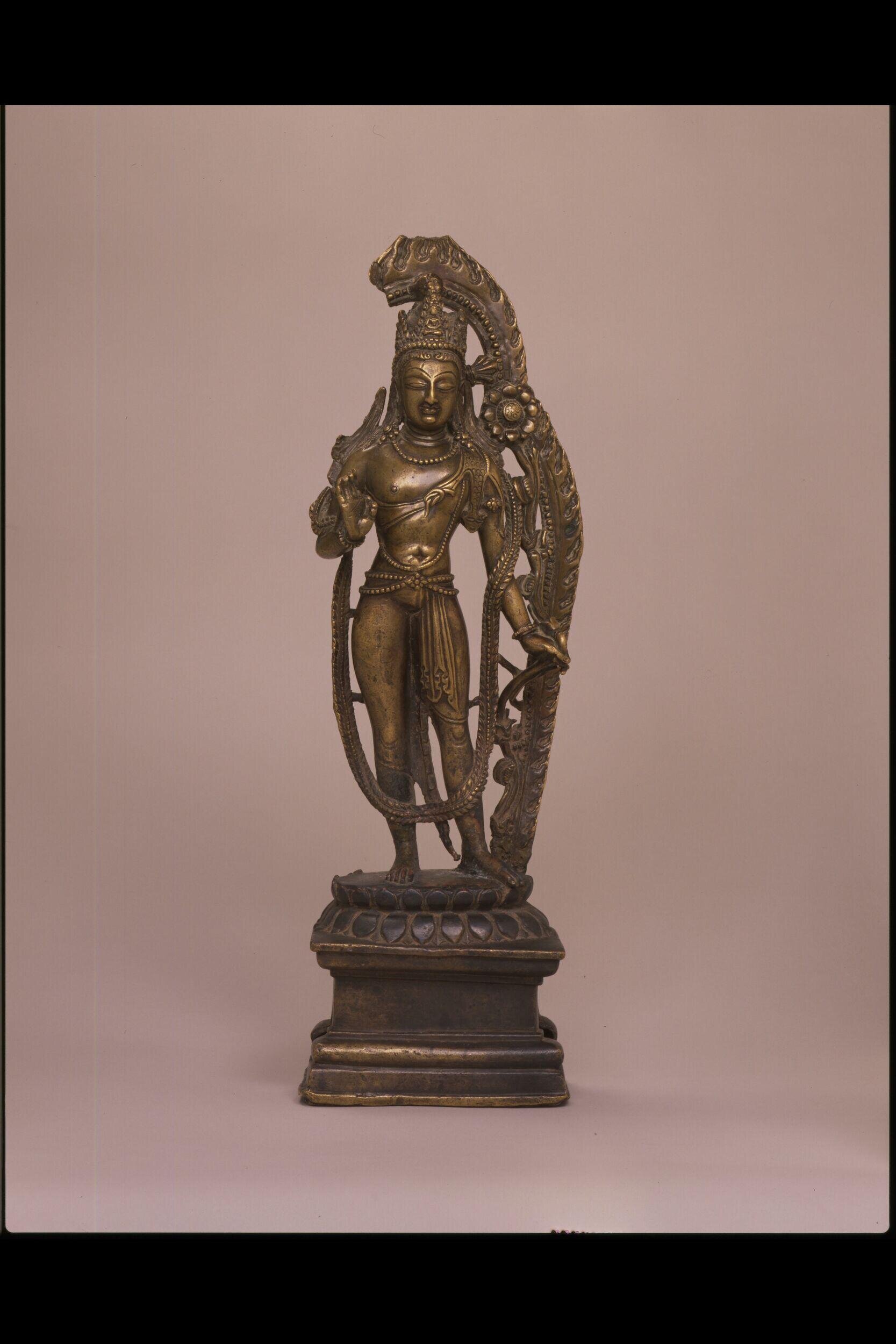
10世纪克什米尔风格合金铜莲花手观音立像(伦敦V&A博物馆)
尺寸:高40 cm
年代:10世纪
质地:合金铜
风格:克什米尔
来源:伦敦V&A博物馆
参阅:外部链接
鉴赏:
 BODHISATTVA AVALOKITESHVARA
Copper alloy with copper inlay
Kashmir, North-western India
c. 10th century
这里,佛教无上救主观世音举起手,向他的信徒作施无畏印,以给予 reassurance and protection(安慰与护佑)。这一手势凸显了这位菩萨作为大乘佛教慈悲救度理念之最高化身的角色。(菩萨是指走在成佛之道上的有情。)
其身形两侧饰有莲茎与莲花,印证了他作为“莲花手”(Padmapani)的双重称号。他头戴三叶冠(mukuta),冠中央是阿弥陀佛(Amitabha, eternal light buddha)——无量光佛及其精神导师。一张羚羊皮(mrigajma)——观世音的主要标志——紧紧系于胸前。
其数个特征体现了在克什米尔保存完好的笈多王朝(约公元320-540年)传统中的风格惯例。这些特征包括:颈部传统的褶纹(kombu-griva),微屈的躯干以及技艺精湛的腰裙褶皱。
克什米尔佛教造像的年代鉴定存在困难,但这尊造像与少数几件有纪年的克什米尔铜像之一在风格上高度契合,即可确定其属于迪达王后(Queen Didda,980-1003在位)统治时期供奉的 Sugatisandarsana Lokesvara。
这尊铜像上刻有当时的铭文,记载了它是在迪达王后统治时期供奉的,而据史料记载,迪达王后曾于公元980年至1003年间统治克什米尔。
Here the supreme Buddhist saviour Avalokitesvara raises his hand in a gesture of reassurance and protection to his devotees. The gesture underscores the role of the bodhisattva, as the supreme expression of the Mahayana Buddhist concept of the compassionate saviour. (Bodhisattava is the name given to one on the path towards becoming a buddha.)
The figure is flanked by a lotus stem and flower asserting his dual title as Padmapani, the ‘Lotus-bearer’. He wears a three-pointed crown (mukuta) in the centre of which is the figure of Amitabha, the Buddha of Eternal Light and his spiritual mentor. An antelope skin (mrigajma), Avalokitesvara’s principal attribute, is tied firmly across his chest.
Several features reflect stylistic conventions that were part of the tradition of the Gupta period (320-about 540 AD) tradition that were well-preserved in Kashmir. These include the conventional folds of the figure’s neck (kombu-griva), the flexed torso and masterfully modelled pleats of the waist-skirt.
The dating of Kashmir Buddhist sculpture is problematic, but this example has a close stylistic correspondence with one of the few dated Kashmiri bronzes. In this instance it is the Sugatisandarsana Lokesvara, which was dedicated during the reign of Queen Didda (980-1003).
This bronze bears a contemporary inscription recording that it was dedicated during the reign of Queen Didda, who is known to have ruled Kashmir between 980 and 1003 AD.
著录:
L'escultura en el temples indis : l'art de la devoció : exposició organitzada per la Fundació “La Caixa” i el Victoria & Albert Museum, Londres. [Barcelona: Obra social, Fundació “la Caixa”, c2007 Number: 9788476649466 p.105, Cat.105
来源:
Bought from Spink & Son US $ 30,000.
页面工具
